

Google Cloud strengthens its AI infrastructure collaboration with Intel, focusing on Xeon processors and custom chips.
In summary: Google Cloud and Intel have announced an enhanced, multi-year partnership focused on AI infrastructure, which includes both CPU deployment and the joint development of custom chips. Google Cloud will keep utilizing Intel’s Xeon 6 processors for its global infrastructure, specifically for C4 and N4 instances. Additionally, the two companies are broadening their work on custom Infrastructure Processing Units (IPUs), which are intended to relieve networking, storage, and security tasks from host CPUs in large-scale AI settings. This announcement comes as Intel's stock rose approximately 33% in a week and just two days after the company became the foundry partner for Tesla’s Terafab megaproject.
“Balanced systems”: the argument Intel and Google are jointly proposing
The key point of the partnership, as articulated by both firms, is that relying solely on GPU accelerators is inadequate for meeting the requirements of contemporary AI infrastructure. In a statement related to the announcement, Intel's CEO, Lip-Bu Tan, remarked: “AI is transforming the way infrastructure is designed and scaled. Scaling AI necessitates more than just accelerators; it demands balanced systems. CPUs and IPUs play a crucial role in delivering the performance, efficiency, and flexibility that modern AI workloads require.” This choice of words is intentional. Intel has dedicated a significant part of the last two years to shifting from its earlier dominance in the general-purpose computing market to a more specialized position: asserting that CPUs and custom infrastructure silicon hold a structural importance in AI deployments that GPU-centric perspectives have frequently overlooked.
Amin Vahdat, Google’s senior vice president and chief technologist for AI infrastructure, supported the argument from the demand perspective. “CPUs and infrastructure acceleration continue to be foundational for AI systems — from training orchestration to inference and deployment,” he stated. “Intel has been a reliable partner for nearly two decades, and their Xeon roadmap assures us that we can keep up with the rising performance and efficiency needs of our workloads.” Presenting the partnership as a long-term commitment to a CPU roadmap, rather than a single-cycle procurement agreement, is noteworthy: it suggests Google has made long-term infrastructure architectural decisions based on Intel’s product development trajectory, which includes both the Xeon line and the custom IPU co-development initiative.
The CPU aspect of the partnership focuses on Intel’s Xeon 6 processor family, which Google Cloud has incorporated into its workload-optimized C4 and N4 instance types. Google claims that C4 instances provide over 2.0 times the total cost of ownership benefit compared to older configurations, a number that indicates the combined performance improvement and power efficiency that Intel promotes as the key competitive advantage of Xeon 6. The agreement extends beyond the current generation: Google has committed to a multi-generational alignment with Intel’s Xeon roadmap, indicating that its infrastructure planning is incorporating future Intel CPU releases as a known factor.
At the same time, Google has been expanding its custom silicon commitments on the accelerator front, providing Anthropic with about one gigawatt of TPU capacity via Broadcom in a deal that supports Anthropic’s AI infrastructure through 2027 and beyond—reflecting how Google is enhancing its infrastructure portfolio across both standard and custom silicon simultaneously.
The CPU architectural context is essential for understanding why this commitment is being made public at this time. As AI workloads transition from training phases, which are GPU-heavy and concentrated among a small number of hyperscalers, to scaled inference, which is distributed, sensitive to latency, and continuously operating across large server fleets, the cost dynamics of AI infrastructure evolve. Inference necessitates consistent CPU resources for orchestration, data preprocessing, and system management, demands that training pipelines do not impose. Google’s investment in Xeon 6 for its C4 and N4 instances partially hinges on the belief that the economics of inference will elevate CPU efficiency to a high priority in the upcoming years.
The custom IPU initiative
A more strategically significant aspect of the partnership is the augmented co-development of Infrastructure Processing Units (IPUs). These are custom ASIC-based programmable accelerators aimed at handling networking, storage, and security functions that would typically burden host CPUs, allowing those CPUs to concentrate solely on application and AI workload processing. In hyperscale environments, where infrastructure tasks consume a considerable and increasing share of available compute, shifting these tasks to dedicated accelerators can markedly enhance utilization rates, energy efficiency, and the reliability of workload performance. Intel and Google have been working together on IPU development, and this announcement indicates that their collaboration is broadening rather than contracting. Specific technical details about the expanded program—such as die design, process node, performance goals, and deployment timeline—have not been publicly revealed.
Nvidia, which reported a fourth-quarter 2025 revenue of $68.1 billion reflecting 73% year-on-year growth and used its GTC 2026 conference in March to promote its full-stack platform as the standard for AI infrastructure, serves as an implicit point of reference for

Other articles
 How AI is revolutionizing hospitality operations while maintaining the human experience
Arran Campolucci-Bordi discusses how AI-powered systems are transforming hospitality operations, enhancing efficiency while maintaining human interaction at the center.
How AI is revolutionizing hospitality operations while maintaining the human experience
Arran Campolucci-Bordi discusses how AI-powered systems are transforming hospitality operations, enhancing efficiency while maintaining human interaction at the center.
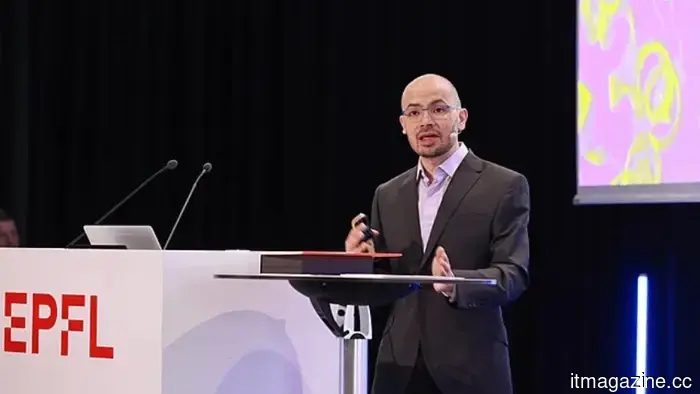 Demis Hassabis states that Google DeepMind needed to revert to its startup origins following the merger with Brain.
Hassabis mentions that after the Brain merger, Google DeepMind needed to reconnect with its startup origins and adopt a more resourceful approach, managing Isomorphic Labs as a secondary role from 10 PM.
Demis Hassabis states that Google DeepMind needed to revert to its startup origins following the merger with Brain.
Hassabis mentions that after the Brain merger, Google DeepMind needed to reconnect with its startup origins and adopt a more resourceful approach, managing Isomorphic Labs as a secondary role from 10 PM.
 Oracle has appointed Hilary Maxson as Chief Financial Officer to oversee its $50 billion investment in AI data centers.
Hilary Maxson, who previously held the position of group CFO at Schneider Electric, has joined Oracle as the company plans to eliminate 30,000 jobs and has pledged $50 billion towards building AI data centers.
Oracle has appointed Hilary Maxson as Chief Financial Officer to oversee its $50 billion investment in AI data centers.
Hilary Maxson, who previously held the position of group CFO at Schneider Electric, has joined Oracle as the company plans to eliminate 30,000 jobs and has pledged $50 billion towards building AI data centers.
 Marceu Martins on creating AI and infrastructure systems focused on reliability at scale.
Marceu Martins discusses the importance of maintaining 99.9% uptime, establishing architectural discipline, and ensuring AI governance, emphasizing that failure in critical infrastructure is not acceptable.
Marceu Martins on creating AI and infrastructure systems focused on reliability at scale.
Marceu Martins discusses the importance of maintaining 99.9% uptime, establishing architectural discipline, and ensuring AI governance, emphasizing that failure in critical infrastructure is not acceptable.
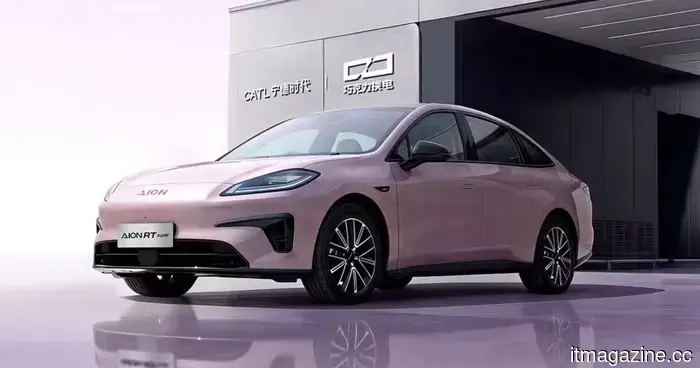 China's newest electric vehicle sensation is priced at $13,000, has a range exceeding 300 miles, and features a battery swap time of just 99 seconds.
Forget the discussions around charging speeds: the $13,000 Aion RT Super replaces its complete CATL battery pack in just 99 seconds, offers a range of 314 miles on a single charge, and may represent a pivotal moment in how budget-friendly EVs address range anxiety worldwide.
China's newest electric vehicle sensation is priced at $13,000, has a range exceeding 300 miles, and features a battery swap time of just 99 seconds.
Forget the discussions around charging speeds: the $13,000 Aion RT Super replaces its complete CATL battery pack in just 99 seconds, offers a range of 314 miles on a single charge, and may represent a pivotal moment in how budget-friendly EVs address range anxiety worldwide.
 Marceu Martins discusses the design of AI and infrastructure systems to ensure scalability and reliability.
Marceu Martins discusses the importance of 99.9% uptime, architectural discipline, and AI governance, emphasizing that failure in critical infrastructure is not an acceptable outcome.
Marceu Martins discusses the design of AI and infrastructure systems to ensure scalability and reliability.
Marceu Martins discusses the importance of 99.9% uptime, architectural discipline, and AI governance, emphasizing that failure in critical infrastructure is not an acceptable outcome.
Google Cloud strengthens its AI infrastructure collaboration with Intel, focusing on Xeon processors and custom chips.
Google Cloud is extending its multi-year partnership with Intel on AI infrastructure, dedicating resources to Xeon 6 CPUs and collaborating on the development of custom Infrastructure Processing Units.