
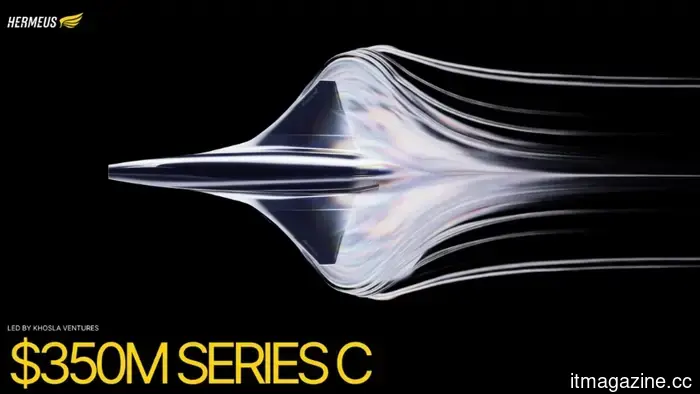
Hermeus has secured $350 million, achieving a valuation of $1 billion.
The Los Angeles-based defense startup successfully flew a demonstrator the size of an F-16 in March, and is currently working on a third aircraft. CEO AJ Piplica emphasizes that in order to construct hypersonic aircraft at this speed, one must acknowledge that hardware failures will occur and plan accordingly.
Hermeus, which is based in Los Angeles and focuses on developing autonomous hypersonic aircraft, has secured $350 million in funding, valuing the company at $1 billion. This funding round includes $200 million in equity led by Khosla Ventures, with contributions from existing investors such as Canaan Partners, Founders Fund, In-Q-Tel, and RTX Ventures. New investments are also coming from the venture fund of media giant Cox Enterprises and publicly traded closed-end investment firm Destiny Tech100, among others. Additionally, there is $150 million in debt structured to minimize dilution as the company expands its hardware manufacturing.
Founded in 2018, Hermeus is working on what it claims to be the fastest unmanned aircraft under development. The company employs a deliberately iterative approach, producing one aircraft each year, with each designed to tackle a specific technical hurdle on the journey to achieving Mach 5 hypersonic flight. Last month, it completed its second first flight in under a year with its largest demonstrator to date, roughly the size of an F-16 fighter. The development of a third aircraft is currently underway.
In an interview with TechCrunch, CEO AJ Piplica remarked that hardware failure should not be viewed as a risk to be avoided, but rather as a milestone to plan for. He noted, "Yes, we might crash an airplane, and I anticipate it will happen at some stage in our development program. We are prepared to handle that very safely."
A significant decision made a few years back helped shape the current fundraising landscape. Hermeus had initially been developing its own engine from scratch due to necessity. However, after receiving investment from RTX Ventures, the corporate venture arm of RTX Corporation (formerly Raytheon), the company was able to collaborate with RTX subsidiary Pratt & Whitney to adapt its F100 engine—used in the F-15 and F-16—for Hermeus's hypersonic aircraft. This collaboration provided a reliable engine framework that enabled testing and iteration, reduced timelines, and opened up government contracting opportunities that purely technological ventures do not offer.
President Zach Shore stated that this partnership establishes incentive structures that help advance the technology, meet immediate Department of Defense needs, and enhance the business's economics.
This funding round comes during a period when defense technology is experiencing significant investment, a trend not seen in years. According to PitchBook data referenced by TechCrunch, global venture investment in defense technology surpassed $9 billion across 265 deals last year, with corporate investors contributing $2 billion in 28 rounds.
The new funds will be allocated towards expanding manufacturing capabilities and increasing the workforce. Piplica cites SpaceX as a prime example of a company willing to build, test, fail, and rapidly iterate to effect meaningful change, acknowledging that Hermeus's greatest constraint is not capital or technology, but talent, as there are very few individuals who have experience in this specific type of work.
Other articles
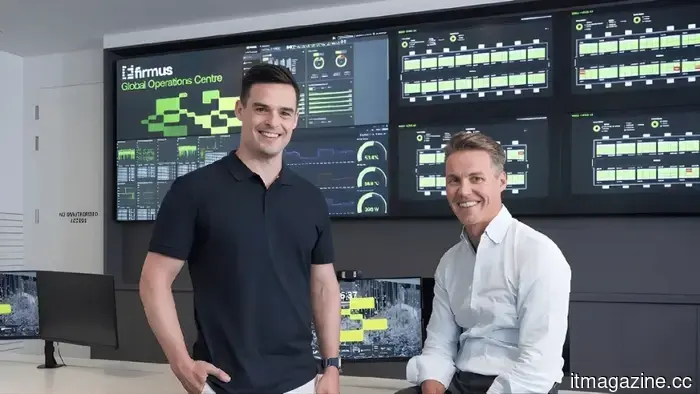 Firmus, supported by Nvidia, aims for a $2 billion IPO on the ASX following a $505 million fundraising and a $10 billion debt from Blackstone.
Firmus is on track for a $2 billion ASX initial public offering after securing $505 million at a valuation of $5.5 billion and a $10 billion debt package from Blackstone to construct 1.6GW of AI factories throughout Australia.
Firmus, supported by Nvidia, aims for a $2 billion IPO on the ASX following a $505 million fundraising and a $10 billion debt from Blackstone.
Firmus is on track for a $2 billion ASX initial public offering after securing $505 million at a valuation of $5.5 billion and a $10 billion debt package from Blackstone to construct 1.6GW of AI factories throughout Australia.
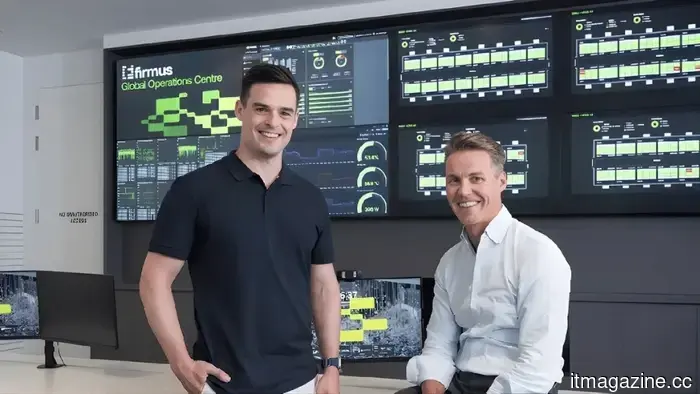 Nvidia-supported Firmus aims for a $2 billion IPO on the ASX following a $505 million capital raise and $10 billion in debt from Blackstone.
Firmus is on track for a $2 billion IPO on the ASX after securing $505 million at a valuation of $5.5 billion, along with a $10 billion debt package from Blackstone to establish 1.6GW of AI factories throughout Australia.
Nvidia-supported Firmus aims for a $2 billion IPO on the ASX following a $505 million capital raise and $10 billion in debt from Blackstone.
Firmus is on track for a $2 billion IPO on the ASX after securing $505 million at a valuation of $5.5 billion, along with a $10 billion debt package from Blackstone to establish 1.6GW of AI factories throughout Australia.
 HexemBio secures $10.4 million for a therapy focused on stem cell rejuvenation.
HexemBio has initiated its operations with a seed funding round led by Draper Associates to promote a rejuvenation therapy for blood stem cells, supported by Robert Langer.
Natter secures $23 million to substitute traditional enterprise surveys.
Natter has secured $23 million in a Series A funding round to expand its AI-moderated business conversation platform. A 7-minute video session provides more insights than a standard survey.
HexemBio secures $10.4 million for a therapy focused on stem cell rejuvenation.
HexemBio has initiated its operations with a seed funding round led by Draper Associates to promote a rejuvenation therapy for blood stem cells, supported by Robert Langer.
Natter secures $23 million to substitute traditional enterprise surveys.
Natter has secured $23 million in a Series A funding round to expand its AI-moderated business conversation platform. A 7-minute video session provides more insights than a standard survey.
 HexemBio secures $10.4 million for a stem cell rejuvenation treatment.
HexemBio has initiated operations with a seed funding round spearheaded by Draper Associates to further develop a blood stem cell rejuvenation treatment supported by Robert Langer.
HexemBio secures $10.4 million for a stem cell rejuvenation treatment.
HexemBio has initiated operations with a seed funding round spearheaded by Draper Associates to further develop a blood stem cell rejuvenation treatment supported by Robert Langer.
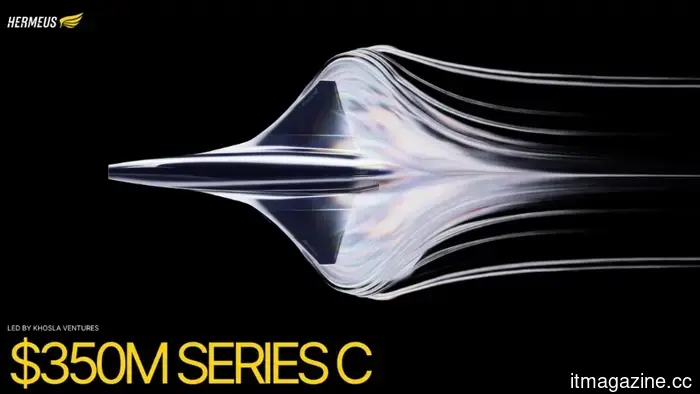 Hermeus has secured $350 million in funding, reaching a valuation of $1 billion.
Hermeus has secured $350 million at a valuation of $1 billion to further develop autonomous hypersonic aircraft. A demonstrator the size of an F-16 completed a flight in March.
Hermeus has secured $350 million in funding, reaching a valuation of $1 billion.
Hermeus has secured $350 million at a valuation of $1 billion to further develop autonomous hypersonic aircraft. A demonstrator the size of an F-16 completed a flight in March.
Hermeus has secured $350 million, achieving a valuation of $1 billion.
Hermeus has secured $350 million at a valuation of $1 billion to advance the development of autonomous hypersonic aircraft. A demonstrator comparable in size to an F-16 took flight in March.