

Doctors developed an app to prevent you from making incorrect assumptions.
Fernando @cferdo/Unsplash / Unsplash
Most of us have experienced this. A delayed text reply suddenly triggers thoughts that something is wrong. A neutral remark somehow sounds critical. A minor incident can escalate into a full-blown worst-case scenario in no time. This mental shortcut, where the mind leaps to a negative conclusion, is known as interpretation bias. For individuals coping with anxiety or depression, this isn't merely an occasional instance of overthinking; it can significantly influence how they feel, respond, and function daily.
It will change the way you perceive the world.
Researchers at Mass General Brigham are addressing this issue with a digital tool called HabitWorks. This app aids users in gradually retraining how they interpret everyday events. It acts as a daily reminder that says, “Perhaps it’s not as bad as it seems.” The app provides brief, game-like activities that take approximately five minutes. These activities aim to disrupt the tendency to assume the worst and promote a more balanced perspective. Courtney Beard, who led the research, notes that our interpretation of situations directly impacts our feelings and responses. Thus, even minor adjustments to that interpretation can create a significant ripple effect. More importantly, it feels approachable and not clinical, integrating seamlessly into how people typically use their phones in short sessions throughout the day.
Freepik
However, it's important to acknowledge that app stores are filled with mental health applications that often promise much but deliver inconsistent results. What distinguishes HabitWorks is that it has been rigorously tested. In a randomized trial published in the Journal of Consulting and Clinical Psychology, 340 adults from 44 states utilized the app over four weeks. The findings were encouraging; participants noted significant improvements in their situational interpretations, along with enhanced overall mental health and daily functioning compared to non-users. Intriguingly, many participants continued using the app—nearly 78 percent were still active by week four, which is uncommon in an industry where most apps are abandoned shortly after download. Another thoughtful aspect is how the app was developed, emphasizing the creation of a tool that fits naturally into users’ daily routines through small, consistent exercises that accumulate over time.
Addressing the broader issue
Access to mental health services remains a significant challenge. High costs, limited availability, and ongoing stigma prevent many from receiving the assistance they need. Digital solutions like HabitWorks could help mitigate this gap by providing a private, accessible, and user-friendly option.
Unsplash
That being said, the app is still undergoing research and is not yet publicly accessible. Additional work is needed to identify who benefits the most and the longevity of the effects. HabitWorks does not claim to resolve all issues but offers a crucial, quieter alternative: a means to pause, reassess, and avoid jumping to negative conclusions. Often, that subtle shift in perspective is where real change starts.
Shimul is a contributor at Digital Trends, with more than five years of experience in the tech industry.
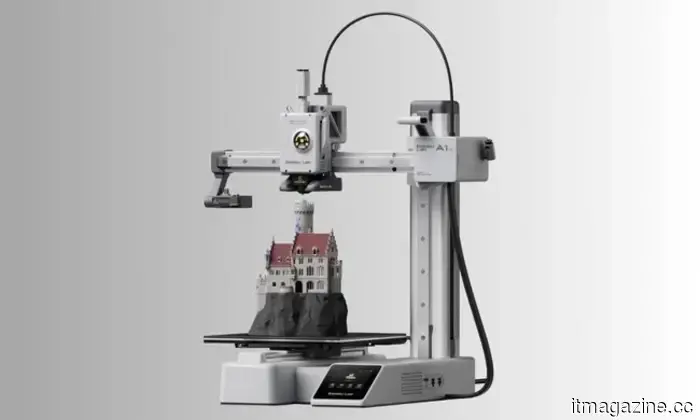
MIT experts propose a solution for a known 3D-printing error
A new tool illustrates what your print will actually resemble.
3D printing is intended to simplify prototyping, but anyone who has utilized it understands the frustrations. You create a design, hit print, wait for hours... and then realize it doesn't match your expectations at all. The texture is off, the colors are strange, or there's simply a feeling of “this isn't right.” Researchers at MIT believe they have found a solution to this precise frustration.
MIT’s new tool addresses a typical 3D-printing issue.
Can AI alleviate loneliness? The answer is… complex.
Research shows advantages but also increasing risks.
Loneliness has quietly emerged as one of the major contemporary issues, and now AI is stepping in as an unexpected companion. A new study led by Aalto University, set to be presented at CHI 2026, investigates how AI companions affect users over time, with results that present a mixed picture. While engaging with AI companions can provide users with a sense of support and lessen feelings of isolation, the study also uncovered signs of heightened emotional distress in their online communications over time, indicating that the relationship may not be as straightforward as it appears.
Claude has just shut the door on OpenClaw (unless you pay more).
Anthropic’s latest move is hitting power users right in the wallet.
Anthropic has taken an action that is unlikely to earn them many fans among power users. One of the most sought-after methods to enhance Claude using OpenClaw is effectively being restricted by a paywall. It’s as problematic as it sounds.
Anthropic has made OpenClaw significantly more costly.




Other articles
 Restaurants are encouraging us to put our phones away, and I have no objections.
Restaurants are encouraging customers to leave their phones behind, aiming to foster more meaningful and undistracted interactions at the table.
Restaurants are encouraging us to put our phones away, and I have no objections.
Restaurants are encouraging customers to leave their phones behind, aiming to foster more meaningful and undistracted interactions at the table.
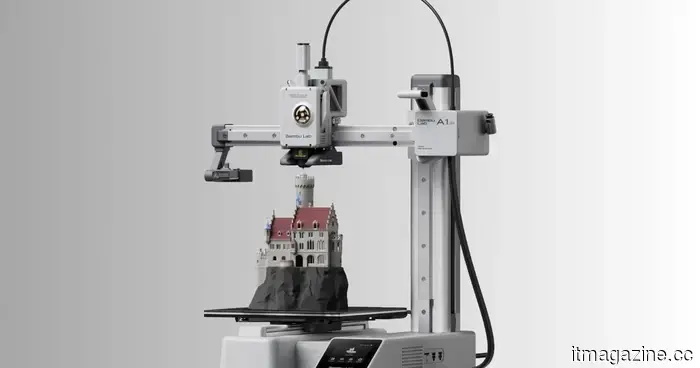 MIT specialists have developed a solution for a recognizable issue in 3D printing.
MIT's VisiPrint tool provides accurate previews of 3D-printed items, aiding in the reduction of print failures, material waste, and the frustrations associated with prototyping.
MIT specialists have developed a solution for a recognizable issue in 3D printing.
MIT's VisiPrint tool provides accurate previews of 3D-printed items, aiding in the reduction of print failures, material waste, and the frustrations associated with prototyping.
 McDonald's created an impressive controller hack to address a common gaming issue.
Attention all gamers!
McDonald's created an impressive controller hack to address a common gaming issue.
Attention all gamers!
 Samsung has decided to abandon its own Messages app.
Samsung plans to terminate its Messages app in July 2026, encouraging users to switch to Google Messages and highlighting a significant change in the Android messaging landscape.
Samsung has decided to abandon its own Messages app.
Samsung plans to terminate its Messages app in July 2026, encouraging users to switch to Google Messages and highlighting a significant change in the Android messaging landscape.
 Slack's major AI enhancement transforms Slackbot into a desktop assistant | TNW
On March 31, 2026, Salesforce introduced over 30 new AI features for Slackbot, which encompass meeting intelligence, a desktop agent, a native CRM, and integration of the MCP client through Claude.
Slack's major AI enhancement transforms Slackbot into a desktop assistant | TNW
On March 31, 2026, Salesforce introduced over 30 new AI features for Slackbot, which encompass meeting intelligence, a desktop agent, a native CRM, and integration of the MCP client through Claude.
 Why are astronauts utilizing outdated technology? A NASA spaceflight expert has the explanations.
NASA clarifies the reasons behind the use of older technology in space missions, emphasizing the importance of reliability, thorough testing, and cost considerations over the adoption of the latest hardware.
Why are astronauts utilizing outdated technology? A NASA spaceflight expert has the explanations.
NASA clarifies the reasons behind the use of older technology in space missions, emphasizing the importance of reliability, thorough testing, and cost considerations over the adoption of the latest hardware.
Doctors developed an app to prevent you from making incorrect assumptions.
Hold off on making any conclusions for now.