
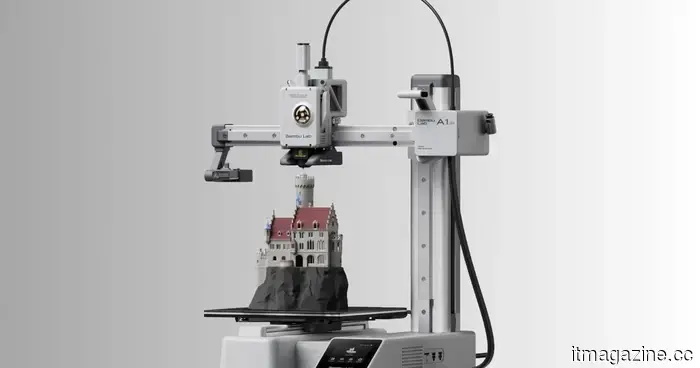
MIT specialists have developed a solution for a recognizable issue in 3D printing.
A new tool reveals how your print will truly appear.
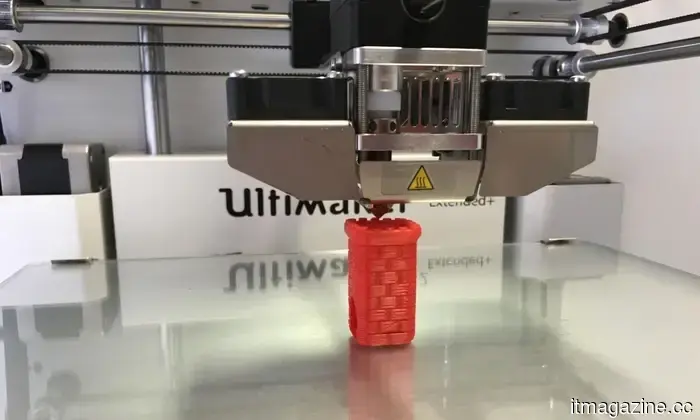
3D printing is intended to simplify prototyping, but anyone who has tried it understands the frustrations. You create a design, start the print, wait for hours, only to discover it looks entirely different from what you envisioned. Issues like incorrect texture, strange color variations, or a general feeling of disappointment can arise. Now, researchers at MIT believe they have found a solution to this persistent problem.
MIT’s new tool addresses a longstanding frustration in 3D printing
The team has introduced a new preview system named VisiPrint, which is built to show users what a 3D-printed item will genuinely look like prior to printing. Unlike existing tools that prioritize structure and function, this new system emphasizes visual precision, focusing on aspects like color, gloss, translucency, and texture.
Here’s how it functions: users provide a design screenshot from slicing software along with an image of the material intended for use. The system then produces a lifelike preview that simulates how the final object will look post-printing, considering how materials and manufacturing processes influence the results.
While this may seem like a minor adjustment, it addresses a significant issue. Current preview tools frequently overlook aesthetic elements, resulting in numerous unsuccessful prints and material waste. Some estimates even indicate that up to a third of 3D printing material can end up as waste due to discarded prototypes.
Why this could be more significant than it appears
At first glance, this seems like a convenient improvement. However, it actually tackles one of the largest inefficiencies in 3D printing: trial and error. By providing users with a more precise “what you see is what you get” preview, it could save time, minimize waste, and make the entire process less aggravating.
Of course, it’s still in the early stages, and real-world application will depend on how well it merges with existing workflows. But if tools like VisiPrint gain traction, the days of printing something and instantly regretting it may be coming to an end.
Varun is an experienced technology journalist and editor with over eight years in consumer tech media. His work spans…
Doctors have developed an app to prevent you from jumping to incorrect conclusions.
We all have experienced it. A delayed text response suddenly implies something is wrong. A neutral remark feels strangely critical. A minor situation escalates into a disastrous worst-case scenario in moments. This mental shortcut, where the mind quickly arrives at a negative conclusion, is known as interpretation bias. For individuals coping with anxiety or depression, this isn’t just occasional overthinking; it can influence their emotions, reactions, and daily functioning.
Can AI alleviate loneliness? The answer is… complex
Research indicates benefits but reveals increasing risks as well.
Loneliness has quietly emerged as one of the most pressing modern issues, and now, AI is stepping in as an unexpected companion. A new study led by Aalto University, which will be presented at CHI 2026, examines how AI companions influence users over time, yielding mixed outcomes. While engagement with AI companions can provide users with a sense of support and connection, the study also observed indications of heightened emotional distress in their online communications over time, implying that the relationship is more complicated than it appears.
Claude just closed the door on OpenClaw (unless you pay more).
Anthropic’s latest decision is likely to frustrate power users.
Anthropic has recently made a move that is unlikely to earn it goodwill among power users. One of the most popular methods to enhance Claude, utilizing OpenClaw, is now effectively locked behind a paywall. And yes, it’s as problematic as it sounds.
Anthropic has significantly increased the cost of OpenClaw.




Other articles
 Why are astronauts utilizing outdated technology? A NASA spaceflight expert has the explanations.
NASA clarifies the reasons behind the use of older technology in space missions, emphasizing the importance of reliability, thorough testing, and cost considerations over the adoption of the latest hardware.
Why are astronauts utilizing outdated technology? A NASA spaceflight expert has the explanations.
NASA clarifies the reasons behind the use of older technology in space missions, emphasizing the importance of reliability, thorough testing, and cost considerations over the adoption of the latest hardware.
 Restaurants are encouraging us to put our phones away, and I have no objections.
Restaurants are encouraging customers to leave their phones behind, aiming to foster more meaningful and undistracted interactions at the table.
Restaurants are encouraging us to put our phones away, and I have no objections.
Restaurants are encouraging customers to leave their phones behind, aiming to foster more meaningful and undistracted interactions at the table.
 Restaurants are compelling us to put our phones away, and I have no objections to that.
Restaurants are encouraging customers to put away their phones to foster more significant and distraction-free dining experiences.
Restaurants are compelling us to put our phones away, and I have no objections to that.
Restaurants are encouraging customers to put away their phones to foster more significant and distraction-free dining experiences.
 Samsung has decided to discontinue its own Messages application.
Samsung is set to stop its Messages app in July 2026, encouraging users to switch to Google Messages and indicating a significant change in the Android messaging landscape.
Samsung has decided to discontinue its own Messages application.
Samsung is set to stop its Messages app in July 2026, encouraging users to switch to Google Messages and indicating a significant change in the Android messaging landscape.
 McDonald's created an impressive controller hack to address a common gaming issue.
Attention all gamers!
McDonald's created an impressive controller hack to address a common gaming issue.
Attention all gamers!
 Slack's major AI enhancement transforms Slackbot into a desktop assistant | TNW
On March 31, 2026, Salesforce introduced over 30 new AI features for Slackbot, which encompass meeting intelligence, a desktop agent, a native CRM, and integration of the MCP client through Claude.
Slack's major AI enhancement transforms Slackbot into a desktop assistant | TNW
On March 31, 2026, Salesforce introduced over 30 new AI features for Slackbot, which encompass meeting intelligence, a desktop agent, a native CRM, and integration of the MCP client through Claude.
MIT specialists have developed a solution for a recognizable issue in 3D printing.
MIT's VisiPrint tool provides accurate previews of 3D-printed items, aiding in the reduction of print failures, material waste, and the frustrations associated with prototyping.