

Why are astronauts utilizing outdated technology? A NASA spaceflight expert has the explanations.
NASA / NASA
Astrophysicists floating in space with what seems like "outdated technology" may seem strange at first. However, there is a very practical explanation for this. It’s not that NASA is lagging behind; a recent clarification from NASA spaceflight expert Jason Hutt reveals why missions such as Artemis still depend on older equipment, including vintage Windows tablets.
Reasons for NASA's use of "outdated" technology in space
Hutt explains that the primary reasons are testing, cost, and reliability. Space hardware cannot be replaced annually like smartphones. Each component must undergo thorough certification and testing, which is time-consuming and expensive. Therefore, once a device is deemed acceptable, NASA continues to utilize it.
For missions like Artemis, NASA intentionally selected devices that had already been utilized on the International Space Station. This choice eliminated the need for re-certification of new hardware, thus saving valuable time and resources. The software was also already designed for that specific platform, making it the safest and most logical option.
Additionally, there is a timeline issue. Missions are planned years ahead, which means that the "latest" technology at the time of launch might be outdated by the time astronauts embark on their journey. Nonetheless, NASA opts for this trade-off, as reliability is prioritized over cutting-edge functionality.
A strategic choice
When viewed from a broader perspective, this strategy is standard across space missions. NASA often favors older, well-tested components because they have proven effective in extreme environments like space, which is filled with radiation. While newer technology may offer quicker performance, it also poses greater risks and unpredictability.
There are also practical constraints to consider. Deep-space missions lack the reliable internet connectivity seen on Earth, so software cannot rely on constant access. When considering bandwidth constraints and data limits, modern, cloud-based systems suddenly become impractical. In essence, space isn’t suitable for trying out the latest devices; it's the domain for technology that has been rigorously tested, validated, and trusted.
Varun is an experienced technology journalist and editor with over eight years in consumer tech media. His work encompasses…
Take a look at this breathtaking image of Earth as the Artemis II crew approaches a new record
NASA has released a stunning photo taken by the Artemis II mission crew as they venture towards the moon. It depicts a small Earth, largely shrouded in darkness, surrounded by the deep blackness of space.
This photo was taken on the fourth day of the Artemis II mission, during which four astronauts will orbit the moon before returning to Earth. On Monday, the crew—NASA’s Victor Glover, Reid Wiseman, and Christina Koch, along with Jeremy Hansen from the Canadian Space Agency—will circle our closest celestial neighbor, breaking a new flight record in the process.
Artemis II moon crew has reached a critical phase
After spending a day in Earth orbit, the spacecraft executed a crucial burn.
NASA’s Artemis II crew began their mission successfully on Wednesday as their Orion spacecraft achieved Earth orbit after a spectacular liftoff from the Kennedy Space Center in Florida. After a day of checking aboard the spacecraft, NASA astronauts Reid Wiseman, Victor Glover, and Christina Koch, along with Canadian Space Agency astronaut Jeremy Hansen, performed a significant burn that sets their trajectory toward a close encounter with the moon, approximately 250,000 miles away—the first such mission since Apollo 17 in 1972. This mission also marks the first lunar journey to include a woman, a person of color, and a non-U.S. astronaut among its crew.
The Artemis II moon mission is significant, and so is the astronauts' restroom
NASA's Artemis II mission is already groundbreaking as the agency's first crewed trip around the moon in over fifty years. However, within this overarching lunar goal lies a crucial advancement: astronauts now have a toilet that doesn’t seem like a hassle.
While it may not be the most glamorous aspect of the mission, it is still an important development. Decades ago, Apollo astronauts traveled to the moon with a waste system utilizing plastic bags and funnels, which NASA later deemed "objectionable" and "distasteful."


Other articles
 McDonald's created an impressive controller hack to address a common gaming issue.
Attention all gamers!
McDonald's created an impressive controller hack to address a common gaming issue.
Attention all gamers!
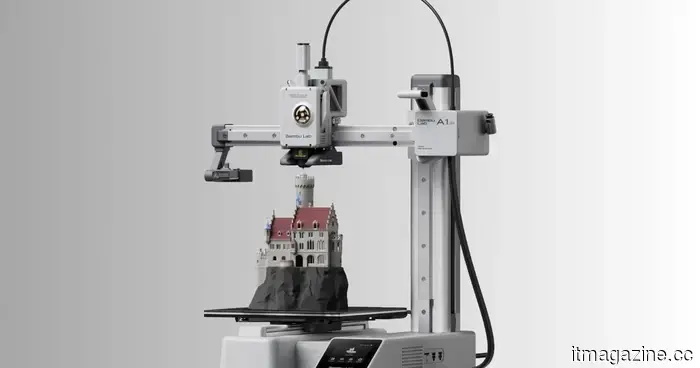 MIT specialists have developed a solution for a recognizable issue in 3D printing.
MIT's VisiPrint tool provides accurate previews of 3D-printed items, aiding in the reduction of print failures, material waste, and the frustrations associated with prototyping.
MIT specialists have developed a solution for a recognizable issue in 3D printing.
MIT's VisiPrint tool provides accurate previews of 3D-printed items, aiding in the reduction of print failures, material waste, and the frustrations associated with prototyping.
 Restaurants are encouraging us to put our phones away, and I have no objections.
Restaurants are encouraging customers to leave their phones behind, aiming to foster more meaningful and undistracted interactions at the table.
Restaurants are encouraging us to put our phones away, and I have no objections.
Restaurants are encouraging customers to leave their phones behind, aiming to foster more meaningful and undistracted interactions at the table.
 Samsung has decided to abandon its own Messages app.
Samsung plans to terminate its Messages app in July 2026, encouraging users to switch to Google Messages and highlighting a significant change in the Android messaging landscape.
Samsung has decided to abandon its own Messages app.
Samsung plans to terminate its Messages app in July 2026, encouraging users to switch to Google Messages and highlighting a significant change in the Android messaging landscape.
 Samsung has decided to discontinue its own Messages application.
Samsung is set to stop its Messages app in July 2026, encouraging users to switch to Google Messages and indicating a significant change in the Android messaging landscape.
Samsung has decided to discontinue its own Messages application.
Samsung is set to stop its Messages app in July 2026, encouraging users to switch to Google Messages and indicating a significant change in the Android messaging landscape.
 Slack's major AI enhancement transforms Slackbot into a desktop assistant | TNW
On March 31, 2026, Salesforce introduced over 30 new AI features for Slackbot, which encompass meeting intelligence, a desktop agent, a native CRM, and integration of the MCP client through Claude.
Slack's major AI enhancement transforms Slackbot into a desktop assistant | TNW
On March 31, 2026, Salesforce introduced over 30 new AI features for Slackbot, which encompass meeting intelligence, a desktop agent, a native CRM, and integration of the MCP client through Claude.
Why are astronauts utilizing outdated technology? A NASA spaceflight expert has the explanations.
NASA clarifies the reasons behind the use of older technology in space missions, emphasizing the importance of reliability, thorough testing, and cost considerations over the adoption of the latest hardware.