
Microsoft is shifting its focus from borrowing AI to creating its own.
Digital Trends may receive a commission if you make a purchase through links on our site. Why put your trust in us?
Frontier AI is the ultimate aim, and Microsoft is making significant efforts to achieve it by 2027.
Microsoft has been advocating for AI to consumers, regardless of their interest. Given the intensity of the company's AI integration into its products, it may come as a surprise that it hasn't utilized its own AI technology until recently. Instead, it leveraged OpenAI’s technology, incorporated it into Copilot and Teams, and considered that sufficient.
However, this is beginning to change. Whether prompted by the public's unfavorable response to its clunky Windows 11 operating system or the increasing market share of Linux in gaming, Microsoft is now committed to creating a more streamlined Windows 11 and developing its own AI models.
According to Bloomberg, Mustafa Suleiman, CEO of Microsoft AI, has made the company's goals clear: “Certainly by 2027, the objective is to really get to state-of-the-art,” focusing on models capable of processing text, images, and audio.
What has held Microsoft back from pursuing this sooner?
A contractual obligation. Microsoft's agreement with OpenAI had previously restricted the company from creating its own versatile AI models. That restriction was lifted in a renegotiated deal last year, granting Microsoft the freedom to pursue independent development.
Microsoft is not starting from scratch, either. In October, the company began utilizing a cluster of Nvidia GB200 chips to create the necessary computing power for frontier-level AI advancements. Regarding the timeline, Suleiman noted, "we’re sort of ramping over the next sort of 12 to 18 months to get to frontier-scale compute.”
What does this imply for you?
The initial indication of this effort is already available. Microsoft has launched a speech transcription model that surpasses competing products in 11 of the 25 most spoken languages. This model is designed to perform well in noisy environments and will soon be integrated into Teams and other Microsoft applications.
The broader vision is for Microsoft to achieve long-term AI self-sufficiency. CEO Satya Nadella reiterated this week the significance of developing state-of-the-art models within the next three to five years.
For average users, increased competition in AI means enhanced and smarter tools are integrated into everyday applications. Conversely, it also suggests that another major corporation is ramping up its acquisition of GPUs and RAM, which could further escalate prices for consumer RAM, GPUs, and SSDs.
Rachit is an experienced tech journalist with over seven years of experience covering the consumer technology sector.
Your chatbot may possess emotions, affecting its behavior.
Recent findings from Anthropic indicate that Claude utilizes internal states like happiness and fear to influence its responses. Your chatbot may not have genuine feelings, but it can behave as if it does in significant ways. Research into Claude's AI emotions reveals that these internal cues are not merely superficial traits; they can indeed shape how the model interacts with you.
Anthropic explains that its Claude model exhibits patterns akin to simplified emotional states—such as happiness, fear, and sadness. While these are not actual experiences, they represent recurring activities within the system triggered by specific inputs.
Your next Android flagship might receive a considerable enhancement with Gemini Nano 4.
Google is hinting at improved speed, reduced battery consumption, and expanded language support for on-device AI capabilities. The imminent Android flagship may see a substantial upgrade with Gemini Nano 4, and Google is already setting the stage for this. In a new developer preview, it’s promoting a quicker, more efficient AI model that will power forthcoming smartphones later this year.
The concept is straightforward: create apps now using the new Gemini 4 model, and the same code will be compatible with supported devices as they become available. This approach gives developers a head start while Google perfects performance for actual hardware.
This new AI strategy enables the extraction of models without directly accessing the system.
A side-channel attack can reconstruct AI models remotely by utilizing leaked signals. AI systems have often been regarded as impenetrable black boxes, particularly in fields like facial recognition and autonomous driving. Recent studies suggest that this assumed protection is not as robust as believed. A team from KAIST has demonstrated that AI systems can be reverse-engineered from a distance by analyzing emissions that leak during regular operation, without any direct intrusion. Instead, the method relies on eavesdropping.




Other articles
 The iPhone 18 Pro may bypass the single color that enthusiasts have been craving.
I sincerely hope this isn't the case.
The iPhone 18 Pro may bypass the single color that enthusiasts have been craving.
I sincerely hope this isn't the case.
 Meta's AI smart glasses have garnered a somewhat unsettling reputation, yet they are also serving a worthwhile purpose.
Meta's Ray-Ban smart glasses are facing an increasing privacy issue, yet blind artist Clarke Reynolds is utilizing them for an extraordinary purpose — completing a full marathon with guidance from strangers globally.
Meta's AI smart glasses have garnered a somewhat unsettling reputation, yet they are also serving a worthwhile purpose.
Meta's Ray-Ban smart glasses are facing an increasing privacy issue, yet blind artist Clarke Reynolds is utilizing them for an extraordinary purpose — completing a full marathon with guidance from strangers globally.
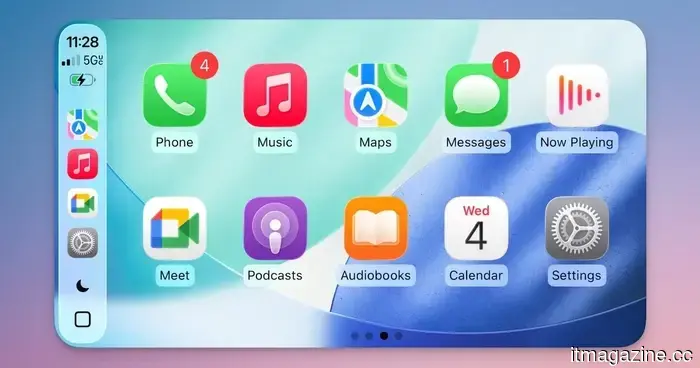 Google Meet launches on Apple CarPlay, leaving Android Auto users in the lurch.
Google Meet is now available on Apple CarPlay, allowing you to join meetings directly from your dashboard without needing to use your phone. Meanwhile, Android Auto is still awaiting its invitation.
Google Meet launches on Apple CarPlay, leaving Android Auto users in the lurch.
Google Meet is now available on Apple CarPlay, allowing you to join meetings directly from your dashboard without needing to use your phone. Meanwhile, Android Auto is still awaiting its invitation.
 Penemue secures €1.7M to enhance AI hate speech detection capabilities.
Penemue has secured €1.7M for its AI platform that identifies online hate speech and digital violence across 89 languages.
Penemue secures €1.7M to enhance AI hate speech detection capabilities.
Penemue has secured €1.7M for its AI platform that identifies online hate speech and digital violence across 89 languages.
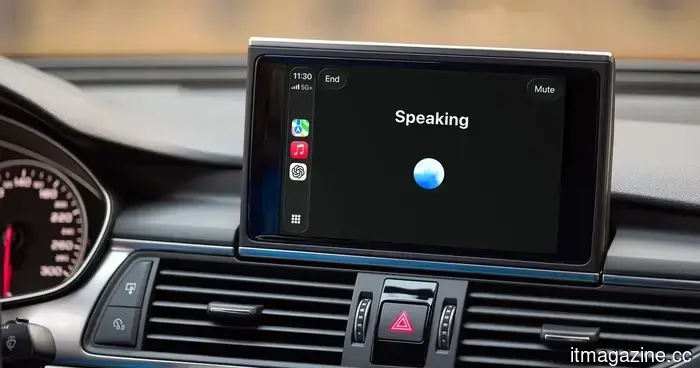 You can now communicate with ChatGPT through your car using CarPlay.
ChatGPT is now accessible on Apple CarPlay through iOS 26.4, providing voice-only AI interactions to ensure safer, hands-free usage while driving.
You can now communicate with ChatGPT through your car using CarPlay.
ChatGPT is now accessible on Apple CarPlay through iOS 26.4, providing voice-only AI interactions to ensure safer, hands-free usage while driving.
 The Artemis II moon crew has just entered the most crucial phase to date.
NASA's Artemis II crew had a fantastic beginning on Wednesday when their Orion spacecraft successfully entered Earth orbit after a stunning launch from the Kennedy Space Center in Florida. Following a day of system checks on the spacecraft, NASA astronauts Reid Wiseman, Victor Glover, and Christina Koch, along with Jeremy Hansen from the Canadian Space Agency (CSA), […]
The Artemis II moon crew has just entered the most crucial phase to date.
NASA's Artemis II crew had a fantastic beginning on Wednesday when their Orion spacecraft successfully entered Earth orbit after a stunning launch from the Kennedy Space Center in Florida. Following a day of system checks on the spacecraft, NASA astronauts Reid Wiseman, Victor Glover, and Christina Koch, along with Jeremy Hansen from the Canadian Space Agency (CSA), […]
Microsoft is shifting its focus from borrowing AI to creating its own.
Microsoft aims to reduce its dependence on OpenAI and develop its own advanced AI models by 2027, a shift that could alter the way you interact with Teams, Copilot, and other services.