

The Artemis II moon crew has just entered the most crucial phase to date.
After spending a day in Earth orbit, the spacecraft has just completed a crucial burn.
The Orion spacecraft is seen as it makes its way toward the moon during the Artemis II mission.
NASA’s Artemis II crew had a fantastic start on Wednesday when their Orion spacecraft achieved Earth orbit after a dramatic launch from the Kennedy Space Center in Florida.
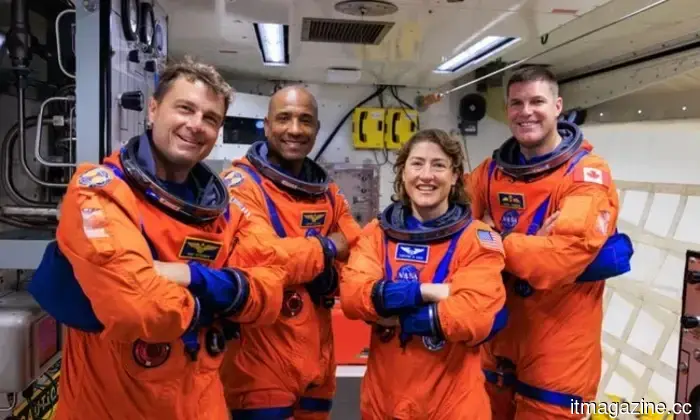
After a day of system checks on the spacecraft, NASA astronauts Reid Wiseman, Victor Glover, and Christina Koch, along with Canadian Space Agency astronaut Jeremy Hansen, executed a vital burn that set them on a path for a close approach to the moon, approximately 250,000 miles away — the first such mission since Apollo 17 in 1972. This mission also marks the first lunar expedition to include a woman, a person of color, and a non-U.S. astronaut among the crew.
The Orion fired up its main engine just before 8 p.m. ET on Thursday for a burn lasting 5 minutes and 50 seconds. NASA called it “a good burn” as the spacecraft moved away from Earth towards the moon.
From the spacecraft, Hansen shared: “The crew’s feeling pretty good up here, on our way to the moon. We just wanted to communicate to everyone around the planet who’s worked to make Artemis possible that we firmly felt the power of your perseverance during every second of that burn. Humanity has once again shown what we are capable of, and it’s your hopes for the future that carry us on this journey to the moon.”
NASA also released a video (below) that highlights the key moments of the mission moving forward. These include a multi-day voyage to the moon, a flyby of our closest celestial neighbor, a return journey, and a splashdown off the California coast. The complete mission is planned to last 10 days and sets the stage for a crewed lunar landing as part of the highly anticipated Artemis IV mission, which could happen as soon as 2028.
After a brief rest aboard the Orion following an extraordinary day, the four crew members were awakened at 2:35 p.m. ET to the sound of John Legend and Andre 3000’s "Green Light" playing through the speakers.
Wiseman, Glover, Koch, and Hansen then began their first full day of activities on the Artemis II mission, which included testing engines, navigation, and life support systems to ensure everything is functioning properly before proceeding with the remaining journey that will take them far from Earth and into the history books.
The Artemis II moon mission is noteworthy, and so is the astronauts’ toilet.
Artemis II is finally sending astronauts back to the moon, marking a significant milestone.
NASA's Artemis II mission is already historic as it represents the agency's first crewed journey around the moon in over half a century. However, beyond the broader lunar ambitions, there is a more practical achievement, as astronauts finally have a toilet that is not a cumbersome issue. Although it may not be the most glamorous aspect of the mission, it is certainly significant. Decades ago, Apollo astronauts relied on a waste system that utilized plastic bags and funnels, which NASA later deemed "objectionable" and "distasteful."
Humans are on their way! NASA launches humans to the moon for the first time in 53 years.
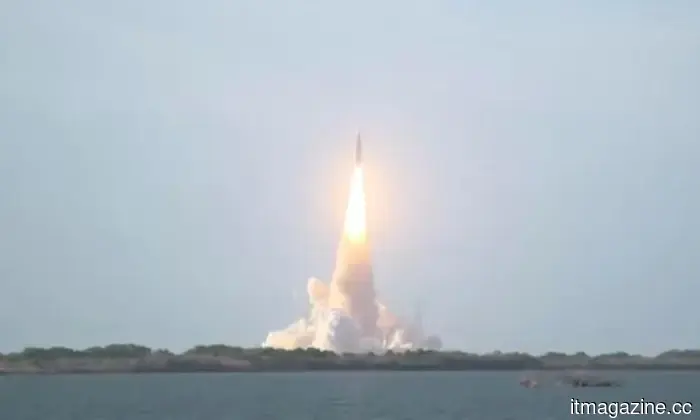
On Wednesday evening, the SLS rocket and four crew members lifted off from the launchpad.
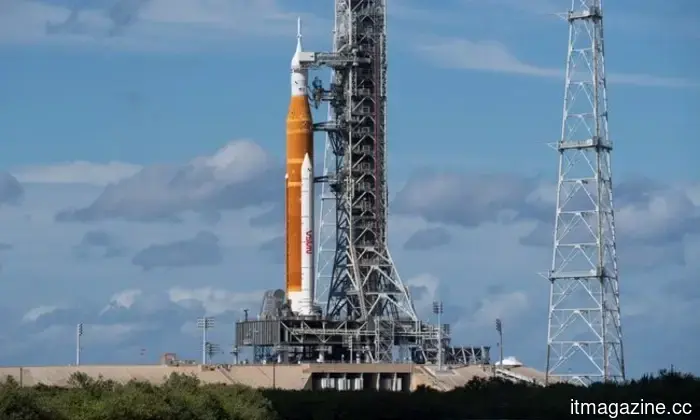
Humans are traveling to the moon for the first time in 53 years, as NASA successfully launched four astronauts aboard its SLS rocket and Orion spacecraft on Wednesday. Generating an impressive 8.8 million pounds of thrust during its ascent, the rocket launched from the Kennedy Space Center in Florida, marking the beginning of the 10-day Artemis II mission that will carry Reid Wiseman, Victor Glover, Christina Koch, and Jeremy Hansen around the moon and back to Earth. Watch the video below to see the rocket take off from the Space Coast at 6:35 p.m. ET.
What will NASA’s Artemis II moon astronauts eat during their journey?
Four astronauts are preparing to spend 10 days traveling to the moon and back in a compact spacecraft. What will their meals consist of during this extraordinary trip?
NASA’s Reid Wiseman, Victor Glover, and Christina Koch, along with Canadian Space Agency’s Jeremy Hansen, are less than 24 hours away from heading to the moon. The Artemis II mission is set to launch from the Kennedy Space Center on Wednesday, April 1. After NASA’s powerful SLS rocket propels the crew into space, they will spend about a day in Earth orbit verifying the systems of the Orion spacecraft before changing course to head for the moon.

Other articles
 OpenAI has purchased the Silicon Valley talk show TBPN.
OpenAI has acquired TBPN, the daily tech talk program favored by Silicon Valley insiders, promising to maintain editorial independence while integrating it within its strategy division.
OpenAI has purchased the Silicon Valley talk show TBPN.
OpenAI has acquired TBPN, the daily tech talk program favored by Silicon Valley insiders, promising to maintain editorial independence while integrating it within its strategy division.
 Google Meet launches on Apple CarPlay, leaving Android Auto users in the lurch.
Google Meet is now available on Apple CarPlay, allowing you to join meetings directly from your dashboard without needing to use your phone. Meanwhile, Android Auto is still awaiting its invitation.
Google Meet launches on Apple CarPlay, leaving Android Auto users in the lurch.
Google Meet is now available on Apple CarPlay, allowing you to join meetings directly from your dashboard without needing to use your phone. Meanwhile, Android Auto is still awaiting its invitation.
 You can now communicate with ChatGPT through your car using CarPlay.
ChatGPT is now accessible on Apple CarPlay through iOS 26.4, providing voice-only AI interactions to ensure safer, hands-free usage while driving.
You can now communicate with ChatGPT through your car using CarPlay.
ChatGPT is now accessible on Apple CarPlay through iOS 26.4, providing voice-only AI interactions to ensure safer, hands-free usage while driving.
 Meta's AI smart glasses have garnered a somewhat unsettling reputation, yet they are also serving a worthwhile purpose.
Meta's Ray-Ban smart glasses are facing an increasing privacy issue, yet blind artist Clarke Reynolds is utilizing them for an extraordinary purpose — completing a full marathon with guidance from strangers globally.
Meta's AI smart glasses have garnered a somewhat unsettling reputation, yet they are also serving a worthwhile purpose.
Meta's Ray-Ban smart glasses are facing an increasing privacy issue, yet blind artist Clarke Reynolds is utilizing them for an extraordinary purpose — completing a full marathon with guidance from strangers globally.
 Microsoft is shifting its focus from borrowing AI to creating its own.
Microsoft aims to reduce its dependence on OpenAI and develop its own advanced AI models by 2027, a shift that could alter the way you interact with Teams, Copilot, and other services.
Microsoft is shifting its focus from borrowing AI to creating its own.
Microsoft aims to reduce its dependence on OpenAI and develop its own advanced AI models by 2027, a shift that could alter the way you interact with Teams, Copilot, and other services.
 Wearable Robotics secures €5 million to enhance its arm exoskeleton.
Wearable Robotics secures €5M in funding, with CDP Venture Capital leading the investment, for its ALEX RS bilateral arm exoskeleton, which is currently utilized in 20 countries.
Wearable Robotics secures €5 million to enhance its arm exoskeleton.
Wearable Robotics secures €5M in funding, with CDP Venture Capital leading the investment, for its ALEX RS bilateral arm exoskeleton, which is currently utilized in 20 countries.
The Artemis II moon crew has just entered the most crucial phase to date.
NASA's Artemis II crew had a fantastic beginning on Wednesday when their Orion spacecraft successfully entered Earth orbit after a stunning launch from the Kennedy Space Center in Florida. Following a day of system checks on the spacecraft, NASA astronauts Reid Wiseman, Victor Glover, and Christina Koch, along with Jeremy Hansen from the Canadian Space Agency (CSA), […]