
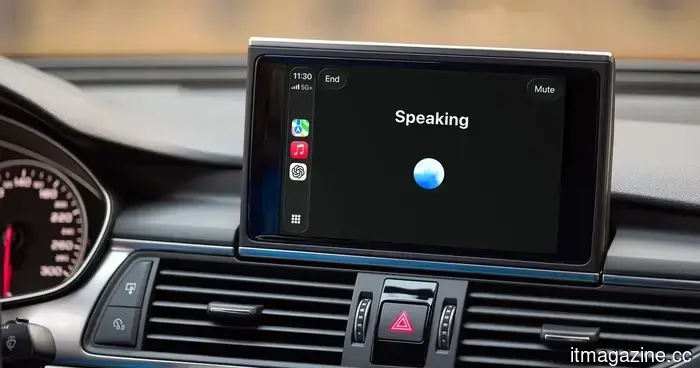
You can now communicate with ChatGPT through your car using CarPlay.
No typing, no distractions. Just voice.
Just when it seemed that AI had seamlessly integrated itself into phones and laptops, it is now making its presence known in car dashboards as well. In a development that feels both natural and somewhat surreal, ChatGPT is officially launching on Apple CarPlay.
The announcement from OpenAI introduces the chatbot's voice mode directly into the driving experience. This means that engaging in casual conversations with AI during traffic jams is now a reality.
How does ChatGPT function in CarPlay?
This integration comes with the latest iOS 26.4 update, which has subtly allowed for third-party voice-based applications in CarPlay. With the updated version of the ChatGPT app, users can access the AI right from their car's infotainment display.
But here's the catch: this isn't the ChatGPT most users are familiar with. There’s no text interface, no scrolling responses, and absolutely no reading lengthy text on your dashboard. The entire experience is voice-centric, intentionally designed to minimize distractions while driving.
Once activated, the interaction feels more akin to a phone call than using an app. The system provides simple indicators like “listening” or “speaking,” while conversations take place entirely through audio. Users can pose questions, receive quick explanations, or even write messages without frequently touching the screen. However, it isn't completely hands-free yet. Unlike Siri, it lacks wake word functionality, requiring users to tap the app to initiate a session. This minor hurdle highlights that this is still the initial stage of a larger concept.
Why this matters more than it appears
At first glance, this development may seem like just another feature update. However, it signifies a notable shift within Apple’s ecosystem. For years, CarPlay has been tightly regulated, with Siri serving as the primary, if not exclusive, voice interface. By permitting third-party AI applications like ChatGPT into CarPlay, Apple is essentially expanding the car into a new significant computing environment.
This first version appears to be a cautious approach. Limited controls, a lack of deep system integration, and a strong emphasis on voice-only engagement clearly indicate that safety is the main focus. Nevertheless, it also feels like a glimpse into something much larger. If this is the starting point, it’s easy to envision a future where your daily commute could become your most productive conversation of the day.
Varun is an experienced technology journalist and editor with over eight years in consumer tech media. His work spans…
Google Vids gets a big AI boost to simplify video generation with some impressive new features
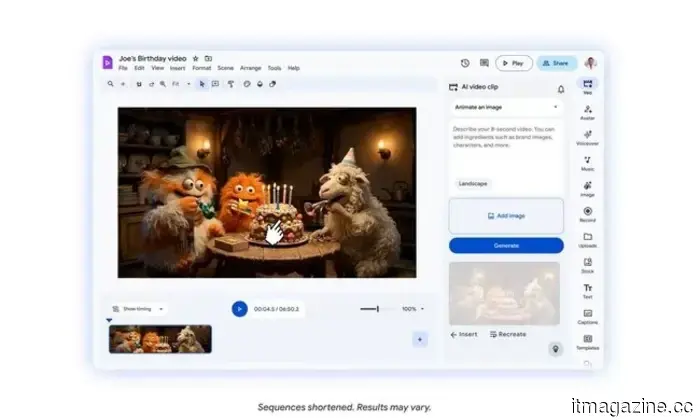
Google Workspace’s AI-driven video tool, Vids, has received a substantial upgrade, and it’s clearly eager to take on more of the workload. With improved editing functions, enhanced automation, and a keener focus on refinement, creating a professional-looking video now seems almost suspiciously effortless.
What's new in Vids?
I’m tired of the chaotic internet, but I finally discovered a cleanup tool that makes it readable
No ads, no clutter, just pure text.
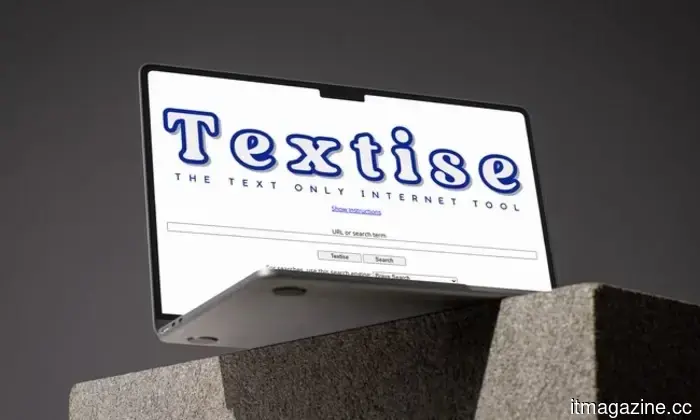
Let’s be honest, today’s web is chaotic. Pop-ups, autoplay videos, cookie notifications, and ads abound. Sometimes, it feels like simply reading something online is the most challenging task. That’s where Textise comes in. Imagine it as a “strip everything away” button for the internet. Textise is a straightforward web tool that transforms any webpage into a clean, text-only view, eliminating ads, images, scripts, and all the unnecessary clutter. What remains is just the content: free of distractions, loading delays, and unnecessary elements. It’s fast, lightweight, and honestly reminiscent of a simpler version of the web.
AI faces a different kind of bias issue, but it’s a recurring one
Women are lagging behind in adoption, which could have long-term consequences.
The bias in AI is often discussed in terms of algorithms: biased datasets, erroneous outputs, and stereotypes embedded in models. However, new research indicates a more subtle issue regarding who actually gets to utilize AI from the outset. A recent report by Lean In highlights that women are less likely than men to engage with AI tools at work, and even when they do, they’re less likely to receive recognition or support for their use. The statistics are revealing. Men are more inclined to use AI regularly (33% compared to 27%), more often have employed it at work, and are significantly more likely to receive encouragement from managers to adopt it. Access isn’t the only concern; perception plays a role as well. Women are more inclined to worry about the risks associated with AI, question its credibility, and even fear being judged for using it, often believing it might be perceived as “cheating.”



Other articles
 Wearable Robotics secures €5 million to enhance its arm exoskeleton.
Wearable Robotics secures €5M in funding, with CDP Venture Capital leading the investment, for its ALEX RS bilateral arm exoskeleton, which is currently utilized in 20 countries.
Wearable Robotics secures €5 million to enhance its arm exoskeleton.
Wearable Robotics secures €5M in funding, with CDP Venture Capital leading the investment, for its ALEX RS bilateral arm exoskeleton, which is currently utilized in 20 countries.
 The Artemis II moon crew has just entered the most crucial phase to date.
NASA's Artemis II crew had a fantastic beginning on Wednesday when their Orion spacecraft successfully entered Earth orbit after a stunning launch from the Kennedy Space Center in Florida. Following a day of system checks on the spacecraft, NASA astronauts Reid Wiseman, Victor Glover, and Christina Koch, along with Jeremy Hansen from the Canadian Space Agency (CSA), […]
The Artemis II moon crew has just entered the most crucial phase to date.
NASA's Artemis II crew had a fantastic beginning on Wednesday when their Orion spacecraft successfully entered Earth orbit after a stunning launch from the Kennedy Space Center in Florida. Following a day of system checks on the spacecraft, NASA astronauts Reid Wiseman, Victor Glover, and Christina Koch, along with Jeremy Hansen from the Canadian Space Agency (CSA), […]
 Microsoft is shifting its focus from borrowing AI to creating its own.
Microsoft aims to reduce its dependence on OpenAI and develop its own advanced AI models by 2027, a shift that could alter the way you interact with Teams, Copilot, and other services.
Microsoft is shifting its focus from borrowing AI to creating its own.
Microsoft aims to reduce its dependence on OpenAI and develop its own advanced AI models by 2027, a shift that could alter the way you interact with Teams, Copilot, and other services.
 Google Meet launches on Apple CarPlay, leaving Android Auto users in the lurch.
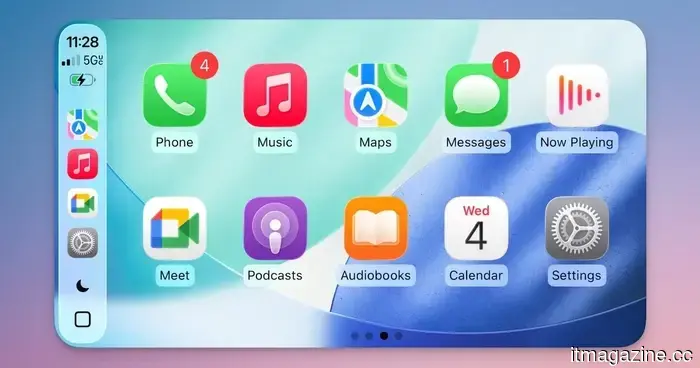
Google Meet is now available on Apple CarPlay, allowing you to join meetings directly from your dashboard without needing to use your phone. Meanwhile, Android Auto is still awaiting its invitation.
Google Meet launches on Apple CarPlay, leaving Android Auto users in the lurch.
Google Meet is now available on Apple CarPlay, allowing you to join meetings directly from your dashboard without needing to use your phone. Meanwhile, Android Auto is still awaiting its invitation.
 Penemue secures €1.7M to enhance AI hate speech detection capabilities.
Penemue has secured €1.7M for its AI platform that identifies online hate speech and digital violence across 89 languages.
Penemue secures €1.7M to enhance AI hate speech detection capabilities.
Penemue has secured €1.7M for its AI platform that identifies online hate speech and digital violence across 89 languages.
 OpenAI has purchased the Silicon Valley talk show TBPN.
OpenAI has acquired TBPN, the daily tech talk program favored by Silicon Valley insiders, promising to maintain editorial independence while integrating it within its strategy division.
OpenAI has purchased the Silicon Valley talk show TBPN.
OpenAI has acquired TBPN, the daily tech talk program favored by Silicon Valley insiders, promising to maintain editorial independence while integrating it within its strategy division.
You can now communicate with ChatGPT through your car using CarPlay.
ChatGPT is now accessible on Apple CarPlay through iOS 26.4, providing voice-only AI interactions to ensure safer, hands-free usage while driving.