
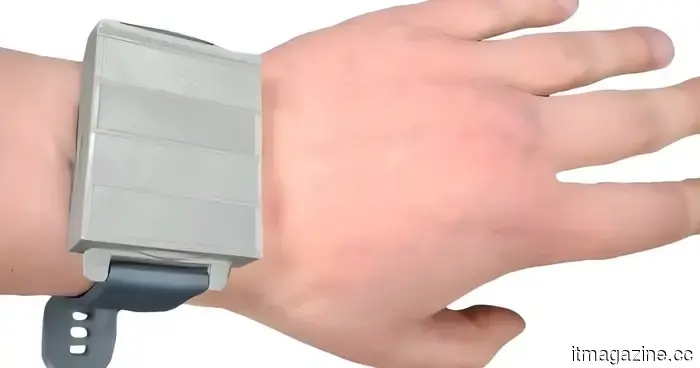
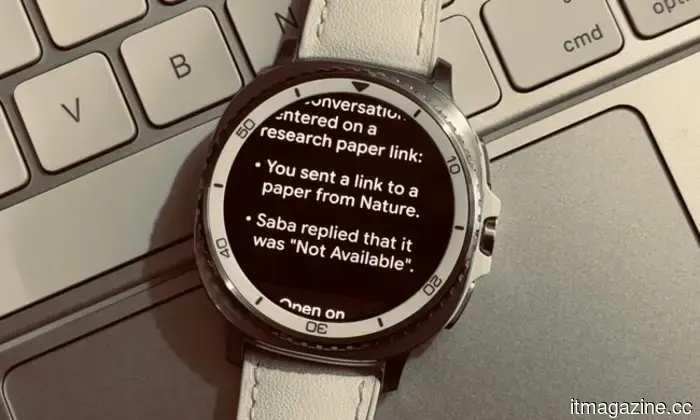
This gadget resembles a smartwatch, but it tracks something much more menacing.
This smartwatch-like device is not designed for counting steps — it’s aimed at detecting microplastics.
Most wearable devices typically offer standard features such as heart rate monitoring, sleep tracking, and perhaps a stress measurement you might not need. However, this one focuses on a much more concerning issue. Researchers at the University of Tartu’s Institute of Computer Science are developing a smartwatch-style device that could assist in identifying micro- and nanoplastic particles within the human body.
Their findings were presented in the Proceedings of the 27th International Workshop on Mobile Computing Systems and Applications.
The idea is noteworthy as it transforms a familiar wellness device into a tool for assessing one of the more alarming consequences of contemporary life.
How does it function?
Detecting plastic particles within the human body poses challenges. It typically requires blood samples, specialized apparatus, and invasive techniques. The researchers aim to avoid these methods. By investigating a light-based sensing technique, they hope to eventually make monitoring more convenient and less uncomfortable.
The researchers employed spectrometry, which examines the interaction of light with materials. Different plastics reflect and absorb light in distinct manners, resulting in optical signatures that sensors can recognize. The team notes that this principle has already been used to identify plastics in environments like soil and water, and they are now working to apply it to wearable health technology.
The prototype is already identifying plastic beneath artificial skin.
The device features a compact spectrometer that emits various colors of light and measures the reflections. This encompasses visible, near-infrared, and ultraviolet wavelengths. The researchers report that this arrangement has successfully detected plastic particles beneath the surface of artificial skin used for testing.
While this concept is promising, a consumer product is not imminent. The team has stated that there remains “a long way to go” before this concept can evolve into functional wearable technology. However, they believe that initial results indicate the possibility for non-invasive monitoring of microplastics in the body.
Micro- and nanoplastics have already been discovered in the bloodstream and many internal organs, though their long-term impacts on human health remain unclear. Studies have associated them with inflammation, oxidative stress, and metabolic disorders, especially affecting the digestive and respiratory systems. This is why this device is considered significant, as it aims to measure the extent of plastic present within us from the environmental exposure around us.


Other articles
 Razer has created a split ergonomic keyboard that, interestingly, features a dedicated AI button.
Razer has finally created a keyboard that cares for your wrists, and has managed to include a dedicated AI button. Here’s what the Pro Type Ergo offers for your workspace.
Razer has created a split ergonomic keyboard that, interestingly, features a dedicated AI button.
Razer has finally created a keyboard that cares for your wrists, and has managed to include a dedicated AI button. Here’s what the Pro Type Ergo offers for your workspace.
 Razer has created a split ergonomic keyboard that features a dedicated AI button, which is quite unusual.
Razer has finally created a keyboard that cares for your wrists and has managed to incorporate a dedicated AI button. Here’s what the Pro Type Ergo offers for your workspace.
Razer has created a split ergonomic keyboard that features a dedicated AI button, which is quite unusual.
Razer has finally created a keyboard that cares for your wrists and has managed to incorporate a dedicated AI button. Here’s what the Pro Type Ergo offers for your workspace.
This gadget resembles a smartwatch, but it tracks something much more menacing.
Scientists at the University of Tartu are creating a wearable device similar to a smartwatch that employs spectrometry to identify plastic particles within the human body without the need for blood samples.