

OpenAI completes a $122 billion funding round, achieving an $852 billion valuation and allowing retail investors to participate.
There is a number that continues to rise, and on Tuesday, it increased once more. OpenAI announced that it has completed its most recent funding round, securing $122 billion in committed capital, which values the ChatGPT creator at $852 billion post-money. This figure has risen from the $110 billion the company shared in February, when Amazon, Nvidia, and SoftBank each invested tens of billions to anchor what was already the largest private funding round in history.
The extra $12 billion came from a wider range of investors, and this portion marks a significant shift. For the first time, OpenAI allowed individual investors to participate through banking channels, raising $3 billion from retail investors. This move resembles less traditional venture funding and more the groundwork for what lies ahead: a widely anticipated initial public offering potentially scheduled for the fourth quarter of 2026.
SoftBank co-led this round with Andreessen Horowitz and D. E. Shaw Ventures. Among the strategic investors, Amazon's pledge was the largest, reaching up to $50 billion, followed by Nvidia and SoftBank with $30 billion each. Microsoft, a long-time partner of OpenAI, also joined the round, though the size of its investment was not disclosed. As of late last year, Microsoft had invested over $13 billion in OpenAI.
The pressure of valuation
The size of this funding round illustrates both OpenAI's ambitious plans and the significant amount of capital focused on AI infrastructure. The company reported generating $2 billion in revenue each month, an increase from the $13.1 billion total recorded for the entire year of 2025. ChatGPT currently supports more than 900 million weekly active users, including over 50 million subscribers. Such figures would be impressive for any organization; for one that introduced its flagship product in late 2022, they are remarkable.
However, OpenAI is still operating at a loss and has yet to achieve profitability, a situation that becomes more pressing as its valuation rises. CEO Sam Altman will face significant pressure to justify the $852 billion valuation, especially as the company has been scaling back on some of its more ambitious spending in recent months. OpenAI shut down Sora, its short-form video generation app, after a steep drop in user engagement and the failure of a licensing agreement with Disney.
The retreat from Sora is telling. It indicates that even within OpenAI, there is a growing awareness that not every area of generative AI will be commercially viable, at least not within the timelines that venture valuations require. The AI boom that fueled record growth in 2025 was largely driven by enterprise adoption and coding tools, rather than consumer fads. OpenAI's CFO Sarah Friar has stated that the company will concentrate on “practical adoption” in 2026, signaling a shift towards prioritizing revenue-generating products over experimental ones as a clear strategy moving forward.
The retail investor issue
Opening the funding round to individual investors is noteworthy for several reasons. It expands OpenAI's shareholder base ahead of its IPO, creating a group of retail supporters who will have a financial stake in the company's public success. OpenAI will also be included in various exchange-traded funds managed by ARK Invest, thus widening ownership access to a category of investors who have generally been excluded from pre-IPO AI companies.
However, while $3 billion from retail investors is symbolically significant, it accounts for less than 2.5 percent of the total round. The real financial power, and leverage, lies with a select group of corporate and institutional investors whose strategic interests reach beyond mere financial returns. For instance, Amazon’s $50 billion investment is as much about securing AI infrastructure for its cloud computing segment as it is about financial gains. Nvidia’s $30 billion investment solidifies its role as a crucial hardware provider in the AI sector. SoftBank, which obtained a $40 billion bridge loan to finance its investment, is banking on AI being the defining investment theme of the decade.
The capital being utilized is, by any historical measure, impressive. However, OpenAI framed it in terms of infrastructure, likening the investment to building foundational technology layers. "The capital being deployed today is helping build the infrastructure layer for intelligence itself," the company stated. This type of language is intended to present the $122 billion as not just a gamble, but as an inevitability.
Whether the market concurs will depend on OpenAI's next steps. The company, which other firms are reorganizing to compete against, must now show that its revenue trajectory can support a valuation that surpasses the GDP of most nations. At $852 billion, OpenAI is no longer a startup evaluated based on its potential; it is increasingly measured by the disparity between its promises and its actual performance.
Other articles
 Multi-Hop Transactions in Cryptocurrency: The Compliance Risks Associated with Indirect Exposure
Multi-hop blockchain transactions complicate the detection of indirect cryptocurrency exposure, leading to significant challenges in compliance, sanctions, and regulations.
Multi-Hop Transactions in Cryptocurrency: The Compliance Risks Associated with Indirect Exposure
Multi-hop blockchain transactions complicate the detection of indirect cryptocurrency exposure, leading to significant challenges in compliance, sanctions, and regulations.
 ALSO secures $200 million in Series C funding at a valuation of $1 billion.
The Rivian spinoff ALSO reaches a $1 billion valuation following a $200 million Series C round led by Greenoaks, along with a commercial partnership with DoorDash.
ALSO secures $200 million in Series C funding at a valuation of $1 billion.
The Rivian spinoff ALSO reaches a $1 billion valuation following a $200 million Series C round led by Greenoaks, along with a commercial partnership with DoorDash.
 South Korea is relying on Russian naphtha as the semiconductor supply chain confronts a crisis in the Middle East.
South Korea is bringing in 27,000 tonnes of Russian naphtha due to the closure of the Strait of Hormuz, which is affecting the essential petrochemical supplies needed for semiconductor production throughout Asia.
South Korea is relying on Russian naphtha as the semiconductor supply chain confronts a crisis in the Middle East.
South Korea is bringing in 27,000 tonnes of Russian naphtha due to the closure of the Strait of Hormuz, which is affecting the essential petrochemical supplies needed for semiconductor production throughout Asia.
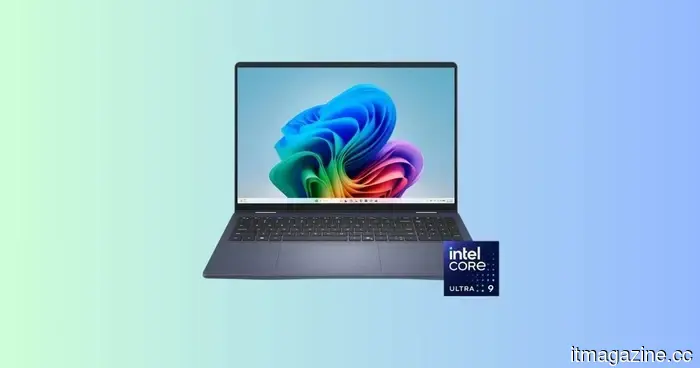 Save $500 on the Dell Plus Copilot+ PC, featuring a Core Ultra 9, 32GB RAM, and a 2.5K Mini-LED touchscreen, priced below $1,100.
The Dell Plus Copilot+ PC is now available for $1,099.99 at Best Buy, providing a savings of $500 from its original price of $1,599.99. This is a significant discount on a 16-inch 2-in-1 device that combines an Intel Core Ultra 9 processor with 32GB of LPDDR5X RAM, a 2.5K Mini-LED touchscreen, and includes Microsoft’s Copilot+ AI functionalities. For a convertible laptop at […]
Save $500 on the Dell Plus Copilot+ PC, featuring a Core Ultra 9, 32GB RAM, and a 2.5K Mini-LED touchscreen, priced below $1,100.
The Dell Plus Copilot+ PC is now available for $1,099.99 at Best Buy, providing a savings of $500 from its original price of $1,599.99. This is a significant discount on a 16-inch 2-in-1 device that combines an Intel Core Ultra 9 processor with 32GB of LPDDR5X RAM, a 2.5K Mini-LED touchscreen, and includes Microsoft’s Copilot+ AI functionalities. For a convertible laptop at […]
 Following face recognition and fingerprint scanning, skull vibrations might become your next method of authentication.
Indeed, that’s precisely what it states.
Following face recognition and fingerprint scanning, skull vibrations might become your next method of authentication.
Indeed, that’s precisely what it states.
 Iran's IRGC has identified 18 American technology companies, including Apple, Microsoft, and Nvidia, as military targets.
Iran's Revolutionary Guards have named 18 American tech firms as "legitimate targets," claiming that their AI and cloud services facilitated the killings of high-ranking Iranian leaders.
Iran's IRGC has identified 18 American technology companies, including Apple, Microsoft, and Nvidia, as military targets.
Iran's Revolutionary Guards have named 18 American tech firms as "legitimate targets," claiming that their AI and cloud services facilitated the killings of high-ranking Iranian leaders.
OpenAI completes a $122 billion funding round, achieving an $852 billion valuation and allowing retail investors to participate.
OpenAI has completed its substantial $122 billion funding round, achieving an $852 billion valuation, which includes $3 billion from retail investors, indicating preparations for a possible IPO.