
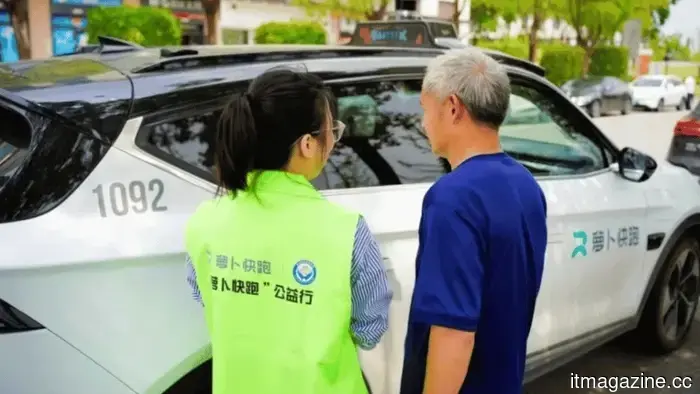
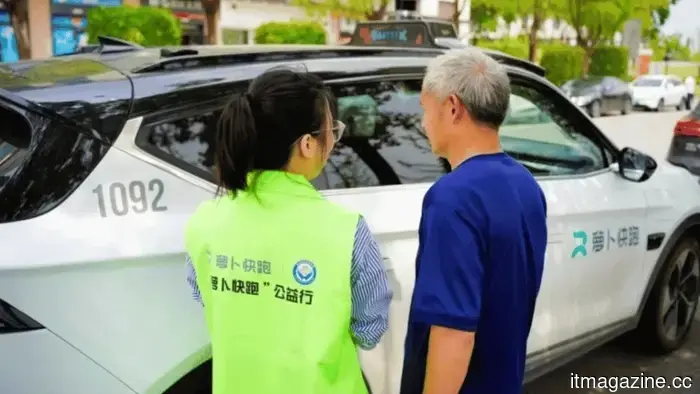
In Wuhan, a mass fleet failure resulted in over 100 Baidu robotaxis becoming immobilized in the middle of traffic.
On Tuesday evening in Wuhan, over 100 of Baidu’s Apollo Go robotaxis abruptly stopped, remaining stationary instead of pulling over or activating emergency protocols. They were scattered across the city’s roads and elevated highways, some stuck in the middle lane of ring roads while traffic flowed around them. Passengers trapped inside called the authorities, and videos shared on Weibo depicted Apollo Go vehicles stranded at intersections with their hazard lights flashing. One video seemed to indicate that the incident led to a highway collision, although Wuhan police reported no injuries, and all passengers managed to exit their vehicles safely.
The Wuhan traffic police stated in a Weibo post that initial investigations indicated a “system malfunction” had caused the vehicles to stop, but the exact cause is still under further examination. Baidu has not yet responded to requests for comments from various news outlets.
Wuhan is a significant market for testing, being the largest deployment of Apollo Go’s fleet in China, with over 1,000 driverless vehicles operating in the city. According to Baidu’s latest earnings report from February, Apollo Go services have been launched in 26 cities worldwide, with total orders surpassing 20 million. In the fourth quarter of 2025 alone, the service provided 3.4 million fully driverless rides, achieving over 300,000 weekly rides during peak periods. This is not a trial initiative; it’s a large-scale commercial operation, making the simultaneous failure of over 100 vehicles in one city a markedly different situation from an isolated incident.
Jack Stilgoe, a professor of science and technology policy at University College London, commented to BBC News that although autonomous technology may generally be safer than human drivers, this occurrence illustrated that it could "still go wrong in entirely new ways." This distinction is significant, as a human driver experiencing a medical emergency presents one risk, while a widespread system failure can create numerous hazards at once. “To make informed choices regarding this technology, we must comprehend entirely new types of risks,” Stilgoe stated.
The situation in Wuhan is part of a concerning trend of failures which have accompanied the rapid growth of the robotaxi industry. In December 2025, a major power outage at a Pacific Gas and Electric substation in San Francisco cut off electricity to about a third of the city, disabling traffic lights in various areas. Waymo’s robotaxis, which treat non-functioning traffic signals as four-way stops, began to seek confirmation checks from the company’s fleet response team. This surge in requests overwhelmed the system, resulting in numerous vehicles stopping and creating significant traffic congestion. Waymo suspended its service and subsequently released a software update to enable its vehicles to navigate around disabled traffic controls more effectively.
Three months prior, in August 2025, an Apollo Go robotaxi carrying a passenger in Chongqing drove into a construction pit after ignoring barriers and warning signs, prompting local residents to rescue the unharmed passenger with a ladder. This incident highlighted a known limitation in autonomous driving systems: their challenges in recognizing large, irregular road hazards that fall outside of their trained datasets.
The timing of the outage in Wuhan is particularly problematic for Baidu. In December 2025, both Uber and Lyft announced collaborations with the Chinese tech company to introduce Apollo Go vehicles on UK roads, with initial trials focusing on London. Uber was set to launch a pilot program in the first half of 2026 using Apollo Go RT6 vehicles—specially designed electric cars with detachable steering wheels. Lyft planned to start testing with a fleet of 50 vehicles as part of its operational rollout following its $197 million acquisition of the FreeNow mobility platform. However, both companies still need regulatory approval before the trials can commence, and the footage of halted robotaxis in Wuhan is unlikely to expedite these discussions.
Apollo Go has also expanded into the Middle East, launching fully autonomous ride-hailing services in Abu Dhabi through AutoGo and securing the first fully driverless testing permit in Dubai. Recently, it began offering rides via the Uber app in Dubai. These regions have intentionally established a favorable regulatory climate, positioning Gulf cities as global centers for autonomous mobility. However, a significant fleet failure in a premier Chinese deployment raises questions that mere hospitality cannot resolve.
The fundamental issue here is systemic. When autonomous vehicles function as isolated units, a software glitch or sensor failure leads to a singular incident. In contrast, when they operate as centrally managed fleets, interconnected to shared backend systems and dependent on common infrastructure, they create a type of risk unique to this context: correlated failure. This means that all vehicles can fail simultaneously, in the same manner, for the same reason. The outcome is not just an automobile accident but a traffic system failure.
Regulators are paying attention. Tesla has been under investigation by US safety authorities due to erratic behavior from its robotaxis, and the ongoing industry debate about the viability of the robotaxi model is intensifying. Waymo employs safety drivers who can monitor remotely, whereas Baidu’s Wuhan fleet operates fully
Other articles
 I inquired with Asus regarding their router that resembles an alien spacecraft. Its ROG lineage extends beyond just gaming.
The ROG Rapture GT-BE19000AI Wi-Fi router is an eye-catching device. However, in addition to its steep price and gaming features, it offers a range of benefits that will satisfy even the most discerning users, along with some unexpected advantages.
I inquired with Asus regarding their router that resembles an alien spacecraft. Its ROG lineage extends beyond just gaming.
The ROG Rapture GT-BE19000AI Wi-Fi router is an eye-catching device. However, in addition to its steep price and gaming features, it offers a range of benefits that will satisfy even the most discerning users, along with some unexpected advantages.
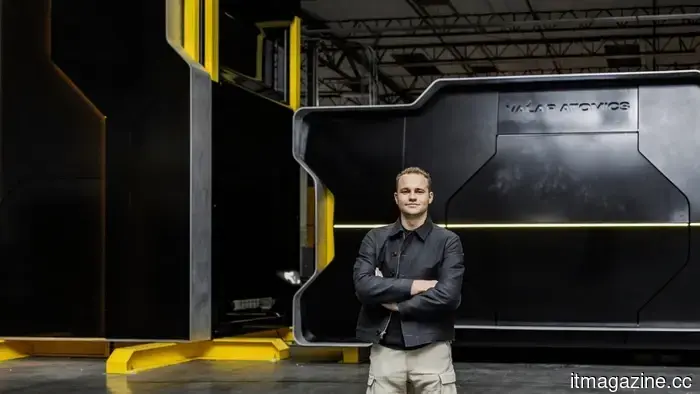 Valar Atomics secures $450 million at a $2 billion valuation to fuel AI through small nuclear reactors.
Valar Atomics, supported by Palmer Luckey, has secured $450 million at a valuation of $2 billion to develop groups of small reactors for AI data centers, just five months after reaching nuclear criticality.
Valar Atomics secures $450 million at a $2 billion valuation to fuel AI through small nuclear reactors.
Valar Atomics, supported by Palmer Luckey, has secured $450 million at a valuation of $2 billion to develop groups of small reactors for AI data centers, just five months after reaching nuclear criticality.
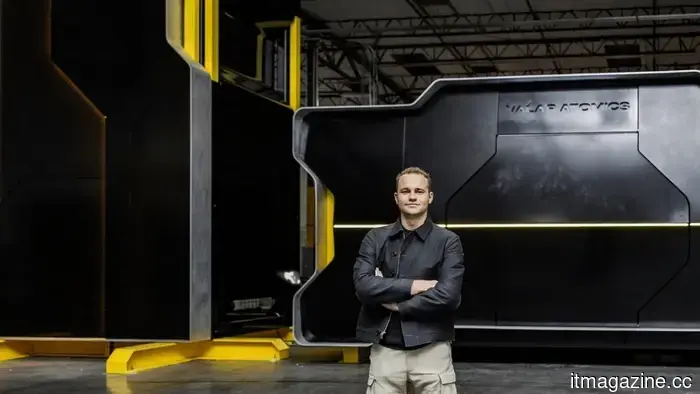 Valar Atomics secures $450 million at a valuation of $2 billion to supply AI with small nuclear reactors.
Valar Atomics, supported by Palmer Luckey, secured $450 million at a valuation of $2 billion to develop clusters of small reactors for AI data centers, just five months after reaching nuclear criticality.
Valar Atomics secures $450 million at a valuation of $2 billion to supply AI with small nuclear reactors.
Valar Atomics, supported by Palmer Luckey, secured $450 million at a valuation of $2 billion to develop clusters of small reactors for AI data centers, just five months after reaching nuclear criticality.
 Klarna clinches a $1.7 billion agreement to facilitate $40 billion in lending as its stock plummets 76% since its IPO.
Klarna revealed its largest risk transfer agreement with Värde Partners, enabling $40 billion in lending capital to be released. Six months following its debut on the NYSE at $40, the shares are now trading around $12.
Klarna clinches a $1.7 billion agreement to facilitate $40 billion in lending as its stock plummets 76% since its IPO.
Klarna revealed its largest risk transfer agreement with Värde Partners, enabling $40 billion in lending capital to be released. Six months following its debut on the NYSE at $40, the shares are now trading around $12.
 Apple provides security updates for older iPhones that are vulnerable to hacking threats.
Apple has ultimately concluded that older iPhones warrant some attention as well.
Apple provides security updates for older iPhones that are vulnerable to hacking threats.
Apple has ultimately concluded that older iPhones warrant some attention as well.
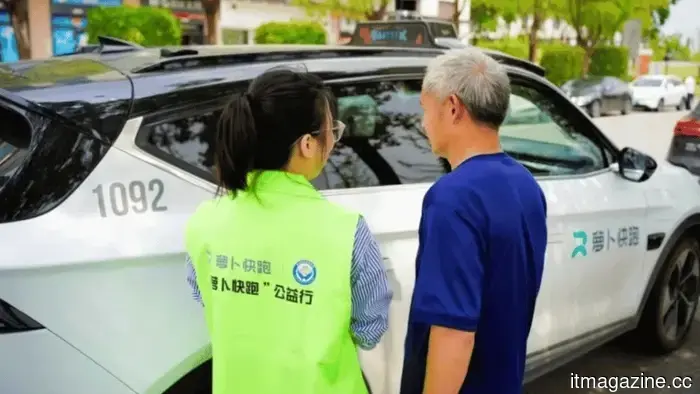 In Wuhan, more than 100 Baidu robotaxis became immobilized simultaneously in a significant fleet malfunction.
A system failure led to over 100 Baidu Apollo Go robotaxis halting in the middle of traffic in Wuhan, leaving passengers stranded and bringing forth new concerns regarding correlated fleet risk.
In Wuhan, more than 100 Baidu robotaxis became immobilized simultaneously in a significant fleet malfunction.
A system failure led to over 100 Baidu Apollo Go robotaxis halting in the middle of traffic in Wuhan, leaving passengers stranded and bringing forth new concerns regarding correlated fleet risk.
In Wuhan, a mass fleet failure resulted in over 100 Baidu robotaxis becoming immobilized in the middle of traffic.
A system error led to over 100 Baidu Apollo Go robotaxis halting in the middle of traffic in Wuhan, leaving passengers stranded and prompting new concerns regarding correlated fleet risk.