
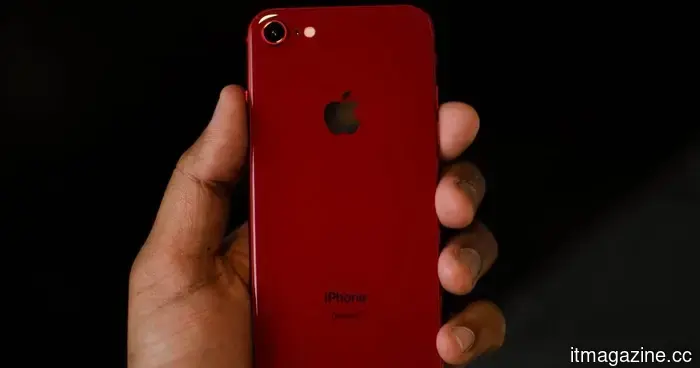
Apple provides security updates for older iPhones that are vulnerable to hacking threats.
Julian Chokkattu/Digital Trends / Apple
For a long time, updating your iPhone meant adapting to a new software interface and features, whether you were in favor of it or not. There was no way to remain on an older version while still receiving security patches. You had to either proceed to the latest version or accept the associated risks. However, Apple is now making a move it rarely makes. It is offering security updates for older iOS versions, even for iPhones capable of running the latest software. While it might seem minor, this is quite significant for Apple.
This change wasn’t made without reason. It was prompted by a serious hacking method known as DarkSword. This exploit can compromise certain iPhones running iOS 18 simply by directing users to a malicious website. A single misclick could leave your device vulnerable before you even notice something is wrong. Users with the most recent iOS were already shielded, but millions still on iOS 18 were left vulnerable. This situation escalated into a risk Apple couldn’t overlook.
A rare yet necessary decision
Apple is now providing a compromise. It has issued a security patch for iOS 18 itself, a process referred to as “backporting.” This involves addressing security vulnerabilities in older software without compelling users to upgrade. Typically, Apple reserves this for much older devices that cannot run the latest iOS. Extending this to newer devices simply because users opted not to upgrade marks new ground for the company. While this is a positive development, there’s a lingering feeling that it should have occurred sooner, as users were exposed to risks while the threat was still spreading.
Digital Trends
DarkSword is not merely a specialized exploit employed by a few elite hackers. Recently, another hacking toolkit named Coruna compelled Apple to issue patches for even older iOS versions. The emergence of two significant threats in such a short timeframe is no coincidence.
Apple is evolving, albeit slowly
Apple still encourages users to upgrade to the latest iOS. That stance hasn’t changed and likely never will. However, this new move indicates that the company is beginning to acknowledge the reality of the situation. Not everyone updates promptly. In an environment where threats are increasingly prevalent and aggressive, it is no longer feasible to leave unprotected users behind.
Digital Trends Graphic
There’s also a reassuring aspect to this transition. It appears that Apple is paying attention, even if it required some external pressure to prompt change. If this trend continues, it may enhance the overall security of iPhones for all users.
Shimul is a contributor at Digital Trends, with over five years of experience in the tech field.
Android 17 is significantly enhancing location privacy
For years, location permissions on Android have been rather chaotic. You launch an app, and it requests your location, immediately forcing you to make a decision: while using the app? Always? Precise? Approximate? Most people just select an option and move on, only partially aware that they might be sharing more information than necessary. Android 17 changes this. It now focuses the decision on the precise moment it's actually needed. This is a game-changer.
The new location button simplifies things
Read more
Google Pixel phones might soon restrict downgrading to older Android versions
Your next Pixel could prevent you from reverting to an earlier Android version.
Google may soon complicate the process for Pixel users wanting to downgrade to previous Android versions. A new report indicates that an upcoming change may extend the anti-rollback protection feature, which is a security mechanism designed to prevent devices from being flashed with outdated software. The primary objective is to safeguard devices from older software versions that may contain known vulnerabilities.
That's the beneficial side of the story. The less enjoyable aspect is that it might also limit a bit of flexibility for Pixel users, particularly for those who enjoy flashing earlier builds for testing, troubleshooting, or simply moving away from a problematic release.
Read more
Google Photos aims to prevent accidental changes to your photos
A new editing interface minimizes mistakes and keeps your images safe.
Google Photos is altering how you edit images on Android to focus on minimizing unintended alterations. If you’ve ever clicked on a photo and accidentally activated a tool, this update is designed to stop that from happening in the future.
The app is eliminating gesture-based shortcuts that previously activated editing features with a tap or scribble. Those actions now require a deliberate selection within the editor, changing the focus from speed to intention. It's a subtle redesign, but it significantly impacts how every edit begins.
Read more





Other articles
 In Wuhan, more than 100 Baidu robotaxis became immobilized simultaneously in a significant fleet malfunction.
A system failure led to over 100 Baidu Apollo Go robotaxis halting in the middle of traffic in Wuhan, leaving passengers stranded and bringing forth new concerns regarding correlated fleet risk.
In Wuhan, more than 100 Baidu robotaxis became immobilized simultaneously in a significant fleet malfunction.
A system failure led to over 100 Baidu Apollo Go robotaxis halting in the middle of traffic in Wuhan, leaving passengers stranded and bringing forth new concerns regarding correlated fleet risk.
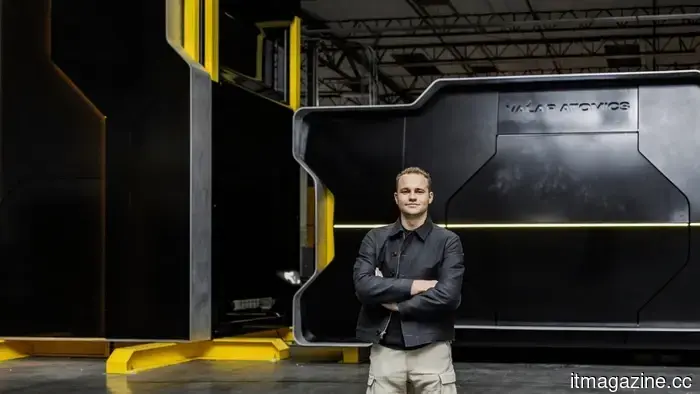 Valar Atomics secures $450 million at a $2 billion valuation to fuel AI through small nuclear reactors.
Valar Atomics, supported by Palmer Luckey, has secured $450 million at a valuation of $2 billion to develop groups of small reactors for AI data centers, just five months after reaching nuclear criticality.
Valar Atomics secures $450 million at a $2 billion valuation to fuel AI through small nuclear reactors.
Valar Atomics, supported by Palmer Luckey, has secured $450 million at a valuation of $2 billion to develop groups of small reactors for AI data centers, just five months after reaching nuclear criticality.
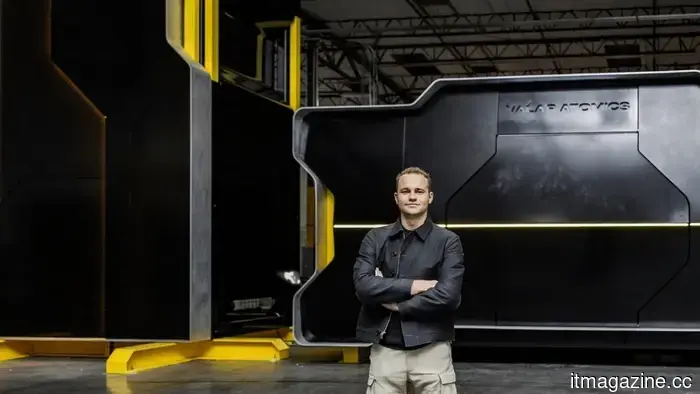 Valar Atomics secures $450 million at a valuation of $2 billion to supply AI with small nuclear reactors.
Valar Atomics, supported by Palmer Luckey, secured $450 million at a valuation of $2 billion to develop clusters of small reactors for AI data centers, just five months after reaching nuclear criticality.
Valar Atomics secures $450 million at a valuation of $2 billion to supply AI with small nuclear reactors.
Valar Atomics, supported by Palmer Luckey, secured $450 million at a valuation of $2 billion to develop clusters of small reactors for AI data centers, just five months after reaching nuclear criticality.
 In Wuhan, a mass fleet failure resulted in over 100 Baidu robotaxis becoming immobilized in the middle of traffic.
A system error led to over 100 Baidu Apollo Go robotaxis halting in the middle of traffic in Wuhan, leaving passengers stranded and prompting new concerns regarding correlated fleet risk.
In Wuhan, a mass fleet failure resulted in over 100 Baidu robotaxis becoming immobilized in the middle of traffic.
A system error led to over 100 Baidu Apollo Go robotaxis halting in the middle of traffic in Wuhan, leaving passengers stranded and prompting new concerns regarding correlated fleet risk.
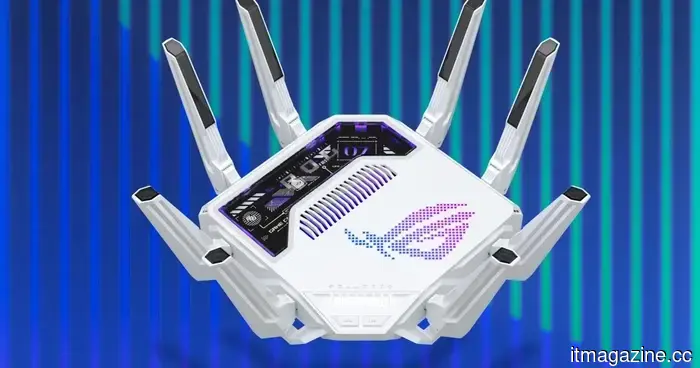 I inquired with Asus regarding their router that resembles an alien spacecraft. Its ROG lineage extends beyond just gaming.
The ROG Rapture GT-BE19000AI Wi-Fi router is an eye-catching device. However, in addition to its steep price and gaming features, it offers a range of benefits that will satisfy even the most discerning users, along with some unexpected advantages.
I inquired with Asus regarding their router that resembles an alien spacecraft. Its ROG lineage extends beyond just gaming.
The ROG Rapture GT-BE19000AI Wi-Fi router is an eye-catching device. However, in addition to its steep price and gaming features, it offers a range of benefits that will satisfy even the most discerning users, along with some unexpected advantages.
 Klarna clinches a $1.7 billion agreement to facilitate $40 billion in lending as its stock plummets 76% since its IPO.
Klarna revealed its largest risk transfer agreement with Värde Partners, enabling $40 billion in lending capital to be released. Six months following its debut on the NYSE at $40, the shares are now trading around $12.
Klarna clinches a $1.7 billion agreement to facilitate $40 billion in lending as its stock plummets 76% since its IPO.
Klarna revealed its largest risk transfer agreement with Värde Partners, enabling $40 billion in lending capital to be released. Six months following its debut on the NYSE at $40, the shares are now trading around $12.
Apple provides security updates for older iPhones that are vulnerable to hacking threats.
Apple has ultimately concluded that older iPhones warrant some attention as well.