

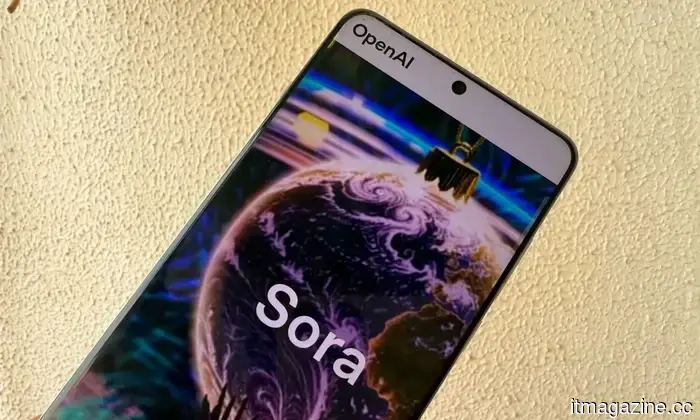
OpenAI shut down the Sora AI video generator, and you might be misjudging the reasons behind it.
OpenAI's AI video creation tool, Sora, has officially been shut down less than a year after going viral. While it may seem that safety issues or backlash from creatives led to its closure, the reality is much more straightforward.
So, what was the real reason for Sora's discontinuation?
According to The Wall Street Journal, the primary factor in Sora’s premature end was not controversy but financial viability. The cost to operate the tool was astronomical, with OpenAI reportedly spending about $1 million per day due to its extensive computational requirements. Creating realistic videos demands significantly more resources than generating text or images, and scaling it for millions of users proved economically unfeasible for the company.
OpenAI announced, “We’re saying goodbye to the Sora app. To everyone who created with Sora, shared it, and built a community around it: thank you. What you made with Sora mattered, and we know this news is disappointing. We’ll share more soon, including timelines for the app and API and details on…”— Sora (@soraofficialapp) March 24, 2026.
Moreover, user interest reportedly waned in the months after Sora's release, with both downloads and engagement dramatically declining. This transformation turned OpenAI's once-popular tool into an expensive venture with diminishing returns. In essence, it wasn’t just the high costs; momentum was also slipping away.
Even though earlier indications suggested OpenAI intended to incorporate Sora’s video features into ChatGPT, that plan seems to have been scrapped.
The implications of Sora’s shutdown highlight a larger trend in the industry.
The closure of Sora is not merely about a single product's failure; it reflects a shift in focus for AI companies. Similar to Anthropic, OpenAI is pivoting away from flashy consumer features towards productivity tools that promise clearer revenue streams and lasting effects.
This represents a crucial yet subtle change. In recent years, AI companies have rushed to display the capabilities of their models, but the emphasis is now shifting toward what consumers are actually willing to pay for. This distinction is beginning to separate experimental features from viable products.
OpenAI's current strategy embodies this transition. The company is focusing on tools like Codex, which can automate software tasks and write code, as well as Deep Research, capable of generating detailed reports quickly. Additionally, OpenAI is extending integrations with workplace tools, evolving ChatGPT into more of a productivity assistant rather than just a chatbot for casual inquiries.
This doesn’t imply that AI video generation will disappear entirely. However, Sora’s discontinuation underscores a significant truth: impressive demonstrations are insufficient. A product that cannot scale sustainably or yield considerable revenue is unlikely to survive.
Despite its undeniable appeal, Sora simply did not align with that future.




Other articles
 Your Android device is receiving a feature similar to AirDrop that allows for easy sharing with a tap.
Google and Samsung are developing a tap-to-share functionality for Android that enables file transfers by placing two phones next to each other. Signs of this feature can be found in One UI 9, Play Services, and Android 17.
Your Android device is receiving a feature similar to AirDrop that allows for easy sharing with a tap.
Google and Samsung are developing a tap-to-share functionality for Android that enables file transfers by placing two phones next to each other. Signs of this feature can be found in One UI 9, Play Services, and Android 17.
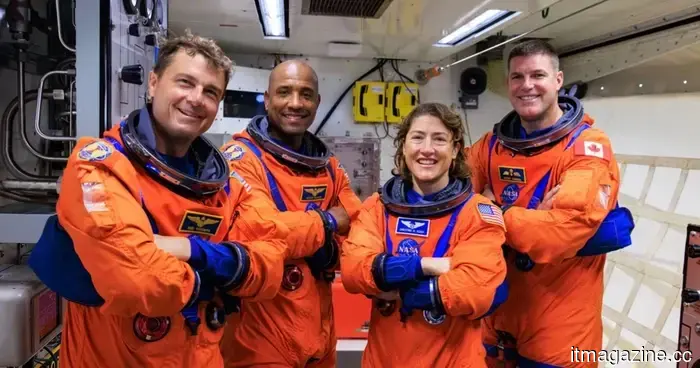 What makes this week’s moon mission particularly significant for Jeremy Hansen?
NASA is in the final stages of preparation for the highly anticipated Artemis II mission, which will send astronauts to the moon for the first time in over fifty years. The space agency plans to launch at 6:24 p.m. ET on Wednesday, April 1, from the Kennedy Space Center in Florida. Suggested Videos The four […]
What makes this week’s moon mission particularly significant for Jeremy Hansen?
NASA is in the final stages of preparation for the highly anticipated Artemis II mission, which will send astronauts to the moon for the first time in over fifty years. The space agency plans to launch at 6:24 p.m. ET on Wednesday, April 1, from the Kennedy Space Center in Florida. Suggested Videos The four […]
 Your Android device will soon feature a tap-to-share function similar to AirDrop.
Google and Samsung are developing a tap-to-share feature for Android that enables users to transfer files by placing two phones in close proximity. Indications of this feature can be found in One UI 9, Play Services, and Android 17.
Your Android device will soon feature a tap-to-share function similar to AirDrop.
Google and Samsung are developing a tap-to-share feature for Android that enables users to transfer files by placing two phones in close proximity. Indications of this feature can be found in One UI 9, Play Services, and Android 17.
 Starcloud has secured $170 million at a valuation of $1.1 billion to develop data centers in space.
 This funding will support the startup's upcoming two satellites.
Starcloud has secured $170 million at a valuation of $1.1 billion to develop data centers in space.
Starcloud has secured $170 million at a valuation of $1.1 billion to develop data centers in space. This funding will support the startup's upcoming two satellites.
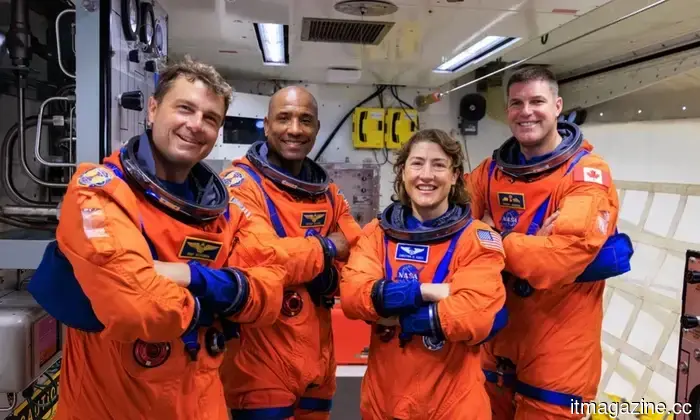 What makes this week's moon mission particularly significant for Jeremy Hansen?
NASA is in the final stages of preparation for the highly awaited Artemis II mission, which will send astronauts to the moon for the first time in over fifty years. The space agency aims for a launch at 6:24 p.m. ET on Wednesday, April 1, from the Kennedy Space Center in Florida. Recommended Videos The four […]
What makes this week's moon mission particularly significant for Jeremy Hansen?
NASA is in the final stages of preparation for the highly awaited Artemis II mission, which will send astronauts to the moon for the first time in over fifty years. The space agency aims for a launch at 6:24 p.m. ET on Wednesday, April 1, from the Kennedy Space Center in Florida. Recommended Videos The four […]
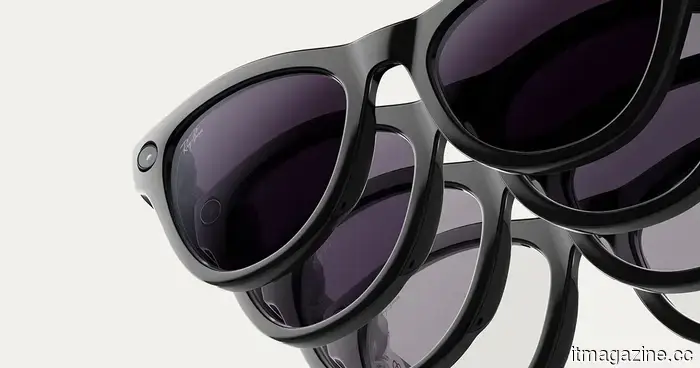 Smart glasses were already unsettling, and now they're being used to assist people in cheating.
Smart glasses powered by AI are generating new worries as reports emerge of users using them to cheat on exams, in addition to existing privacy concerns.
Smart glasses were already unsettling, and now they're being used to assist people in cheating.
Smart glasses powered by AI are generating new worries as reports emerge of users using them to cheat on exams, in addition to existing privacy concerns.
OpenAI shut down the Sora AI video generator, and you might be misjudging the reasons behind it.
OpenAI has closed Sora less than a year after its launch, and the true reason may not be what you anticipate.