
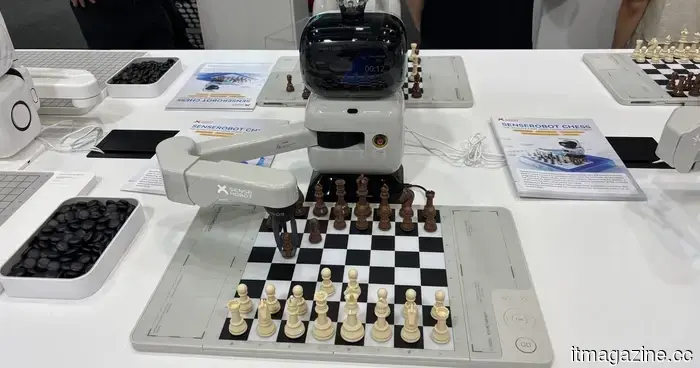
AI is capable of defeating chess grandmasters, however, it struggles to adjust to contemporary video games.
Modern video games reveal the limitations of AI capabilities.
Artificial intelligence is pervasive in our lives.
Despite the attention surrounding AI's achievements in chess, Go, and even coding, a significant weakness remains evident beneath these successes. AI struggles significantly when faced with a new video game that it has never encountered before.
A recent paper from NYU emphasizes that these headline-making milestones have created a distorted view of how close machines are to achieving true general intelligence.
The distinction is important.
While feats in chess and Go are remarkable, these games operate with fixed rules and structured settings, unlike the intricate modern video games. NYU points out that AI has not yet achieved human-like intelligence as it struggles with adaptability.
Where AI falls short
Researchers note that many of AI’s notable achievements in gaming stem from systems fine-tuned to a single game. Within those specific parameters, AI can perform at a superhuman level. However, even minor alterations to the rules or environment can lead to a significant decline in its performance.
This is where video games serve as a genuine litmus test for AI intelligence. Games typically demand a diverse array of skills, including spatial reasoning, long-term planning, trial-and-error learning, and social intuition. According to the report, this diversity makes gaming a much better indicator of flexible intelligence than isolated benchmark tests.
Reinforcement learning and LLMs encounter limitations
The research paper indicates that while reinforcement learning can yield impressive results, it typically requires millions or billions of simulated runs to achieve acceptable outcomes. As a result, the system excels only in the exact scenarios it was trained for. However, this expertise falters when any modifications are introduced. Even simple changes, like altered colors or repositioned objects on a screen, can disrupt its performance.
Large Language Models (LLMs) do not resolve this issue either. NYU notes that they perform surprisingly poorly in unfamiliar games. When they do manage to perform well, it's usually due to custom game-specific frameworks designed to interpret game states, manage memory, and execute actions. Remove that additional support, and their performance declines sharply.
The true benchmark
The researchers posit that a genuinely effective game-playing AI would need to learn a new game from the ground up in approximately the same amount of time as a skilled player—perhaps tens of hours—without relying on extensive simulation or prior knowledge. All of this is beyond the capabilities of current AI systems.
This has broader implications beyond gaming. If AI struggles to adapt to a brand-new video game, it is even less equipped to handle the unpredictability of the real world. While chess may still generate headlines, modern video games highlight the significant distance AI still has to cover.



Other articles
 Chinese technology firms are shifting their focus to Hong Kong as restrictions from the US and EU become more stringent.
Mainland Chinese listings on the Hong Kong Stock Exchange increased by 153% in 2025. As Western markets contract, Hong Kong is emerging as China's technology launchpad.
Chinese technology firms are shifting their focus to Hong Kong as restrictions from the US and EU become more stringent.
Mainland Chinese listings on the Hong Kong Stock Exchange increased by 153% in 2025. As Western markets contract, Hong Kong is emerging as China's technology launchpad.
 Vivo X300 Ultra is designed to take the place of your camera, rather than just serve as your smartphone.
Vivo has introduced the X300 Ultra, featuring a professional-grade camera system aimed at competing with standalone cameras.
Vivo X300 Ultra is designed to take the place of your camera, rather than just serve as your smartphone.
Vivo has introduced the X300 Ultra, featuring a professional-grade camera system aimed at competing with standalone cameras.
 Battery technology that can hold more than nine times the energy is now available, making it ideal for your devices.
Researchers have created a novel silicon-carbon battery design that has the capability to store up to nine times more energy while maintaining stability over time.
Battery technology that can hold more than nine times the energy is now available, making it ideal for your devices.
Researchers have created a novel silicon-carbon battery design that has the capability to store up to nine times more energy while maintaining stability over time.
 The Pixel 11 has appeared in early leak reports, showcasing a familiar cyclops design for Google's upcoming device.
Same situation, different year?
The Pixel 11 has appeared in early leak reports, showcasing a familiar cyclops design for Google's upcoming device.
Same situation, different year?
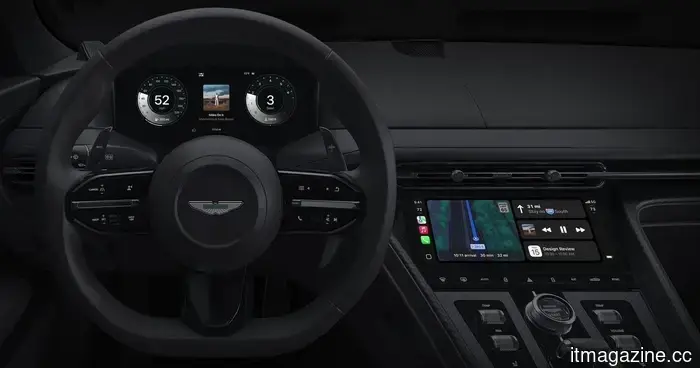 WhatsApp support for CarPlay is just around the corner.
As a dedicated CarPlay user for many years, this update seems like it's been a long time coming. WhatsApp is finally developing a proper app for CarPlay, which is well overdue. So far, I've only been able to see notifications appear on the dashboard, without any meaningful interaction beyond that. The downside is that it’s still in the testing phase.
WhatsApp support for CarPlay is just around the corner.
As a dedicated CarPlay user for many years, this update seems like it's been a long time coming. WhatsApp is finally developing a proper app for CarPlay, which is well overdue. So far, I've only been able to see notifications appear on the dashboard, without any meaningful interaction beyond that. The downside is that it’s still in the testing phase.
 ScaleOps secures $130 million at a valuation exceeding $800 million.
ScaleOps has secured $130 million at a valuation exceeding $800 million, with Insight Partners leading the round, to autonomously manage Kubernetes and AI infrastructure.
ScaleOps secures $130 million at a valuation exceeding $800 million.
ScaleOps has secured $130 million at a valuation exceeding $800 million, with Insight Partners leading the round, to autonomously manage Kubernetes and AI infrastructure.
AI is capable of defeating chess grandmasters, however, it struggles to adjust to contemporary video games.
Researchers at NYU indicate that the major limitation of AI remains its adaptability, as contemporary systems have difficulty managing new video games they have not previously encountered.