

Battery technology that can hold more than nine times the energy is now available, making it ideal for your devices.
A new silicon-carbon battery design could potentially provide longer-lasting devices without sacrificing reliability.
Battery life has consistently been a major limitation in modern devices, including smartphones and wearables. Now, researchers have created a new lithium-ion battery design that could significantly improve this issue while maintaining durability.
What makes this new battery technology noteworthy?
Researchers at the University of Surrey have introduced a new type of lithium-ion battery anode capable of storing much more energy than conventional designs. It uses advanced silicon-carbon battery technology, with a crucial enhancement in the way silicon is utilized.
While current silicon-carbon batteries offer much greater energy density compared to standard lithium-ion batteries, they also have a significant drawback. The silicon in the electrodes can hold more energy but tends to expand and crack over time, resulting in quick degradation.
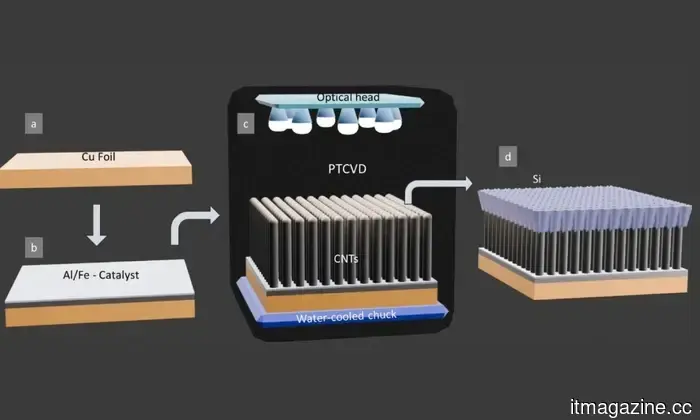
To address this issue, the team created a novel structure called “Vertically Integrated Silicon-Carbon Nanotube.” This structure incorporates a flexible scaffold made from carbon nanotubes coated in silicon, which allows for expansion and contraction without damage.
As a result, this battery can hold over 3,500 mAh per gram, in contrast to about 370 mAh for traditional graphite-based batteries. This accounts for the claim of “up to nine times more energy.”
Beyond enhancing capacity, the new design maintains stability over repeated charging cycles, which has been a significant challenge for high-capacity batteries for a long time.
Why is this new design important?
Silicon-carbon batteries are not entirely new and already represent a significant advancement over traditional lithium-ion technology. However, major companies like Apple and Samsung have hesitated to adopt this technology due to reliability issues.
The repeated expansion and contraction of current silicon-carbon batteries can lead to long-term damage, negatively impacting battery life, performance, and safety. For companies that produce millions of devices, such inconsistency is unacceptable.
This new design addresses that concern by enhancing battery stability. If it performs as anticipated outside laboratory conditions, it could eliminate a major barrier preventing Apple and Samsung from using silicon-carbon batteries. Ultimately, this could result in smartphones and wearables with much longer lifespans while ensuring reliability.
Pranob is an experienced tech journalist with more than eight years of experience reporting on consumer technology. His work has been…
Smart glasses were already controversial due to privacy issues, but they now face another emerging problem: cheating. The situation is surprisingly straightforward.
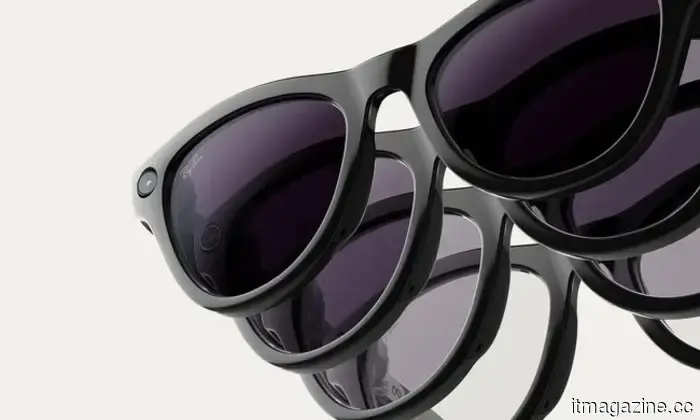
A recent report from Rest of World reveals that AI-powered smart glasses are being utilized to scan exam questions and display the answers directly on the lens, effectively transforming them into real-time cheating devices. Some students are even renting these glasses for as low as $6 a day, using them not only for navigation or translation but specifically to gain an unfair advantage during tests.
AI is indeed becoming remarkably proficient, yet research indicates that AI creativity is merely an illusion.
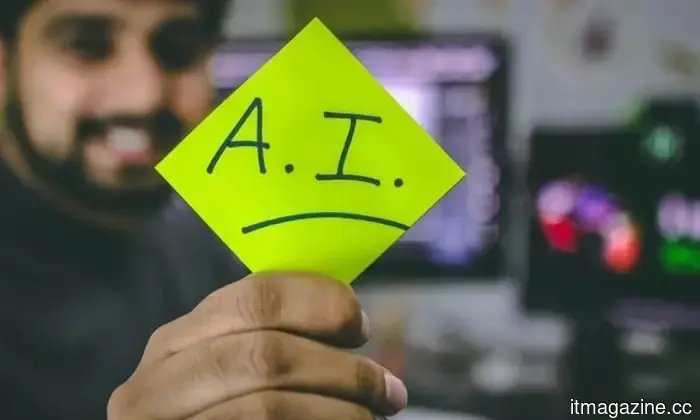
AI seems increasingly capable of writing, designing, and brainstorming. However, when it comes to genuine creativity, humans still hold the advantage. A recent study published in Advanced Science by researchers from the University of Barcelona’s Institute of Neuroscience, alongside collaborators from IDIBELL, CVC-UAB, and the Vienna Cognitive Science Hub, argues that AI's so-called “creativity” is not authentic. Rather, it merely appears so at first glance.
The research indicates that although generative AI can create outputs that look creative, it primarily recombines existing patterns rather than producing genuinely original ideas. It suggests that AI struggles with the deeper cognitive processes associated with creativity, even if the final product appears compelling. In essence, AI can simulate creativity but lacks true understanding of it.
There’s something intriguing about delegating your curiosity to an AI that doesn’t get tired or anxious. After all, if an AI agent can contact thousands of pubs to create a Guinness price index, why limit its potential? Why not have one track the cost of your daily coffee or late-night ramen?
I’m convinced—I want one of those!


Other articles
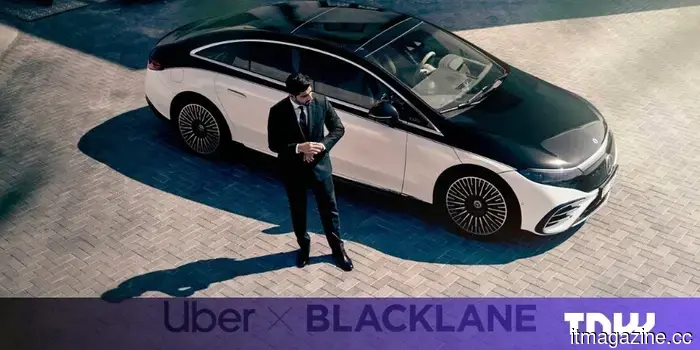 Uber is buying Blacklane.
Uber is acquiring Blacklane, the luxury chauffeur service based in Berlin and supported by Sixt and Mercedes-Benz, in a transaction that enhances the global presence of Uber Elite.
Uber is buying Blacklane.
Uber is acquiring Blacklane, the luxury chauffeur service based in Berlin and supported by Sixt and Mercedes-Benz, in a transaction that enhances the global presence of Uber Elite.
 Chinese technology firms are shifting their focus to Hong Kong as restrictions from the US and EU become more stringent.
Mainland Chinese listings on the Hong Kong Stock Exchange increased by 153% in 2025. As Western markets contract, Hong Kong is emerging as China's technology launchpad.
Chinese technology firms are shifting their focus to Hong Kong as restrictions from the US and EU become more stringent.
Mainland Chinese listings on the Hong Kong Stock Exchange increased by 153% in 2025. As Western markets contract, Hong Kong is emerging as China's technology launchpad.
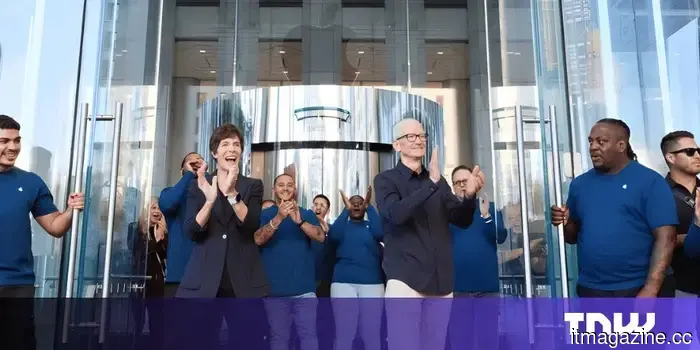 The UK's enforcement agency has imposed a fine of £390,000 on Apple's Irish subsidiary for violating sanctions against Russia.
Apple Distribution International made a payment of £635,000 to the sanctioned Russian streamer Okko through App Store revenue. The fine imposed by OFSI establishes a precedent for app marketplaces.
The UK's enforcement agency has imposed a fine of £390,000 on Apple's Irish subsidiary for violating sanctions against Russia.
Apple Distribution International made a payment of £635,000 to the sanctioned Russian streamer Okko through App Store revenue. The fine imposed by OFSI establishes a precedent for app marketplaces.
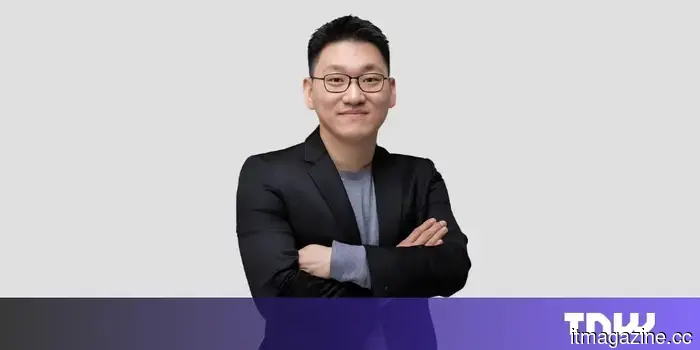 Rebellions has wrapped up a $400 million pre-IPO funding round, achieving a valuation of $2.34 billion.
Rebellions secures $400M in pre-IPO funding at a valuation of $2.34B, supported by South Korea's government growth fund, and unveils two new AI infrastructure products.
Rebellions has wrapped up a $400 million pre-IPO funding round, achieving a valuation of $2.34 billion.
Rebellions secures $400M in pre-IPO funding at a valuation of $2.34B, supported by South Korea's government growth fund, and unveils two new AI infrastructure products.
 The Pixel 11 has appeared in early leak reports, showcasing a familiar cyclops design for Google's upcoming device.
Same situation, different year?
The Pixel 11 has appeared in early leak reports, showcasing a familiar cyclops design for Google's upcoming device.
Same situation, different year?
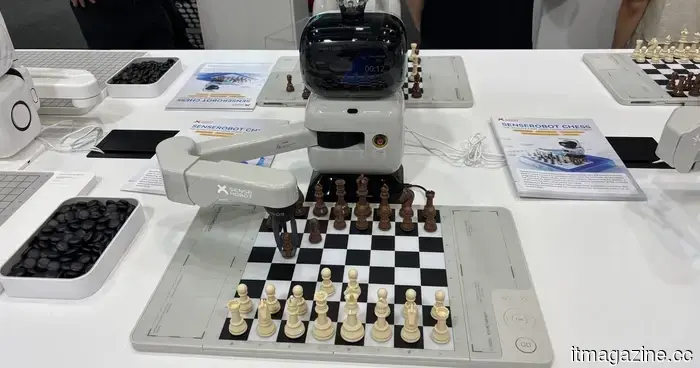 AI is capable of defeating chess grandmasters, however, it struggles to adjust to contemporary video games.
Researchers at NYU indicate that the major limitation of AI remains its adaptability, as contemporary systems have difficulty managing new video games they have not previously encountered.
AI is capable of defeating chess grandmasters, however, it struggles to adjust to contemporary video games.
Researchers at NYU indicate that the major limitation of AI remains its adaptability, as contemporary systems have difficulty managing new video games they have not previously encountered.
Battery technology that can hold more than nine times the energy is now available, making it ideal for your devices.
Researchers have created a novel silicon-carbon battery design that has the capability to store up to nine times more energy while maintaining stability over time.