
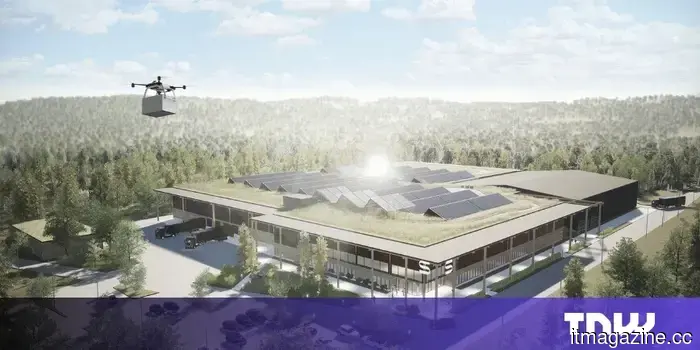
PaperShell obtains a €40.3M EU grant to establish its initial full-scale factory.
The Swedish deeptech firm has entered into a Grant Agreement with the European Commission under the EU Innovation Fund, securing €40.3 million of a total €83 million project aimed at increasing the capacity of its Tibro plant to 23,000 tonnes per year by 2030. The material produced is NATO-approved and is being distributed to clients in sectors including construction, defence, electronics, and transport.
PaperShell creates a composite that appears improbable on paper, which is fitting since it is fundamentally composed of it. The Swedish company presses layers of kraft paper that have been treated with a bio-binder sourced from agricultural waste into load-bearing elements that are touted to be stronger than plastics, lighter than aluminium, and more adaptable than glass fibre composites.
Their pilot facility in Tibro, Sweden, has been operational since 2023 and has dispatched over 150,000 components. The material is NATO-certified and is currently utilized in construction, electronics, defence, and transport sectors.
On Friday, the company revealed it has finalized a Grant Agreement with the European Commission under the EU Innovation Fund, obtaining up to €40.3 million in grant funding. This grant forms part of an €83 million project to enhance PaperShell’s existing Tibro operations into a full-scale flagship factory, marking the first complete implementation of a production system the company plans to duplicate across Europe.
Construction is slated to commence in 2027, with full operational capabilities aimed for 2030. At that time, the facility is expected to achieve an annual production capacity of 23,000 tonnes and, within its first decade, to eliminate about 2.6 million tonnes of CO₂ emissions.
The EU Innovation Fund, funded through proceeds from the EU Emissions Trading System, ranks among the largest climate-innovation initiatives globally. PaperShell was chosen from 359 contenders in the Medium-Scale category of the Net Zero Technologies call managed by CINEA.
The company received its initial notification in November 2025 that it was invited to draft a Grant Agreement, a process that necessitated showing co-financing for the remaining €43 million needed for the overall €83 million project cost.
The material’s unique composition provides various commercially appealing features within the current European industrial landscape. The company reports that substituting aluminium, glass fibre composites, or plastics with PaperShell’s material can lower CO₂ equivalent emissions by as much as 98%, and there is potential for carbon-negative outcomes in closed-loop systems.
The Tibro factory will accommodate several automated production lines spanning a 15,600 square metre area, with one line specifically reserved for copper-clad laminates and printed circuit boards—a crucial materials category considering Europe’s dependence on Asian PCB supply chains.
Current applications of PaperShell materials span construction façade panels, transport parts, defence components, and consumer electronics.
Anders Breitholtz, the founder of PaperShell and a seasoned technology scout with over twenty years of experience in materials and manufacturing, has previously characterized the grant as a pivotal moment for the company and for the broader initiative of industrial decarbonisation in Europe.
The pilot plant has been functioning since 2023, and a fully subscribed funding round was completed in December 2025 to help meet the co-financing requirement. The new flagship factory in Tibro is specifically crafted to serve as a blueprint: the production system is modular and meant to be replicated at other locations across Europe once its viability at scale has been established.
Other articles
 SoftBank obtains a $40 billion bridge loan to support its investment in OpenAI.
SoftBank has obtained a $40 billion loan, its largest in dollars to date, to finance a $30 billion follow-on investment in OpenAI, raising its total investment to approximately $64.6 billion.
SoftBank obtains a $40 billion bridge loan to support its investment in OpenAI.
SoftBank has obtained a $40 billion loan, its largest in dollars to date, to finance a $30 billion follow-on investment in OpenAI, raising its total investment to approximately $64.6 billion.
 Meta awards executives stock options worth up to $921 million while laying off 700 employees | TNW
Meta granted stock options to six executives linked to a valuation goal of $9 trillion, just hours before laying off 700 employees in Reality Labs, recruitment, and sales.
Meta awards executives stock options worth up to $921 million while laying off 700 employees | TNW
Meta granted stock options to six executives linked to a valuation goal of $9 trillion, just hours before laying off 700 employees in Reality Labs, recruitment, and sales.
 Ysios Capital introduces a €100 million fund aimed at developing biotech companies.
Ysios Capital has initiated a €100M fund aimed at creating biotech companies from academic research, with the goal of establishing at least three new companies by 2026.
Ysios Capital introduces a €100 million fund aimed at developing biotech companies.
Ysios Capital has initiated a €100M fund aimed at creating biotech companies from academic research, with the goal of establishing at least three new companies by 2026.
 Meta’s Ray-Ban smart glasses could soon introduce new models known as Scriber and Blazer.
Meta's upcoming Ray-Ban AI glasses have appeared in FCC filings, indicating the emergence of two new models and potential enhancements in hardware.
Meta’s Ray-Ban smart glasses could soon introduce new models known as Scriber and Blazer.
Meta's upcoming Ray-Ban AI glasses have appeared in FCC filings, indicating the emergence of two new models and potential enhancements in hardware.
 OpenAI has made an investment in Isara, a startup valued at $650 million that is developing swarms of AI agents.
Isara has secured $94 million at a valuation of $650 million to develop software that manages thousands of AI agents. OpenAI is one of the investors in this nine-month-old startup.
OpenAI has made an investment in Isara, a startup valued at $650 million that is developing swarms of AI agents.
Isara has secured $94 million at a valuation of $650 million to develop software that manages thousands of AI agents. OpenAI is one of the investors in this nine-month-old startup.
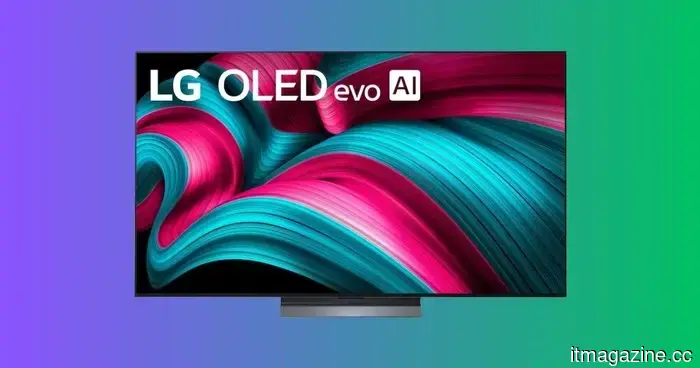 The LG C5 OLED evo is now priced at $1,399 after a $1,300 discount, and no other option at this price offers comparable picture quality.
The LG C5 swiftly became the leading recommendation for OLEDs in 2025, and it is currently priced at $1,399.99 at Best Buy, which is a $1,300 reduction from its original price of $2,699.99. This nearly half-off deal for a 65-inch OLED evo screen featuring LG’s latest AI picture processing is the sort of discount that makes […]
The LG C5 OLED evo is now priced at $1,399 after a $1,300 discount, and no other option at this price offers comparable picture quality.
The LG C5 swiftly became the leading recommendation for OLEDs in 2025, and it is currently priced at $1,399.99 at Best Buy, which is a $1,300 reduction from its original price of $2,699.99. This nearly half-off deal for a 65-inch OLED evo screen featuring LG’s latest AI picture processing is the sort of discount that makes […]
PaperShell obtains a €40.3M EU grant to establish its initial full-scale factory.
PaperShell has obtained €40.3M in EU funding to construct the inaugural full-scale plant for its fossil-free composite material that substitutes aluminium and plastic.