

OpenAI has made an investment in Isara, a startup valued at $650 million that is developing swarms of AI agents.
Isara, a startup based in San Francisco, is creating software designed to coordinate numerous AI agents to tackle complex analytical tasks. It has secured $94 million in funding, achieving a valuation of $650 million, with OpenAI as one of the investors. Founded just nine months ago by two 23-year-olds, the company currently has no product on the market.
The funding round was initially reported by The Wall Street Journal. Other investors include Amity Ventures, Michael Ovitz (former chairman of Creative Artists Agency and an early supporter of Uber), and billionaire hedge fund manager Stanley Druckenmiller. OpenAI's involvement is particularly noteworthy as one of Isara's co-founders, Eddie Zhang, previously worked as an AI safety researcher at OpenAI. Zhang left to establish Isara in June 2025, partnering with Henry Gasztowtt, a computer science student at the University of Oxford. Together, they co-authored a paper presented at ICML 2024, examining how AI systems could collaborate to enhance policymaking, which serves as a theoretical basis for their company.
Since its inception, Isara has hired about a dozen additional researchers from companies like Google, Meta, and even OpenAI.
What Isara is developing focuses on large-scale multi-agent coordination. Unlike most current AI applications that utilize a single model responding to a single prompt, Isara's system enables hundreds or thousands of specialized agents to communicate, allocate tasks, align their objectives, and produce a collective outcome. The founders characterize this as a transition from standalone tools to coordinated groups.
So far, the company has showcased a demonstration involving around 2,000 agents cooperating to predict gold prices. The primary commercial target is investment firms willing to invest in predictive modeling software, while biotechnology and geopolitical analysis represent secondary markets. The long-term goal, as described to the Journal, includes training agent swarms to monitor geopolitical shifts and forecast economic trends.
The technical obstacles are significant. Ensuring a single AI agent can reliably complete a complex task is challenging, and coordinating thousands of agents without triggering errors, conflicting goals, or compounding inaccuracies is a problem that academic literature has barely started to address on a large scale. Tools like LangChain, CrewAI, and AutoGen exist, but they generally coordinate only a small number of agents on more structured tasks. Isara's ambition to manage thousands on open-ended analytical challenges is a much greater undertaking.
The "neolab" phenomenon
Isara fits into a trend termed “neolabs” by The Information: AI startups focused on research founded by alumni of organizations like OpenAI, DeepMind, Anthropic, and Google Brain, functioning more like privately funded research institutions than conventional companies. In just over a month, investors have either invested in or discussed $2.5 billion for five of these startups. Overall, The Information estimates that over $10 billion has been directed toward the neolab category, indicating a belief that significant future AI advancements will originate from fundamentally different architectures compared to the large language models currently prevalent in the market.
The trend is consistent: small teams of highly qualified researchers with prestigious credentials raise funding rounds that value the company at hundreds of millions, often before generating any revenue. Investors believe that foundational research capabilities, rather than specific products, are the rare and valuable assets worth investing in. In a context where companies like Cognition, the firm behind the AI coding agent Devin, reached a valuation of $10.2 billion in September 2025 with $73 million in annual recurring revenue, it's argued that a breakthrough in multi-agent coordination could yield immense returns.
However, the inherent uncertainty of foundational research poses a risk. Many of the architectures explored by neolabs—including diffusion models for reasoning, world models, and multi-agent swarms—remain unproven outside controlled experiments. The disparity between a demonstration that successfully coordinates 2,000 agents to predict gold prices and a fully operational system that investment firms can depend on for real capital allocation decisions is significant enough to potentially undermine a $94 million funding round.
The OpenAI aspect
OpenAI’s investment prompts a familiar question in the AI landscape: why is a leading lab supporting a startup founded by one of its former employees focusing on challenges related to its own research agenda? The simplest explanation is strategic flexibility. If multi-agent coordination emerges as a vital capability, OpenAI aims to remain informed about developments outside its own organization. Investing $94 million at a $650 million valuation can be seen as a cost-effective form of insurance considering OpenAI’s larger scope. The company is raising funds at a $300 billion valuation and is dedicated to advancing artificial general intelligence. Supporting research in agent swarms aligns with that objective.
Additionally, there’s a talent-related aspect. The AI industry’s greatest asset isn’t computational power but rather the researchers skilled in utilizing it. By backing Isara, OpenAI maintains connections with Zhang and his team rather than letting them slip into the competitive landscape. This dynamic also drives investments from companies like Google
Other articles
 OpenAI invests in Isara, a startup valued at $650 million that is developing AI agent swarms.
Isara secured $94 million at a $650 million valuation to develop software that manages thousands of AI agents. OpenAI is one of the investors in the nine-month-old company.
OpenAI invests in Isara, a startup valued at $650 million that is developing AI agent swarms.
Isara secured $94 million at a $650 million valuation to develop software that manages thousands of AI agents. OpenAI is one of the investors in the nine-month-old company.
 SoftBank obtains a $40 billion bridge loan to support its investment in OpenAI.
SoftBank has obtained a $40 billion loan, its largest in dollars to date, to finance a $30 billion follow-on investment in OpenAI, raising its total investment to approximately $64.6 billion.
SoftBank obtains a $40 billion bridge loan to support its investment in OpenAI.
SoftBank has obtained a $40 billion loan, its largest in dollars to date, to finance a $30 billion follow-on investment in OpenAI, raising its total investment to approximately $64.6 billion.
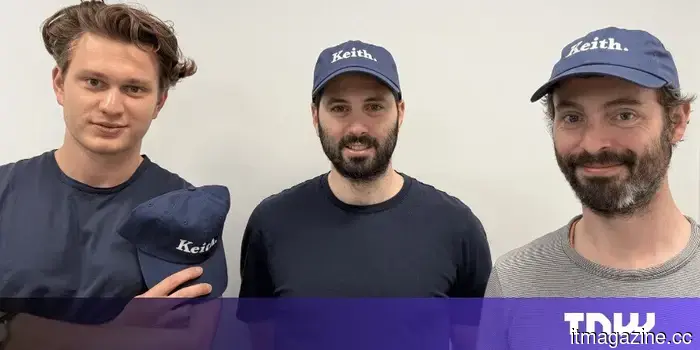 Keith secures £2 million to establish the UK's most automated legal practice.
Keith, established by the founders of the plant-based food brand THIS, has secured £2M in seed funding to create an AI-focused law firm specializing in conveyancing.
Keith secures £2 million to establish the UK's most automated legal practice.
Keith, established by the founders of the plant-based food brand THIS, has secured £2M in seed funding to create an AI-focused law firm specializing in conveyancing.
 ActiveCampaign free trial: 14 days of AI-driven automation | TNW
ActiveCampaign offers a 14-day free trial that provides complete access to AI-driven email automation, CRM, and cross-channel campaigns. No credit card needed.
ActiveCampaign free trial: 14 days of AI-driven automation | TNW
ActiveCampaign offers a 14-day free trial that provides complete access to AI-driven email automation, CRM, and cross-channel campaigns. No credit card needed.
 PaperShell obtains a €40.3M EU grant to establish its initial full-scale factory.
PaperShell has obtained €40.3M in EU funding to construct the inaugural full-scale plant for its fossil-free composite material that substitutes aluminium and plastic.
PaperShell obtains a €40.3M EU grant to establish its initial full-scale factory.
PaperShell has obtained €40.3M in EU funding to construct the inaugural full-scale plant for its fossil-free composite material that substitutes aluminium and plastic.
 Meta awards executives stock options worth up to $921 million while laying off 700 employees | TNW
Meta granted stock options to six executives linked to a valuation goal of $9 trillion, just hours before laying off 700 employees in Reality Labs, recruitment, and sales.
Meta awards executives stock options worth up to $921 million while laying off 700 employees | TNW
Meta granted stock options to six executives linked to a valuation goal of $9 trillion, just hours before laying off 700 employees in Reality Labs, recruitment, and sales.
OpenAI has made an investment in Isara, a startup valued at $650 million that is developing swarms of AI agents.
Isara has secured $94 million at a valuation of $650 million to develop software that manages thousands of AI agents. OpenAI is one of the investors in this nine-month-old startup.