
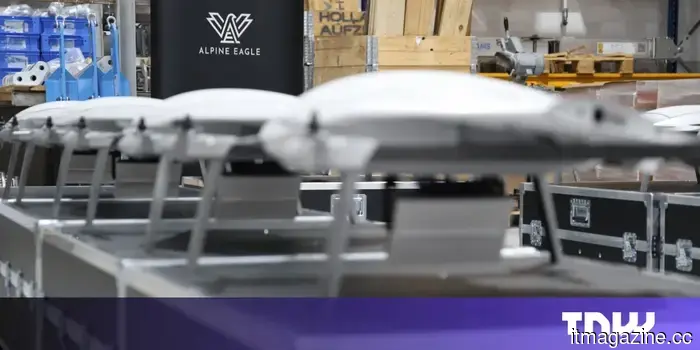
Alpine Eagle is increasing its production of counter-drone systems.
The Munich-based startup’s airborne Sentinel system has been trialed in Ukraine and alongside US and UK forces, and is now planning to establish a 2,000-square-metre production facility while increasing its workforce fourfold.
The cost disparity inherent in contemporary drone warfare is well-recognized. In April 2024, Iran launched approximately 300 drones and missiles at Israel, with defenders intercepting the majority at a cost exceeding $1.5 billion, while the attacking drones were far cheaper to manufacture.
This same scenario unfolds daily in Ukraine, where inexpensive first-person-view drones overwhelm defenses not designed to cope with high volumes. The strategic consequence is clear: those who can deploy counter-drone systems at a low enough cost to neutralize inexpensive drones gain a significant advantage.
Alpine Eagle is addressing this issue. On Thursday, the Munich-based defense technology startup revealed plans to scale production of its Sentinel counter-UAS system as European governments intensify their search for drone defense solutions.
The company aims to establish a 2,000-square-metre production facility near Munich for its self-developed interceptors and has partnered with Dutch UAV manufacturer DeltaQuad to expand the overall Sentinel platform using industrial production capabilities within a European supply chain.
Founded in 2023 by Jan-Hendrik Boelens, a Dutch aerospace engineer with a decade of experience at Airbus Helicopters and previous roles as CTO at electric air taxi startup Volocopter and autonomous UAV company Quantum Systems, Alpine Eagle was co-founded alongside Timo Breuer, a scientist with a background at Microsoft Research and Fraunhofer Gesellschaft.
The Sentinel is an airborne counter-drone system, setting it apart from most competing ground-based approaches. The core system utilizes a mothership UAV carrying airborne interceptors—smaller drones that can either capture hostile targets with nets or destroy them—backed by an AI-driven radar and sensor network. Operating from an elevated position allows Sentinel to avoid interference from terrain that can conceal low-flying drones from ground-based radars and prevents it from becoming a stationary target.
The Sentinel-OS software platform is designed to be hardware-agnostic, allowing integration with both standard and custom platforms.
The company has rapidly established operational credibility, with the German Bundeswehr becoming Sentinel’s first customer in 2024. Alpine Eagle subsequently conducted trials in Ukraine, the only location worldwide where counter-drone systems have faced ongoing pressure from mass attacks amid disrupted GPS conditions, and took part in Project Vanaheim, a counter-UAS trial with US and UK armed forces.
TechCrunch confirmed the participation in Ukraine trials in March 2025, following Alpine Eagle’s €10.25 million seed round. The company reports the addition of three more European customers and expansion into the UK and Netherlands, where it is currently involved in a Dutch defense innovation program, although these specific customer and program claims are based on Alpine Eagle’s own press releases and have not been independently verified.
The seed round, which concluded in March 2025, was led by IQ Capital, with contributions from HTGF, Expeditions Fund, and Sentris Capital. General Catalyst and HCVC, who led Alpine Eagle’s earlier pre-seed funding, also participated again. The total funding has reached over €10 million, according to the company.
“Defense ministries are increasingly seeking systems that can be quickly delivered and scaled in response to rising operational demands,” stated Jan-Hendrik Boelens, founder and CEO. “The reality is that Europe faces higher threats than it has in decades, and drones are altering the battlefield more rapidly than traditional defense systems can adapt.”
The broader context is well recognized within European defense circles. Ground-based air defense systems intended for Cold War threats, along with the missiles used to intercept modern drones, are costly per engagement. The first-mover advantage lies with whoever can produce interceptors affordably and in sufficient volume to sustain prolonged operations.
Alpine Eagle’s airborne solution is one of several competing architectures being evaluated across allied nations; the establishment of the 2,000-square-metre facility near Munich signals the company’s belief that it is nearing production readiness to scale its operations.
Other articles
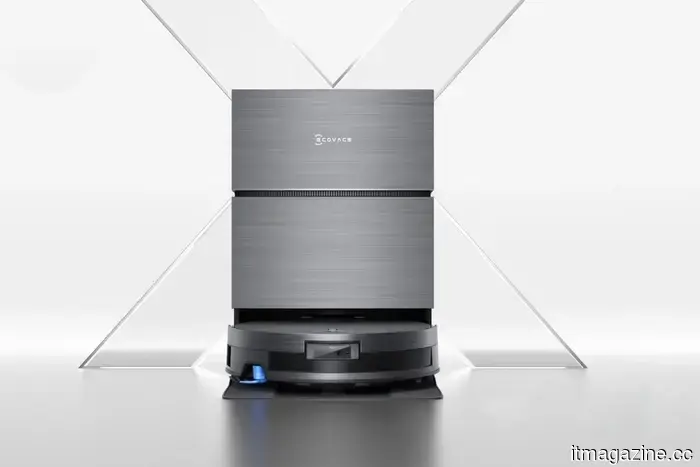 Robots have learned to understand people without complex instructions.
Modern household appliances have long ceased to be just a set of buttons, yet interacting with them still resembles a guessing game. Manufacturers of smart devices have trained us for years to use strict formulations, because only an exact command from the instructions guaranteed that the vacuum cleaner would start cleaning and not go into sleep mode. The situation is beginning to change thanks to the introduction of artificial intelligence technologies into the household sector.
Robots have learned to understand people without complex instructions.
Modern household appliances have long ceased to be just a set of buttons, yet interacting with them still resembles a guessing game. Manufacturers of smart devices have trained us for years to use strict formulations, because only an exact command from the instructions guaranteed that the vacuum cleaner would start cleaning and not go into sleep mode. The situation is beginning to change thanks to the introduction of artificial intelligence technologies into the household sector.
 Bluesky secures $100 million in Series B funding as a new CEO steps in.
Bluesky announced a $100 million Series B funding round led by Bain Capital Crypto, which was completed last April, and a new CEO has taken over.
Bluesky secures $100 million in Series B funding as a new CEO steps in.
Bluesky announced a $100 million Series B funding round led by Bain Capital Crypto, which was completed last April, and a new CEO has taken over.
 Bluesky secures $100 million in Series B funding as a new CEO steps in.
Bluesky announced a $100M Series B funding round led by Bain Capital Crypto, which concluded last April, and has appointed a new CEO.
Bluesky secures $100 million in Series B funding as a new CEO steps in.
Bluesky announced a $100M Series B funding round led by Bain Capital Crypto, which concluded last April, and has appointed a new CEO.
 Your inbox is a business model for someone else. It doesn't have to be that way.
Free email services can be more expensive than you realize. We explore why investing in a paid email service could be the wisest choice for your privacy this year.
Your inbox is a business model for someone else. It doesn't have to be that way.
Free email services can be more expensive than you realize. We explore why investing in a paid email service could be the wisest choice for your privacy this year.
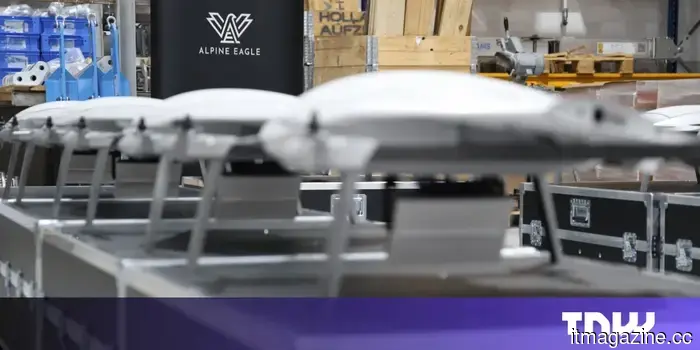 Alpine Eagle is ramping up its production of counter-drone systems.
The Munich-based counter-drone company Alpine Eagle is expanding its production of the Sentinel by opening a new facility and partnering with DeltaQuad.
Alpine Eagle is ramping up its production of counter-drone systems.
The Munich-based counter-drone company Alpine Eagle is expanding its production of the Sentinel by opening a new facility and partnering with DeltaQuad.
 AI analytics agents require limitations rather than increased model size.
AI analytics agents require safeguards rather than larger models. Discover why governed data, common definitions, and semantic layers are more crucial than the size of the model.
AI analytics agents require limitations rather than increased model size.
AI analytics agents require safeguards rather than larger models. Discover why governed data, common definitions, and semantic layers are more crucial than the size of the model.
Alpine Eagle is increasing its production of counter-drone systems.
The Munich-based counter-drone startup Alpine Eagle is expanding its Sentinel production through a new facility and a partnership with DeltaQuad.