
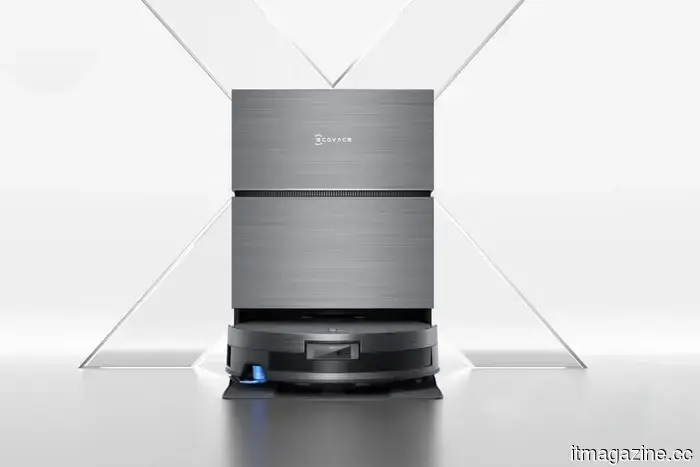
Robots have learned to understand people without complex instructions.
Modern household appliances have long ceased to be just a set of buttons; however, interacting with them still resembles a game of "guessing." For years, manufacturers of smart devices have trained us to use strict formulations, as only an exact command from the instructions guaranteed that the vacuum cleaner would start cleaning and not go into sleep mode. The situation is beginning to change thanks to the implementation of artificial intelligence technologies in the household sphere.
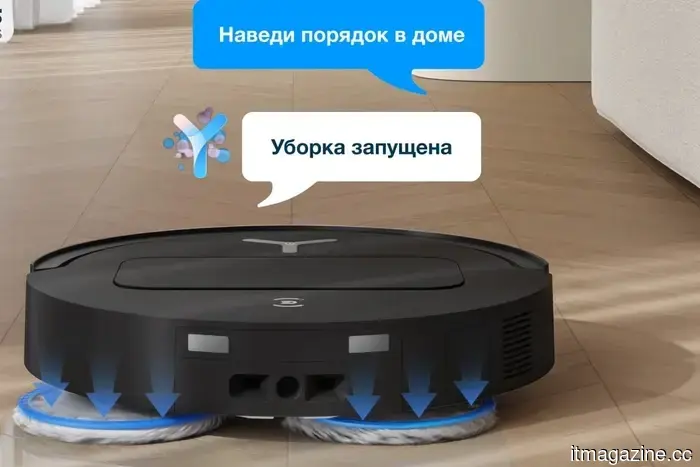
Unlike traditional voice interfaces that operate on the principle of "heard a keyword - perform an action," new algorithms attempt to understand the essence of the request. Engineers at ECOVACS have trained their assistant YIKO Voice to recognize natural conversational speech in all its diversity. Now, users do not need to memorize specific phrases. They can simply say "the house is dirty," "go clean," or "first vacuum, then mop the floor," and the device will interpret the person's intent rather than searching for an exact match in the database.
When words are not the main thing
This approach has become possible thanks to the use of a specialized GPT model. Developers did not just take a ready-made solution but adapted it by training it on a vast array of Russian-speaking speech patterns. The database included natural formulations characteristic of everyday speech, allowing the system to better understand not only the logic but also the nuances of requests. In this case, artificial intelligence makes interaction with the device smoother and closer to communication between people, freeing users from the need to adjust their speech to the machine's limitations. Image: ECOVACS press service
Voice control helps to start or finish cleaning, choose a mode (vacuum only, mop only, or both at the same time), go to charge, build a map of rooms, approach the user, empty the dustbin, or rinse the attachments. At the same time, the system recognizes both elaborate phrases and short commands equally well.
Among the models in the ECOVACS lineup available in the Russian market, support for the Russian language is available in the following models: X11 PRO OMNI, X8 PRO OMNI, T50 PRO OMNI, T30 PRO OMNI.
Other articles
 The German agritech company eternal.ag has secured €8 million in funding.
eternal.ag has secured €8 million to implement autonomous tomato harvesting robots that have been trained in virtual greenhouses prior to their actual deployment in the field.
The German agritech company eternal.ag has secured €8 million in funding.
eternal.ag has secured €8 million to implement autonomous tomato harvesting robots that have been trained in virtual greenhouses prior to their actual deployment in the field.
 The ultra-light portable monitor Acer PM161QB1 has been released.
Acer PM161QB1 portable monitor has been introduced to the Russian market. The new product features a 15.6-inch screen with Full HD resolution and is aimed at those who need additional workspace outside of home or office.
The ultra-light portable monitor Acer PM161QB1 has been released.
Acer PM161QB1 portable monitor has been introduced to the Russian market. The new product features a 15.6-inch screen with Full HD resolution and is aimed at those who need additional workspace outside of home or office.
 German agritech company eternal.ag secures €8 million in funding.
eternal.ag has secured €8M to implement autonomous tomato harvesting robots that have been trained in virtual greenhouses prior to being deployed in real-world settings.
German agritech company eternal.ag secures €8 million in funding.
eternal.ag has secured €8M to implement autonomous tomato harvesting robots that have been trained in virtual greenhouses prior to being deployed in real-world settings.
 Parallel secures $20 million to implement AI agents in healthcare facilities.
Parallel has secured $20 million to implement AI agents that automate medical coding and billing directly within existing hospital software systems.
Parallel secures $20 million to implement AI agents in healthcare facilities.
Parallel has secured $20 million to implement AI agents that automate medical coding and billing directly within existing hospital software systems.
 The ultra-light portable monitor Acer PM161QB1 has been released.
Acer PM161QB1 portable monitor has been introduced to the Russian market. The new product features a 15.6-inch screen with Full HD resolution and is aimed at those who need additional workspace outside of home or office.
The ultra-light portable monitor Acer PM161QB1 has been released.
Acer PM161QB1 portable monitor has been introduced to the Russian market. The new product features a 15.6-inch screen with Full HD resolution and is aimed at those who need additional workspace outside of home or office.
 Robots have learned to understand people without complex instructions.
Modern household appliances have long ceased to be just a set of buttons, yet interacting with them still resembles a guessing game. Manufacturers of smart devices have trained us for years to use strict formulations, because only an exact command from the instructions guaranteed that the vacuum cleaner would start cleaning and not go into sleep mode. The situation is beginning to change thanks to the introduction of artificial intelligence technologies into the household sector.
Robots have learned to understand people without complex instructions.
Modern household appliances have long ceased to be just a set of buttons, yet interacting with them still resembles a guessing game. Manufacturers of smart devices have trained us for years to use strict formulations, because only an exact command from the instructions guaranteed that the vacuum cleaner would start cleaning and not go into sleep mode. The situation is beginning to change thanks to the introduction of artificial intelligence technologies into the household sector.
Robots have learned to understand people without complex instructions.
Modern household appliances have long ceased to be just a set of buttons, yet interacting with them still resembles a guessing game. Manufacturers of smart devices have trained us for years to use strict formulations, because only an exact command from the instructions guaranteed that the vacuum cleaner would start cleaning, rather than going into sleep mode. The situation is beginning to change thanks to the introduction of artificial intelligence technologies into the household sphere.