
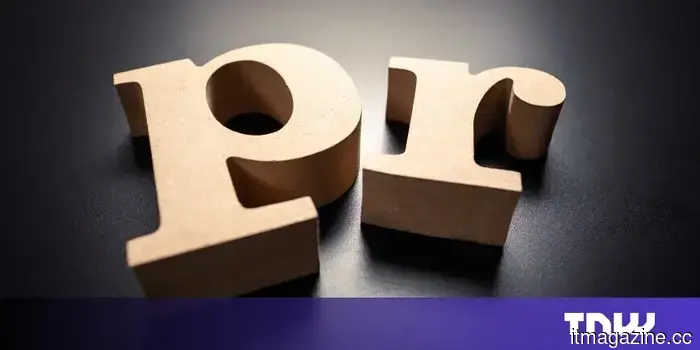
Controlling your brand's story in the era of AI
Earned media has long been regarded as the ultimate goal of public relations because of its unique ability to foster trust. According to recent surveys, 40%–60% of people still place the highest trust in organic content, varying by country.
However, I see considerable business risks in depending solely on organic PR, especially with the rise of various AI systems. These technologies do not differentiate between earned and paid content when generating responses. This serves as a crucial reminder for us to reassess our PR strategies.
The potential pitfalls of relying exclusively on earned media
The key benefit of earned media, which is the independence of journalists, also poses a significant strategic risk. By relying entirely on organic coverage, a business relinquishes control of its narrative to a third party, which can be detrimental.
For instance, if you want to emphasize specific product features in an article, but the journalist focuses on less critical aspects to suit their narrative, you may end up with coverage that does not support your marketing goals.
The results can be unpredictable, filtered through a journalist's subjective viewpoint, which may or may not align with your brand's message.
The unfortunate reality is that you still bear the cost of any unfavorable outcomes. Although earned PR is often viewed as free, it requires substantial investment in time and effort to connect with the right journalists, cultivate relationships, and send numerous pitches.
If luck is on your side, your story might be published in a matter of weeks; if not, it could take several months—something not all businesses can afford.
In today’s technological environment, speed is essential for remaining competitive. AI systems need consistent and repetitive signals from the media regarding a brand to incorporate them into their responses.
If your product is only referenced in an organic article once every quarter, you might already be at a disadvantage. That frequency is insufficient for AI to recommend your product.
These considerations lead me to view earned-only strategies as highly unreliable. Public relations should evolve beyond that.
Owned media: The foundation of your brand’s narrative for AI systems
As an advocate of the PESO model created by Gini Dietrich, I believe a well-rounded PR strategy should integrate all four components: Paid, Earned, Shared, and Owned. However, when focusing on amplification in AI responses, I would prioritize “Owned” media. Your website lays the groundwork for the informative data points about your brand and products for AI applications.
At the same time, I oppose the notion that websites must be specifically optimized for search engines or AI systems by adding robots.txt or llm.txt files, as there is no solid proof that such tactics are effective.
What I observe in practice is that if your website communicates clearly enough for human visitors to grasp what you sell or the services you provide, an AI system will understand it as well. If the content is well-organized and easy for a person to consume, it has already been sufficiently optimized for machines.
While owned media shapes the narrative, earned media reinforces that narrative through third-party credibility. Nonetheless, just like in real life, it is essential to first ensure your own foundation is secure before seeking external validation.
The less obvious advantages of paid PR strategies
Once your owned media is set up with transparent, easy-to-digest content, it’s time to incorporate paid media. There is sometimes an elitist view within the industry suggesting that paid placements are of lesser quality, but that is not necessarily true.
When paying for a placement, you control the narrative and the context in which it is presented. You can emphasize the key features of your product and omit the less significant ones; however, you must still adhere to media guidelines.
Moreover, higher-authority media impose stricter standards for sponsored content, necessitating that you provide real value to the audience—such as an industry insight, a fresh perspective, or a unique approach that goes beyond merely promoting your product.
As I noted earlier, with the growing prevalence of AI-generated responses, the second crucial advantage of paid media is its speed. It enables PR teams to transition from a “wait and see” mentality to proactive media planning.
This predictability is particularly important for geographical expansion, as cultural differences and the extensive time required to form organic relationships can create significant entry barriers, while paid media serves as a shortcut to reach AI responses.
This capability for predictability, along with the potential to add UTM links in certain media outlets, transforms PR into a data-informed communication channel. Even in the absence of custom links, some media provide performance reports on content, which are essential for the overall communication strategy.
Paid media plays a crucial role in enhancing a brand’s visibility in AI responses
Due to these often disregarded factors, I view paid media as a strategic enhancer for the narrative created through owned and earned media. If appearing in AI-generated answers is your aim, speed becomes the most vital element.
As AI systems depend on consistent signals from various trusted sources, it’s necessary to disseminate your message across as many
Other articles
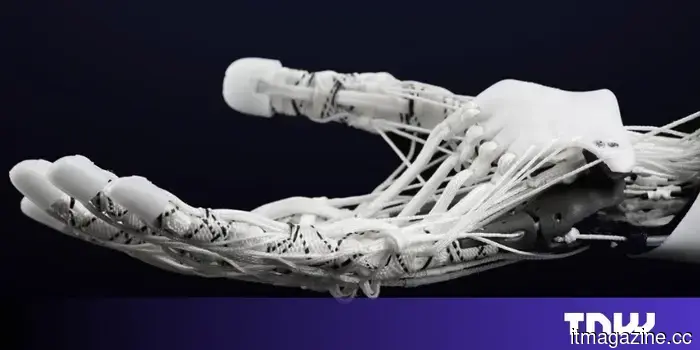 Allonic is reconstructing robotics from the ground up.
Allonic's $7.2 million pre-seed funding indicates a transition in Europe towards early-stage investments in robotics hardware and substantial industrial innovation.
Allonic is reconstructing robotics from the ground up.
Allonic's $7.2 million pre-seed funding indicates a transition in Europe towards early-stage investments in robotics hardware and substantial industrial innovation.
 The European Union has invested €700 million in NanoIC.
The European Union has dedicated €700 million to NanoIC, the largest pilot line established under the Chips Act, located at imec in Leuven.
The European Union has invested €700 million in NanoIC.
The European Union has dedicated €700 million to NanoIC, the largest pilot line established under the Chips Act, located at imec in Leuven.
 Naboo secures $70 million for a platform focused on event procurement powered by AI.
Naboo secured $70 million in a Series B funding round led by Lightspeed to expand its AI event and procurement platform internationally and enhance its growth in the US market.
Naboo secures $70 million for a platform focused on event procurement powered by AI.
Naboo secured $70 million in a Series B funding round led by Lightspeed to expand its AI event and procurement platform internationally and enhance its growth in the US market.
 Tem secures $75 million to automate energy markets using an AI-driven platform.
Tem secured $75 million to expand its AI-driven energy platform, which streamlines electricity market transactions and reduces expenses for companies.
Tem secures $75 million to automate energy markets using an AI-driven platform.
Tem secured $75 million to expand its AI-driven energy platform, which streamlines electricity market transactions and reduces expenses for companies.
 The European Union has invested €700 million in NanoIC.
The European Union has pledged €700 million to NanoIC, the largest pilot line established under the Chips Act, located at imec in Leuven.
The European Union has invested €700 million in NanoIC.
The European Union has pledged €700 million to NanoIC, the largest pilot line established under the Chips Act, located at imec in Leuven.
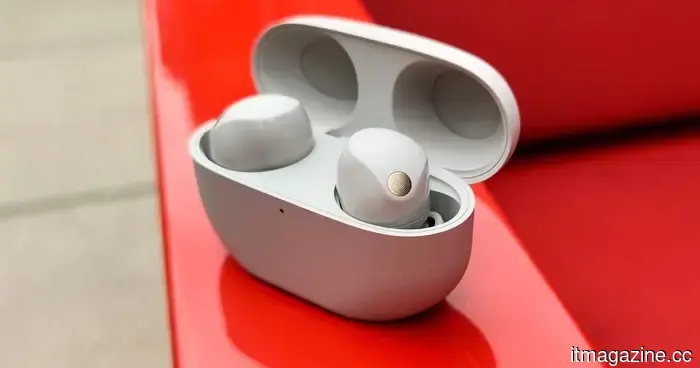 A Sony leak generates excitement around enhanced noise cancellation features in the forthcoming WF-1000XM6 earbuds.
A leak has disclosed that the Sony WF-1000XM6 earbuds will feature a quicker QN3e chip, enhanced ANC, new drivers, spatial audio, and LE Audio, prior to their launch in February 2026.
A Sony leak generates excitement around enhanced noise cancellation features in the forthcoming WF-1000XM6 earbuds.
A leak has disclosed that the Sony WF-1000XM6 earbuds will feature a quicker QN3e chip, enhanced ANC, new drivers, spatial audio, and LE Audio, prior to their launch in February 2026.
Controlling your brand's story in the era of AI
Why relying solely on earned PR is insufficient in the era of AI, and how owned and paid media enable brands to shape the narrative and appear in AI responses.