
Meta's AI glasses will now assist you in reading and writing without the need to look at your phone.
Meta showcases the future of AI glasses and EMG input at CES 2026
Meta utilized CES 2026 this week to indicate a significant advancement in its wearable ecosystem, transitioning the Meta Ray-Ban Display and Meta Neural Band from mere high-tech novelties to multifunctional tools for work, travel, and enhanced accessibility. This update represents a shift toward "head-up" computing, where glasses serve as your display and your wrist acts as the controller.
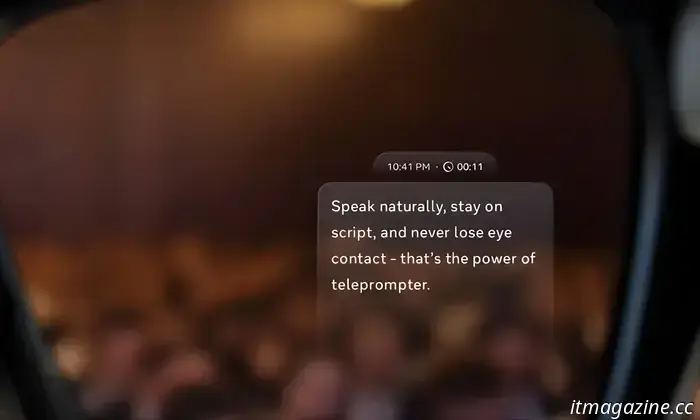
One of the most practical updates is the introduction of the Teleprompter feature, which is starting its phased release this week. This feature allows users to see notes or full scripts directly within the glasses' lens. By using the Neural Band, you can subtly scroll through the text at your own speed, making it a valuable tool for public speakers, content creators, or anyone aiming to deliver a presentation while maintaining optimal eye contact.
Additionally, Meta is providing early access to EMG-based handwriting input in the U.S.
With the Neural Band, users can “write” messages by tracing letters on any surface or even in mid-air. The band’s sensors detect subtle muscle signals in your wrist, converting them into text for platforms like WhatsApp or Messenger. This showcases a future where you can send a text without ever touching a screen or speaking aloud.
Navigation features are also improving. Meta's pedestrian navigation is now operational in 32 cities, with Denver, Las Vegas, Portland, and Salt Lake City added this week. Turn-by-turn directions appear directly in your line of sight, eliminating the need to glance at a phone while navigating a new city.
Despite the excitement surrounding these features, Meta has confirmed some disappointing news for international users.
The planned rollout in the UK, France, Italy, and Canada has been suspended. Due to “unprecedented demand” and inventory shortages in the U.S., current waitlists extend well into 2026, prompting Meta to prioritize existing orders before global expansion.
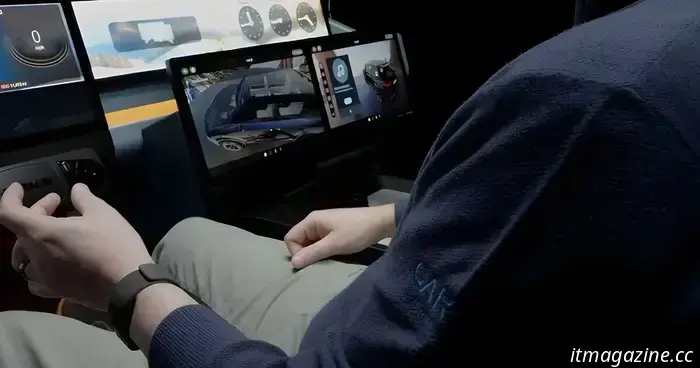
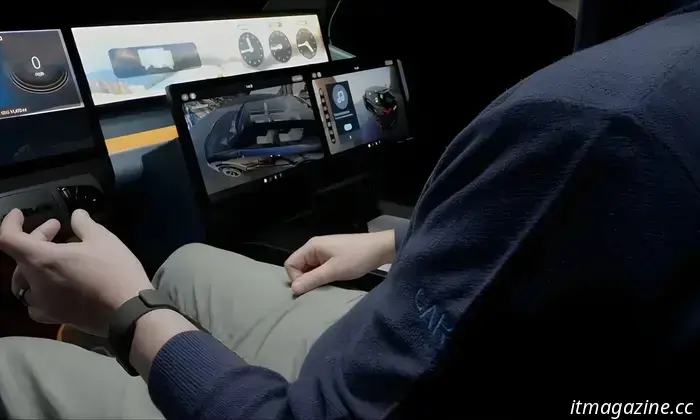
On the innovation front, Meta unveiled a “proof-of-concept” partnership with Garmin. In the demonstration, passengers utilized the Meta Neural Band to control Garmin’s Unified Cabin infotainment system. By executing simple finger gestures like pinching or scrolling, passengers could manage music and climate settings without needing to reach for a physical screen—a concept designed for the comfortable luxury of future autonomous or high-end vehicles.
Perhaps the most significant announcement was a new research collaboration with the University of Utah. This project examines how the Neural Band can serve as a transformative interface for individuals with limited mobility, such as those affected by ALS or recovering from a stroke.
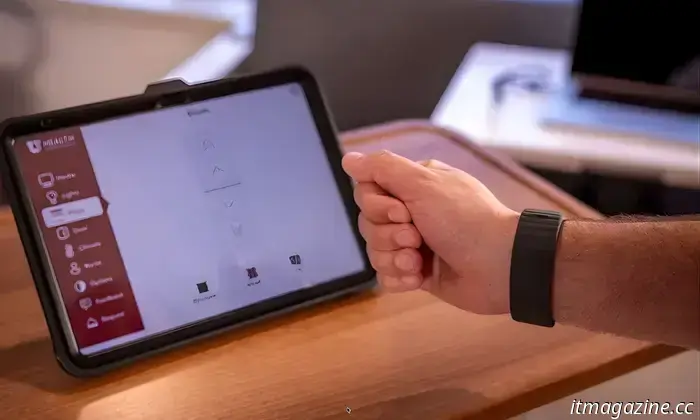
Since the band detects neural signals rather than physical movements, it can sense intent even when muscles are weak. Researchers are exploring how these subtle signals can control smart home devices (like lighting and blinds) or even maneuver the TetraSki, an advanced sit-ski designed for individuals with complex disabilities. This research emphasizes Meta’s long-term vision: developing a computing platform that is genuinely accessible to all, irrespective of physical ability.
Moinak Pal has been working in the technology sector, covering both consumer-focused tech and automotive technology for...
Intel Core Ultra Series 3 laptops set to launch later this month; here’s what to expect
Intel's laptops featuring enhanced integrated graphics and extended battery life are on their way.
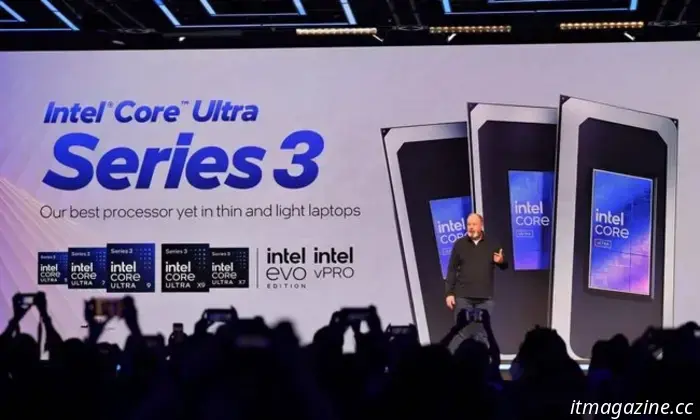
Intel's Panther Lake CPUs are ready to debut in the market. First revealed in October last year, the new Core Ultra Series 3 chips were recently showcased at CES 2026, where the company confirmed pre-order and retail launch plans for the initial laptops equipped with these new processors.
In its announcement, Intel reiterated that the new Core Ultra Series 3 processors are its first AI PC platform built on the Intel 18A process technology. The company claims these chips will power over 200 designs from global partners, making the Series 3 "the most widely adopted and globally available AI PC platform Intel has ever introduced."
HP unveils a new keyboard PC aiming to replace your desktop setup
The EliteBoard G1a incorporates a full Copilot+ AI PC within a 12mm keyboard, designed for seamless desk transitions.
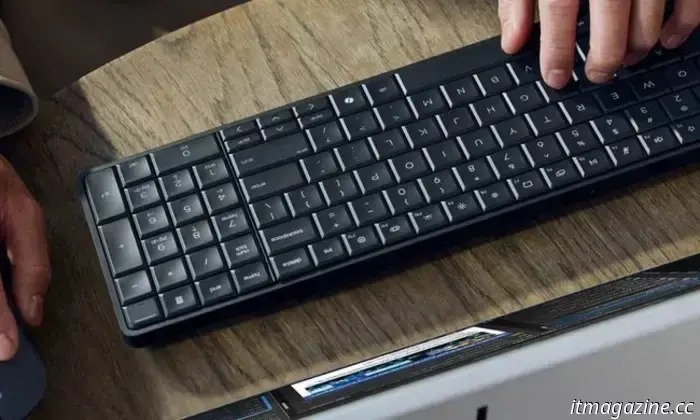
HP recently introduced a new keyboard PC at CES 2026, presenting a surprisingly practical concept. The computer is integrated into the keyboard, allowing users to transport their entire setup between desks without needing to carry a mini PC or laptop dock.
This device is called the HP EliteBoard G1a Next Gen AI PC. HP claims it's the world's first complete AI PC embedded in a keyboard, emphasizing local on-device AI performance as its unique selling point, rather than relying on cloud services.
HP’s new OmniBook Ultra 14 is 5% slimmer than the MacBook Air
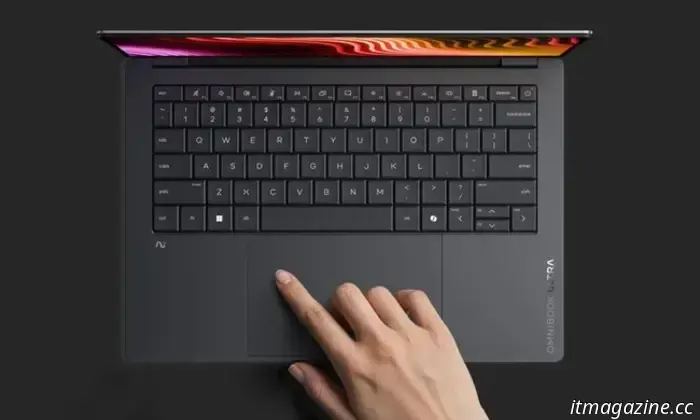
HP is focusing on portability, asserting that the OmniBook Ultra 14 is 52% lighter than its predecessor and thinner than a 13-inch MacBook Air.
HP is highlighting the HP OmniBook Ultra 14 this week at CES 2026, targeting shoppers looking for a premium

Other articles
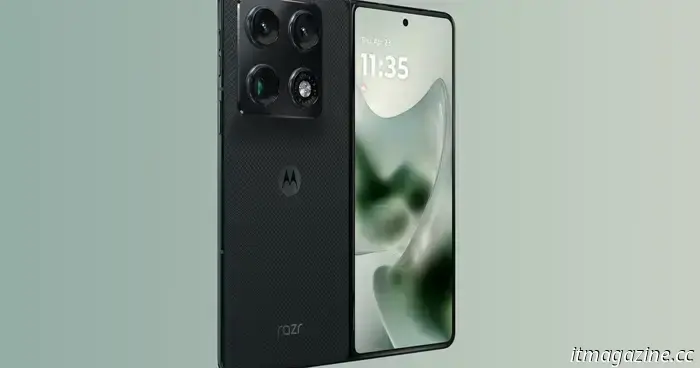 Motorola has finally introduced a foldable device that competes with the Galaxy Fold 7 and the Pixel 10 Pro Fold.
The Motorola Razr Fold is set to launch in the next few months, importantly ahead of the anticipated iPhone Fold.
Motorola has finally introduced a foldable device that competes with the Galaxy Fold 7 and the Pixel 10 Pro Fold.
The Motorola Razr Fold is set to launch in the next few months, importantly ahead of the anticipated iPhone Fold.
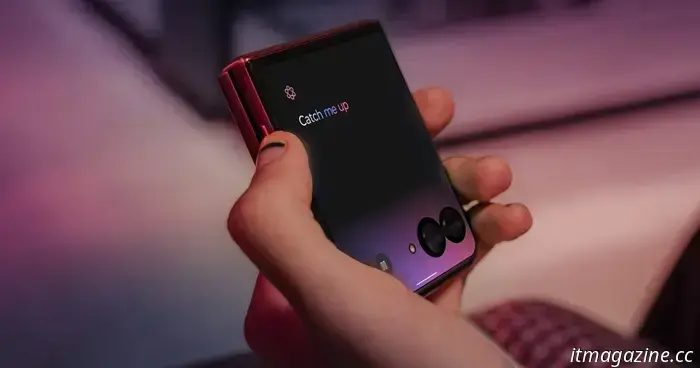 Lenovo and Motorola introduce Qira, an AI assistant designed to handle a wide range of tasks.
Qira is capable of performing tasks like providing intelligent suggestions (Next Move), assisting with text (Write For Me), engaging in live conversations with screen and camera sharing, and generating images directly on the device.
Lenovo and Motorola introduce Qira, an AI assistant designed to handle a wide range of tasks.
Qira is capable of performing tasks like providing intelligent suggestions (Next Move), assisting with text (Write For Me), engaging in live conversations with screen and camera sharing, and generating images directly on the device.
 The Zenbook A14 feels lighter than a MacBook Air, but is being lighter truly an advantage?
Asus introduces the latest Zenbook A14 at CES 2026, a laptop that is lighter than the MacBook Air and nearly as lightweight as a child's toy. However, is it merely a marketing ploy?
The Zenbook A14 feels lighter than a MacBook Air, but is being lighter truly an advantage?
Asus introduces the latest Zenbook A14 at CES 2026, a laptop that is lighter than the MacBook Air and nearly as lightweight as a child's toy. However, is it merely a marketing ploy?
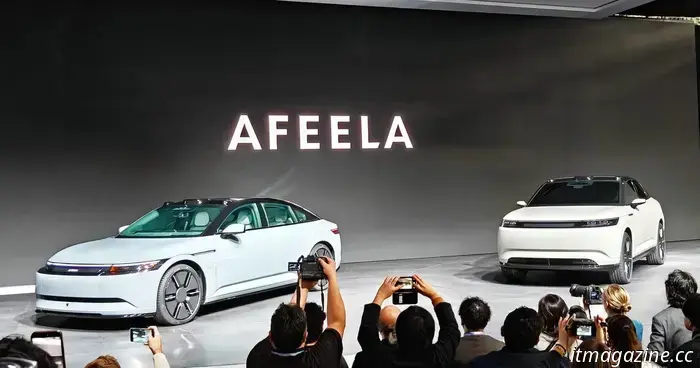 Sony has introduced a new concept car and announced the expected arrival date for the initial Afeela 1 vehicles.
The Afeela prototype 2026 is an SUV set to arrive in America in 2028.
Sony has introduced a new concept car and announced the expected arrival date for the initial Afeela 1 vehicles.
The Afeela prototype 2026 is an SUV set to arrive in America in 2028.
 Tineco's FLOOR ONE series at CES 2026 elevates intelligent floor maintenance to new heights.
The Tineco FLOOR ONE series provides both cordless and corded smart floor care options that integrate suction strength, hot-water and steam cleaning, hands-free upkeep, and customized features to cater to various homes and lifestyles.
Tineco's FLOOR ONE series at CES 2026 elevates intelligent floor maintenance to new heights.
The Tineco FLOOR ONE series provides both cordless and corded smart floor care options that integrate suction strength, hot-water and steam cleaning, hands-free upkeep, and customized features to cater to various homes and lifestyles.
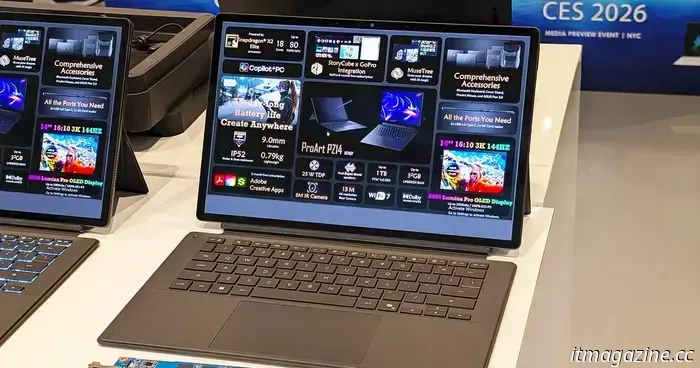 Asus has just resolved my main issue with OLED screens on nearly all of its latest laptops.
At CES 2026, Asus is debuting brand-new displays for both its consumer and gaming laptops, and they may have addressed the major issue associated with OLED technology.
Asus has just resolved my main issue with OLED screens on nearly all of its latest laptops.
At CES 2026, Asus is debuting brand-new displays for both its consumer and gaming laptops, and they may have addressed the major issue associated with OLED technology.
Meta's AI glasses will now assist you in reading and writing without the need to look at your phone.
At CES 2026, Meta broadened its AI glasses ecosystem by introducing teleprompter tools, EMG handwriting input, pedestrian navigation, and collaborations aimed at enhancing accessibility and automotive interfaces.