

How contemporary technology is taking the place of legacy systems while also prolonging their longevity.
Each generation of technology is distinct from its predecessor. Many might assume that contemporary industrial facilities uniformly employ the latest advanced equipment. However, this assumption is not accurate.
In an industry where numerous sectors utilize systems cobbled together from technology dating back to the 1980s and 90s, companies, regardless of their size, often depend on infrastructure that necessitates various levels of maintenance, the availability of components, as well as communication protocols and failure models that may not be compatible with modern machinery.
Premanand Jothilingam, an industrial automation engineer specializing in control system asset management, highlights that this complex reality is frequently underestimated. He has pointed out in industry discussions that legacy systems endure not because they are the most efficient, but due to their deep integration into production workflows, making them challenging to dismantle without thorough planning.
While conventional industrial maintenance typically adopts a "repair it when it fails" or "repair it on a schedule" approach, it is vital to acknowledge that some technologies may not be built for long-term use. With the advent of newer, more sophisticated systems, managers and business owners can utilize these advanced tools and devices to maintain operational continuity in the long run, minimizing the risk of downtime from maintenance or other complications.
Transitioning to predictive maintenance
Gaining insight into how and when technology can fail is essential for long-term operational planning. Jothilingam’s work in industrial control system reliability emphasizes the importance of blending on-site inspections, historical performance data, and predictive modeling to detect assets that pose higher risks in a plant setting. Instead of treating all equipment the same, this strategy directs focus toward systems whose failures would significantly impact operations.
However, Jothilingam is not alone in advocating for these types of safeguards. Many believe that businesses will eventually need to abandon traditional, outdated legacy systems to meet the demands of the modern digital landscape.
Industry studies indicate that updating legacy applications has consistently been a significant investment priority for enterprises. While legacy systems are most prevalent in the healthcare and financial sectors, they are also widespread in manufacturing. Unfortunately, they incur substantial costs. Organizations allocate a considerable portion of their IT budgets to maintain these legacy systems, which encompasses maintenance expenses, hardware and software upgrades, and licensing fees. As Jothilingam has noted in professional conversations, these expenses can obscure the heightened risk associated with outdated systems that remain crucial to production.
Adapting technologies through life cycle optimization
Life Cycle Optimization (LCO) is a strategic method aimed at maximizing the value, efficiency, and sustainability of a business's technology throughout the lifespan of a product, service, or system. In the industrial sector, this primarily focuses on incorporating predictive analytics to foresee end-of-life indicators in systems.
Jothilingam has discussed the significance of balancing maintenance, retrofitting, and planned replacements, arguing that extending asset life does not entail avoiding upgrades but timing them wisely. By mapping assets across their life-cycle stages, organizations can mitigate premature failures while sidestepping unnecessary capital expenditure.
While routine maintenance might prolong the utility of a technology or system throughout its lifecycle, businesses should ultimately plan for retrofitting new technology and establishing replacement strategies, particularly those reliant solely on reactive repairs of systems, products, and tools. By comprehending the life-cycle stages of industrial assets, organizations can make informed decisions to avert premature equipment failures, ultimately leading to reduced losses.
However, monitoring these systems is no longer exclusively a manual task. Advances in IoT and system-level monitoring, some facilitated by artificial intelligence, enable businesses to utilize real-time environmental data along with AI analysis to detect and resolve issues before they result in failures or suboptimal performance. According to Jothilingam, this data-driven approach promotes more consistent decision-making, especially in facilities managing a combination of legacy and modern systems.
Evaluating scenarios and forecasting failures with digital twin technology
Digital twin technology innovation for industrial asset management has enabled engineers to test various scenarios, not only predicting failures but also optimizing maintenance strategies without disrupting production.
In industry discussions about his work, Jothilingam has emphasized digital twins as practical planning tools rather than replacements for engineering judgment, stressing that their efficacy is contingent upon the quality and relevance of the underlying data. Unlike conventional simulations, digital twins integrate real-time inputs, which can enhance predictive model accuracy when executed properly.
Despite its sophisticated technology, digital twinning is heavily reliant on the accuracy of the data used to create its models, making it essential for the supplied data to be precise to yield unbiased results.
The solution to longevity lies in methodology
While the technical capabilities of new technologies may drive business growth, the methodologies engineers employ to maintain them determine their longevity. By shifting maintenance from reactive responses to strategic, data-driven actions, businesses can gain a clearer understanding of their technology's performance, foresee potential issues, and address them proactively.
As Premanand Jothilingam has consistently articulated in professional discussions, extending system lifespan is less about individual tools and more about the frameworks for assessing risk, prioritizing actions, and
Other articles
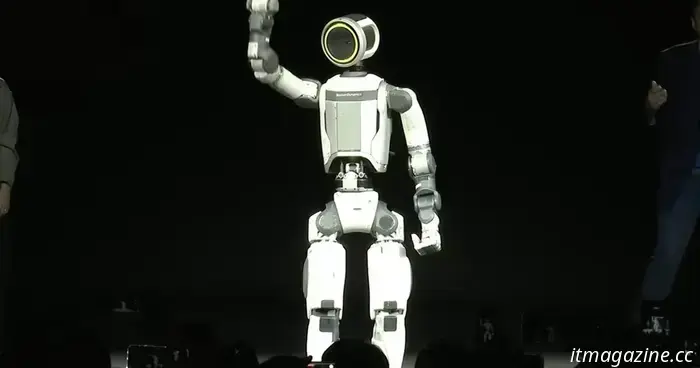 The Atlas humanoid robot appears more prepared than ever for the workplace.
CES 2026 Read and view our full CES coverage here Updated under 2 hours ago Boston Dynamics is presenting its impressive Atlas humanoid robot at CES 2026 in Las Vegas this week, and video from the autonomous machine's unveiling event might leave you stunned. The Massachusetts-based company has been [...]
The Atlas humanoid robot appears more prepared than ever for the workplace.
CES 2026 Read and view our full CES coverage here Updated under 2 hours ago Boston Dynamics is presenting its impressive Atlas humanoid robot at CES 2026 in Las Vegas this week, and video from the autonomous machine's unveiling event might leave you stunned. The Massachusetts-based company has been [...]
 HP's inaugural HyperX OMEN gaming laptop features an RTX 5090 mobile GPU and an OLED display.
HP's newest gaming laptops are not solely focused on quicker GPUs and OLED displays; they represent a shift in the brand that could transform the company's gaming prospects.
HP's inaugural HyperX OMEN gaming laptop features an RTX 5090 mobile GPU and an OLED display.
HP's newest gaming laptops are not solely focused on quicker GPUs and OLED displays; they represent a shift in the brand that could transform the company's gaming prospects.
 Get a discount of $120 on a 3-channel dash cam that offers coverage for the front, interior, and rear of your vehicle.
Dash cams are one of those items that often go unnoticed until you find yourself wishing you had one. This makes a significant discount on a multi-camera system noteworthy. The Rexing V33 3-channel dash cam is now available for $199.99, reduced from $319.99, which saves you $120. If you've been intending to enhance your coverage [...]
Get a discount of $120 on a 3-channel dash cam that offers coverage for the front, interior, and rear of your vehicle.
Dash cams are one of those items that often go unnoticed until you find yourself wishing you had one. This makes a significant discount on a multi-camera system noteworthy. The Rexing V33 3-channel dash cam is now available for $199.99, reduced from $319.99, which saves you $120. If you've been intending to enhance your coverage [...]
 Meta's AI glasses will now assist you in reading and writing without the need to look at your phone.
At CES 2026, Meta broadened its AI glasses ecosystem by introducing teleprompter tools, EMG handwriting input, pedestrian navigation, and collaborations aimed at enhancing accessibility and automotive interfaces.
Meta's AI glasses will now assist you in reading and writing without the need to look at your phone.
At CES 2026, Meta broadened its AI glasses ecosystem by introducing teleprompter tools, EMG handwriting input, pedestrian navigation, and collaborations aimed at enhancing accessibility and automotive interfaces.
 HP's EliteBook X G2 laptops deliver significant AI capabilities in impressively lightweight designs.
HP's newest EliteBook X G2 Series transforms business computing for the AI era with exceptional performance, modular choices, a high-quality construction, and enhanced portability.
HP's EliteBook X G2 laptops deliver significant AI capabilities in impressively lightweight designs.
HP's newest EliteBook X G2 Series transforms business computing for the AI era with exceptional performance, modular choices, a high-quality construction, and enhanced portability.
 The Zenbook A14 feels lighter than a MacBook Air, but is being lighter truly an advantage?
Asus introduces the latest Zenbook A14 at CES 2026, a laptop that is lighter than the MacBook Air and nearly as lightweight as a child's toy. However, is it merely a marketing ploy?
The Zenbook A14 feels lighter than a MacBook Air, but is being lighter truly an advantage?
Asus introduces the latest Zenbook A14 at CES 2026, a laptop that is lighter than the MacBook Air and nearly as lightweight as a child's toy. However, is it merely a marketing ploy?
How contemporary technology is taking the place of legacy systems while also prolonging their longevity.
It is undeniable that every generation of technology differs from its predecessor. Many might assume that contemporary industrial facilities would universally depend on the latest and most advanced equipment. However, this is not true. In an industry where numerous sectors use systems that are patched [...]