

SwitchBot's latest device, MindClip, is designed to transform your note-taking experience.
It joins similar devices from Anker, Plaud, and Pebble.
AI note-taking devices are rapidly becoming the latest trend in consumer electronics, with an increasing number of manufacturers introducing products in various unique styles. Pebble has recently entered the market with its Index 01 smart ring, which not only lets users take notes but also enables setting reminders, creating calendar events, or executing custom actions like managing music playback, taking photos, or activating smart home commands. Now, SwitchBot has also entered the competition with its AI MindClip.
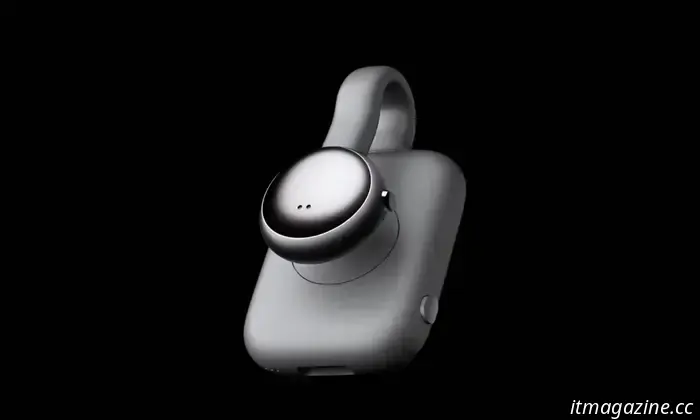
Presented at CES 2026 in Las Vegas, the SwitchBot AI MindClip bears a resemblance to Anker’s Soundcore Work and offers comparable functionality. Essentially, it is a wearable microphone that clips onto your collar or lapel, allowing you to take notes without using your hands. SwitchBot claims the MindClip can act as a “second brain,” enabling you to record voice notes, conversations, or meetings into an audio database.
The MindClip employs AI to transform these recordings into summaries or generate to-do lists. You can even access past discussions, reminders, or learning materials through voice commands, or inquire about details related to the recordings. These features necessitate a subscription to SwitchBot’s cloud AI service, although the company has not yet disclosed all of its specifics.
SwitchBot’s MindClip already faces stiff competition
Weighing 18 grams, the SwitchBot AI MindClip is slightly heavier than the Anker Soundcore Work. It boasts support for over 100 languages, giving it an advantage over Plaud’s NotePin, which caters to only 59 languages.
Thus far, SwitchBot has not announced pricing or availability for the MindClip or its cloud AI subscription service. The company has also yet to detail the pin's full capabilities, so we will need to wait for its official launch to see how it compares to the competition.
Pranob is an experienced technology journalist with more than eight years of expertise in covering consumer technology. His work has been...
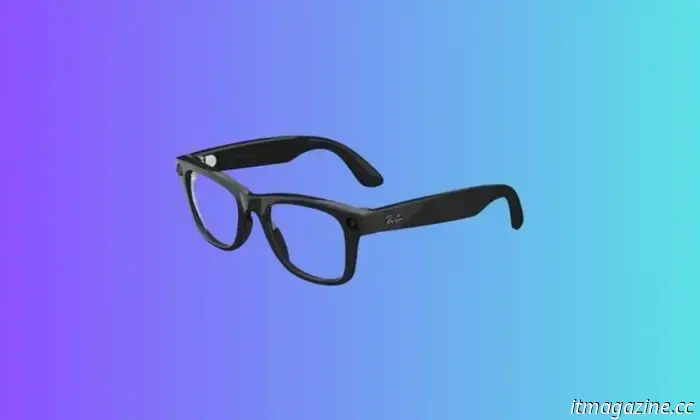
Ray-Ban Meta Wayfarer price drop: get them for $224 and save $75
Save $75 on Ray-Ban Meta Wayfarers, the smart glasses that resemble regular sunglasses.
Smart glasses have finally reached a point where they don’t overtly appear as “tech gadgets,” making this discount noteworthy. The Ray-Ban Meta Wayfarer with clear lenses is now priced at $224.25 (down from $299.00), representing a savings of $74.75. If you’ve been interested in taking hands-free photos, quick videos, and audio that can be heard without earbuds, this sale offers a significant discount on a product that typically falls within the premium range.
get the deal
Read more
My 10 tech predictions for 2026
The year 2026 could usher in a reckoning for AI, alter our views on wearables, and advance the electric vehicle sector.
The year 2025 was notable in many respects, although not everything was positive for the average tech enthusiast. Apple returned to its engineering labs, providing a glimpse of its innovative capabilities. At the same time, its lagging performance in the AI domain became increasingly evident compared to Google. Electric vehicles continued to improve, particularly in China, while demand in the West began to wane. Meta introduced a new type of smart glasses featuring a screen positioned in front of your eye, all while maintaining the classic Ray-Ban aesthetic. Smaller companies like TCL’s RayNeo also made significant strides.
Read more
Apple wants AR glasses that fit you, not the other way around
A forward hinge and frame-fixed optics housing are designed to preserve image geometry while enhancing comfort.
Apple faces a practical challenge with AR glasses that must be addressed before they feel commonplace: adjusting the fit can shift the image. According to Patently Apple, a new patent outlines a structure for smart glasses intended to keep key display components precisely aligned, even as the arms move like standard eyewear. The filing describes a rigid electronics housing adjacent to the display frame, which can hold essential components like projectors, waveguides, speakers, processors, and batteries while maintaining a consistent distance and angle between the projector and the transparent display window. Essentially, the optics remain stable so that the visuals should remain consistent.
Read more


Other articles
 Samsung's latest Micro RGB TV is oversized and designed to resemble a large window pane.
Samsung is introducing a new 130-inch Micro RGB TV to its lineup, which also features new anti-reflective display technology.
Samsung's latest Micro RGB TV is oversized and designed to resemble a large window pane.
Samsung is introducing a new 130-inch Micro RGB TV to its lineup, which also features new anti-reflective display technology.
 LG brings back its Wallpaper design as the thinnest wireless OLED TV in the world, and it looks remarkable.
The LG OLED evo W6 reintroduces the minimalist Wallpaper TV aesthetic with advanced display technology, a completely wireless design, and a variety of helpful AI features as well.
LG brings back its Wallpaper design as the thinnest wireless OLED TV in the world, and it looks remarkable.
The LG OLED evo W6 reintroduces the minimalist Wallpaper TV aesthetic with advanced display technology, a completely wireless design, and a variety of helpful AI features as well.
 I discovered a small application that can help prevent low-battery work problems on MacBooks.
Plug That In is a Menu Bar utility that monitors your MacBook's battery level and delivers unmistakable audiovisual alerts when the battery is low.
I discovered a small application that can help prevent low-battery work problems on MacBooks.
Plug That In is a Menu Bar utility that monitors your MacBook's battery level and delivers unmistakable audiovisual alerts when the battery is low.
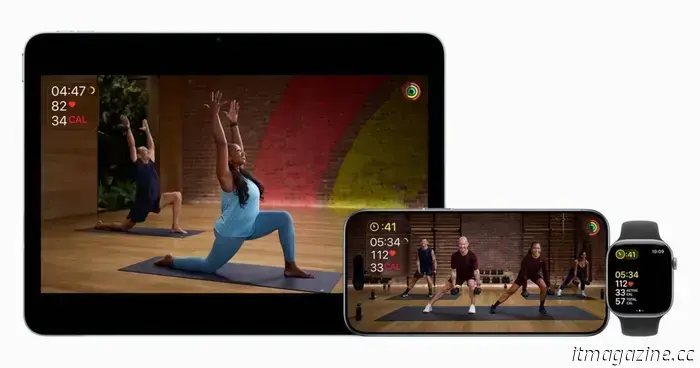 Apple Fitness+ introduces new workout programs designed to assist you in achieving your fitness objectives for 2026.
Apple has launched a new collection of Apple Fitness+ content designed to assist users in reaching their fitness objectives in 2026.
Apple Fitness+ introduces new workout programs designed to assist you in achieving your fitness objectives for 2026.
Apple has launched a new collection of Apple Fitness+ content designed to assist users in reaching their fitness objectives in 2026.
-like-a-pro.jpg) Introducing the humanoid robot that plays tennis (nearly) at a professional level.
If you find yourself in need of a tennis partner to hit some balls with, UBTECH Robotics' Walker S2 humanoid robot might be the solution. A recent video from the Chinese technology firm demonstrates the Walker S2 skillfully handling a tennis racket, maneuvering around the court and seemingly making impressive shots.
Introducing the humanoid robot that plays tennis (nearly) at a professional level.
If you find yourself in need of a tennis partner to hit some balls with, UBTECH Robotics' Walker S2 humanoid robot might be the solution. A recent video from the Chinese technology firm demonstrates the Walker S2 skillfully handling a tennis racket, maneuvering around the court and seemingly making impressive shots.
 Zeroth invites your family to get to know the Zeroth M1 home robot, along with a WALL-E lookalike.
Zeroth Robotics launched at CES 2026 with a lineup of five robots, but only the 15-inch M1 home humanoid has a clear timeline and pricing for the near future. Preorders are anticipated to begin in the first quarter of 2026.
Zeroth invites your family to get to know the Zeroth M1 home robot, along with a WALL-E lookalike.
Zeroth Robotics launched at CES 2026 with a lineup of five robots, but only the 15-inch M1 home humanoid has a clear timeline and pricing for the near future. Preorders are anticipated to begin in the first quarter of 2026.
SwitchBot's latest device, MindClip, is designed to transform your note-taking experience.
At CES 2026, SwitchBot has joined the AI note-taking trend with its MindClip, a wearable device intended for capturing notes without the need for hands.