
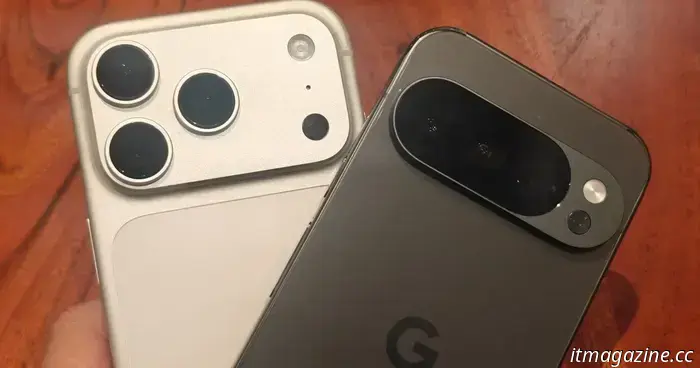
I have been reporting on smartphones for years, but 2026 appears to be particularly bold and concerning.
The year 2025 was quite fulfilling for my tech-loving heart. It introduced remarkable developments, like the liquid-cooled Red Magic 11 Pro, which set new standards for value and performance. The iPhone 17 turned out to be an unexpected hit, while the iPhone 17 Pro saw Apple return to its adventurous spirit.
We also saw phones like the Vivo X300, which significantly changed what a compact phone is capable of. Samsung kept the momentum going with the Galaxy Z TriFold, which truly embraced the concept of a hybrid phone-tablet. Google reached its zenith with the impressive Pixel 10 series.
Brands like OnePlus and Honor advanced battery technology, while companies such as Oppo and Vivo displayed true camera quality. However, not everything was positive. Smartphone users became cautious about the pervasive presence of AI, and towards the end of the year, we faced a memory crisis.
A pricing shock is nearly unavoidable.
Nadem Sarwar / Digital Trends
The issue began with AI, or more precisely, the vast investments made into data centers supporting tools such as ChatGPT and Gemini. The consequence? A severe memory shortage. With ample funding, AI companies paid higher prices and monopolized memory chip supplies.
This led to a shortage that drove the cost of RAM modules so high that DDR5 has become a luxury item. It was inevitable that manufacturers—already experiencing record profits—would focus their attention on AI clients, leaving smartphone brands in a tough position.
Reports indicate that the cost of smartphone memory has surged by up to 50%, and this trend is expected to continue in the coming months. This, along with increasing silicon prices, strongly suggests that a price increase will occur next year. While Apple, thanks to its supply chain expertise, may manage the situation to some degree, others will have no choice but to pass on the heightened costs to consumers.
Samsung
Insiders reveal that many smartphone brands are already struggling to prevent a price hike next year, with noticeable effects in markets like India, where even a memory producer like Samsung has raised its prices. Due to the escalating costs of DRAM and NAND, smartphone manufacturers are in a precarious position, where their only option may be to reduce RAM capacity.
However, this approach is undesirable. The demand for more AI features in phones continues to grow, but AI requires substantial memory. Essentially, users must choose between spending more money or compromising on memory, and neither option seems appealing.
More AI, fewer apps
AI has become a contentious trend in the smartphone industry over the last few years. Every smartphone manufacturer appears to view it as a crucial enhancement, regardless of actual user engagement, despite what enthusiastic marketing suggests. Nevertheless, AI's presence is set to persist.
In 2026, AI will become more versatile and integrated than ever before. More AI-driven experiences will be available directly on devices, meaning tasks will be executed locally without requiring internet access or personal data to leave the phone.
Nadeem Sarwar / Digital Trends
Crucially, AI will delve deeper into apps. Google and Apple have already established frameworks to incorporate Gemini and Apple Intelligence into their applications. For instance, on Pixel devices, users can manage various tasks across apps using natural language prompts, even in third-party applications like WhatsApp and Spotify—without opening them.
However, will developers embrace these changes? That remains uncertain. Even if they don’t, there will be alternative ways for AI to integrate into apps. OpenAI has just introduced its own ChatGPT App Store, enabling users to perform various tasks within multiple apps using text or voice commands. From crafting playlists in Apple Music to editing photos in Photoshop, it can manage it all. Users only need to link their accounts once to get started.
Nothing has created a uniquely personalized system that eliminates the need for apps. The AI-driven Nothing Playground app lets users design mini-apps by simply describing their purpose and design in simple terms. These mini-apps can be shared and built upon, extending their functionality.
Apps in ChatGPT Nadeem Sarwar / Digital Trends
Google’s Opal is pursuing a similar approach, and it’s only a matter of time before this concept becomes mainstream. The vision is clear: while apps will remain, AI assistants will increasingly handle everyday tasks through conversation instead of manual interaction within those applications.
However, there's a significant consideration. As AI becomes more prevalent, it will necessitate more RAM. This means consumers will not only bear the costs of enhanced hardware but also ongoing subscriptions needed to fully enjoy the experience. It’s a somewhat bittersweet trade-off that many users didn’t initially seek.
Big battery, more power
When 2025 began, a phone featuring a 5,000 mAh battery was regarded as a powerhouse in terms of battery life. By the end of the year, Honor had already released a standard-looking phone equipped with a 10,000 mAh battery, marking a departure from single-instance devices.
The OnePlus 15 packed a


Other articles
 2026 paves the way for more rapid laptops, albeit with a trade-off in memory.
Anticipate a diverse selection of new laptops featuring the latest processors from Intel, AMD, and Qualcomm.
2026 paves the way for more rapid laptops, albeit with a trade-off in memory.
Anticipate a diverse selection of new laptops featuring the latest processors from Intel, AMD, and Qualcomm.
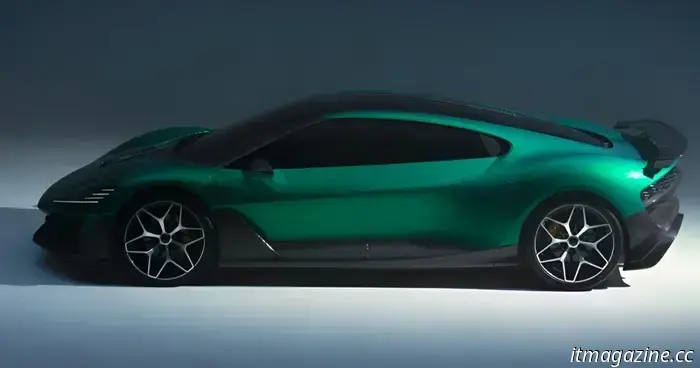 The first electric hypercar from this renowned vacuum brand aims to compete with BYD and Tesla.
A Chinese vacuum cleaner company has hinted at a 1,000hp electric hypercar in the lead-up to CES 2026. Here's why Dreame's surprising decision is significant for electric vehicle technology.
The first electric hypercar from this renowned vacuum brand aims to compete with BYD and Tesla.
A Chinese vacuum cleaner company has hinted at a 1,000hp electric hypercar in the lead-up to CES 2026. Here's why Dreame's surprising decision is significant for electric vehicle technology.
 A summary of 2025 for Technology and AI
The year 2025 marked the moment when technology transitioned from being a future promise to a present reality. The rise of generative AI and platform innovation that started two years earlier solidified this year into significant changes in the ways people work and govern.
A summary of 2025 for Technology and AI
The year 2025 marked the moment when technology transitioned from being a future promise to a present reality. The rise of generative AI and platform innovation that started two years earlier solidified this year into significant changes in the ways people work and govern.
 How AI could help you become fitter than ever by 2026.
From planning meals to boosting gym confidence and aiding in recovery, AI is gradually emerging as the most intelligent fitness companion you'll ever encounter.
How AI could help you become fitter than ever by 2026.
From planning meals to boosting gym confidence and aiding in recovery, AI is gradually emerging as the most intelligent fitness companion you'll ever encounter.
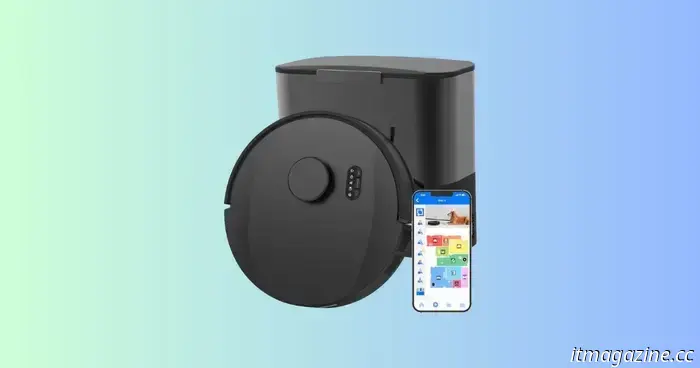 Get a $860 discount on a self-emptying robot vacuum and mop, now available for only $269.99.
If you have been looking for a substantial discount on a robot vacuum, this offer is noteworthy. The bObsweep UltraVision Pet self-empty robot vacuum and mop is available for $269.99, down from its original price of $1,129.99, resulting in an $860 savings. The key factor to consider is the timing: this deal is being promoted as a limited-time opportunity.
Get a $860 discount on a self-emptying robot vacuum and mop, now available for only $269.99.
If you have been looking for a substantial discount on a robot vacuum, this offer is noteworthy. The bObsweep UltraVision Pet self-empty robot vacuum and mop is available for $269.99, down from its original price of $1,129.99, resulting in an $860 savings. The key factor to consider is the timing: this deal is being promoted as a limited-time opportunity.
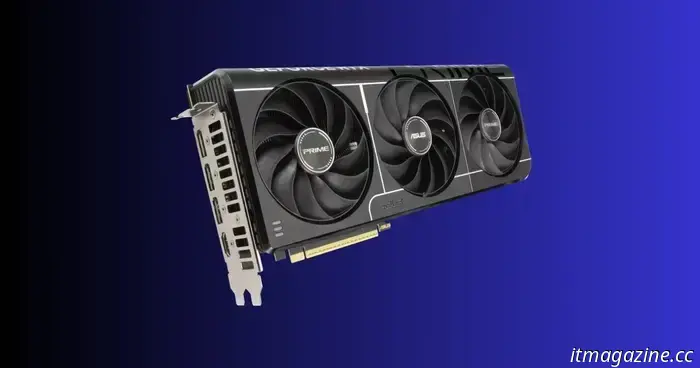 RTX 5070 Ti price reduction: save $130 on a contemporary PCIe 5.0 graphics card.
The GPU deals that truly matter are typically those that provide significant savings on a graphics card you would purchase regardless for a new build or a much-needed upgrade. The ASUS Prime NVIDIA GeForce RTX 5070 Ti OC Edition, featuring 16GB of GDDR7, is currently priced at $809.99, down from a comparable price of $939.99, offering a savings of $130. If […]
RTX 5070 Ti price reduction: save $130 on a contemporary PCIe 5.0 graphics card.
The GPU deals that truly matter are typically those that provide significant savings on a graphics card you would purchase regardless for a new build or a much-needed upgrade. The ASUS Prime NVIDIA GeForce RTX 5070 Ti OC Edition, featuring 16GB of GDDR7, is currently priced at $809.99, down from a comparable price of $939.99, offering a savings of $130. If […]
I have been reporting on smartphones for years, but 2026 appears to be particularly bold and concerning.
The year 2025 turned out to be remarkable for innovations in smartphones. For 2026, my forecasts include a combination of thrilling enhancements and a significant amount of caution.