
2026 paves the way for more rapid laptops, albeit with a trade-off in memory.
CES (Consumer Electronics Show) has historically been a significant platform for launching new laptops, also serving as a barometer for wider industry trends and future directions. CES 2026 is anticipated to uphold this tradition.
Initial indications suggest that next year’s laptops will prioritize performance enhancements across various platforms, form factors, and price ranges. Key players in this arena include new mobile CPUs such as Intel’s forthcoming Core Ultra Series 3, codenamed Panther Lake, AMD’s Gorgon Point with the new Ryzen AI 400 series, and Qualcomm’s second-generation Snapdragon X2.
However, a major concern is the rising cost of memory. Even as CPUs become faster and more efficient, increasing RAM prices may significantly influence pricing, configurations, and value in 2026.
Panther Lake and Intel’s turning point
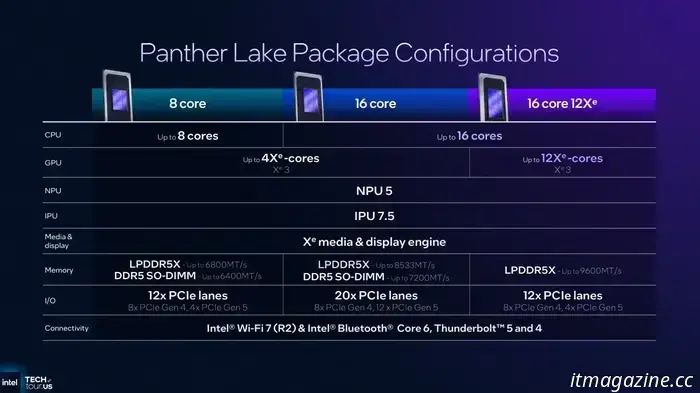
Following a prolonged period of inconsistent mobile generations, Intel's upcoming Panther Lake represents an opportunity for the company to reset expectations. It is the first client platform utilizing the cutting-edge Intel 18A manufacturing process, expected to merge the energy efficiency of the Lunar Lake architecture with the computational capabilities of Arrow Lake.
Panther Lake will include the new Intel Arc Xe3 (Celestial) graphics, promising up to a 50% performance improvement over previous generations. Intel also claims to achieve more than a 30% reduction in power consumption at similar performance levels compared to Arrow Lake. In terms of AI enhancements, the integrated NPU 5 is rated for up to 50 TOPS (trillions of operations per second), a modest increase compared to Lunar Lake.
Intel
There are reports that Lenovo will unveil new laptops featuring Intel’s Panther Lake platform, including the ThinkPad X1 Carbon Gen 14, ThinkPad X9 15p Aura Edition, and a distinctive 1-liter cylindrical Yoga Mini PC. Additionally, MSI has confirmed that its new Prestige series laptops will incorporate Intel’s latest chips.
Thunderobot, a newcomer in the Chinese OEM market known for its mini-gaming PCs, plans to launch the Zero Air gaming laptop, combining Panther Lake with Nvidia’s upcoming RTX 50-series mobile GPUs in a lightweight 16-inch form. Weighing approximately 1.6 kg, this suggests that Intel’s new platform could support slimmer gaming laptops without necessitating significant compromises in thermal performance or battery life.
This is significant because Intel's main weakness in recent years has not been raw performance but efficiency under real-world conditions. If Panther Lake can deliver consistent performance while managing power consumption effectively, it might restore confidence among OEMs who have increasingly turned to AMD and Qualcomm for more streamlined designs.
AMD Gorgon Point leans into its strengths
AMD is expected to continue its approach in mobile technology, focusing on refinement rather than reinvention. Internally designated as Gorgon Point, the Ryzen AI 400 series is set to debut at CES 2026 and seems to be an incremental update to Strix Point and Krackan Point rather than a complete redesign.
This new lineup is anticipated to retain Zen 5 and Zen 5c CPU cores, paired with RDNA 3.5 integrated graphics, while increasing clock speeds and enhancing AI capabilities. The most notable architectural advancement appears to be the upgraded XDNA 2 NPU, rumored to deliver 55 AI TOPS, up from 50 TOPS in the current Ryzen AI 300 chips. On the surface, this keeps AMD competitive in a sector that increasingly values localized AI processing, even if practical applications are still catching up.
For everyday laptops, whereby incremental enhancements could be more impactful than dramatic advancements, Ryzen-based systems have built a reputation for solid multi-core performance, adequate integrated graphics, and good efficiency, particularly in models that do not require a discrete GPU. With Gorgon Point, AMD could enhance this balance, making these processors particularly attractive for creators, developers, and power users seeking reliable performance in thinner, quieter machines.
Laptops featuring Gorgon Point, including models such as the Lenovo Legion 7a, Legion 5a, and revamped Asus Vivobook systems, are expected to debut at the event. A broader range of AMD offerings across various form factors and price categories, especially in premium ultrabooks, would signal growing confidence from OEMs.
Snapdragon X2 and the Arm challenge
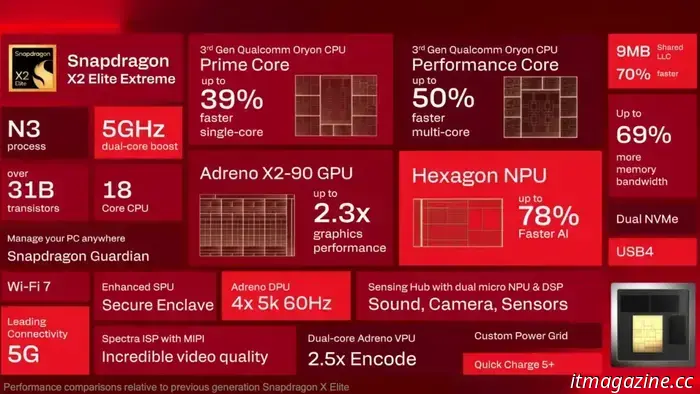
Qualcomm has signaled its ambitions well before CES 2026 with the announcement of Snapdragon X2 Elite and X2 Elite Extreme. However, CES serves as the stage for these chips to demonstrate their capabilities in actual laptops.
The initial series of Snapdragon X laptops illustrated the potential of Arm for Windows in terms of battery longevity and daily responsiveness. They were quiet, efficient, and surprisingly smooth for basic tasks but felt more like early-adopter devices. Challenges such as app compatibility issues, inconsistent gaming performance, and premium pricing prevented them from being seen as viable mainstream alternatives to x86 laptops.
Qualcomm
The Snapdragon X2 generation seems to be Qualcomm’s strategy to overcome these hurdles. Built on a 3nm process and featuring
Other articles
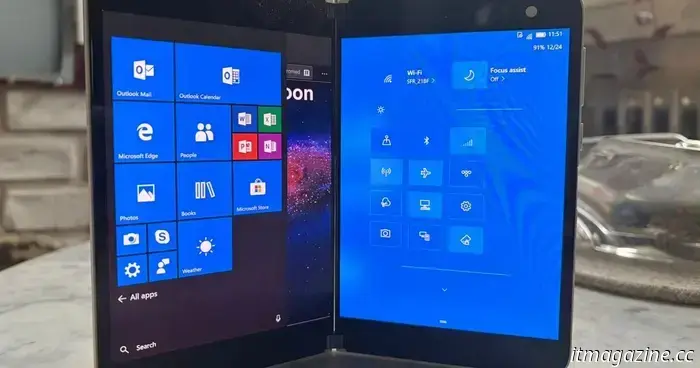 You can now experience the Windows Phone OS that Microsoft chose not to launch.
A leaked version of Andromeda OS now allows users to explore the discontinued Windows software that was initially intended for Surface Duo, providing a firsthand experience of Microsoft’s forsaken initiative to revive a dual-screen edition of Windows Phone.
You can now experience the Windows Phone OS that Microsoft chose not to launch.
A leaked version of Andromeda OS now allows users to explore the discontinued Windows software that was initially intended for Surface Duo, providing a firsthand experience of Microsoft’s forsaken initiative to revive a dual-screen edition of Windows Phone.
 A summary of 2025 for Technology and AI
The year 2025 marked the moment when technology transitioned from being a future promise to a present reality. The rise of generative AI and platform innovation that started two years earlier solidified this year into significant changes in the ways people work and govern.
A summary of 2025 for Technology and AI
The year 2025 marked the moment when technology transitioned from being a future promise to a present reality. The rise of generative AI and platform innovation that started two years earlier solidified this year into significant changes in the ways people work and govern.
 What if the Apple Watch resembled an iMac G3? This concept captures that perfectly.
A fresh Apple Watch concept reinvents Apple's legendary iMac G3 with a transparent, vibrant color scheme, demonstrating that striking retro styles remain highly popular.
What if the Apple Watch resembled an iMac G3? This concept captures that perfectly.
A fresh Apple Watch concept reinvents Apple's legendary iMac G3 with a transparent, vibrant color scheme, demonstrating that striking retro styles remain highly popular.
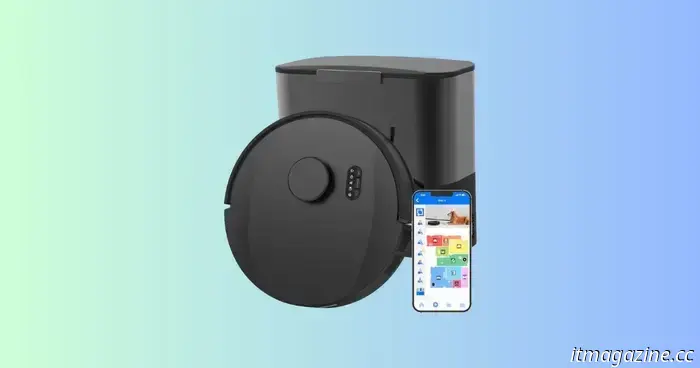 Get a $860 discount on a self-emptying robot vacuum and mop, now available for only $269.99.
If you have been looking for a substantial discount on a robot vacuum, this offer is noteworthy. The bObsweep UltraVision Pet self-empty robot vacuum and mop is available for $269.99, down from its original price of $1,129.99, resulting in an $860 savings. The key factor to consider is the timing: this deal is being promoted as a limited-time opportunity.
Get a $860 discount on a self-emptying robot vacuum and mop, now available for only $269.99.
If you have been looking for a substantial discount on a robot vacuum, this offer is noteworthy. The bObsweep UltraVision Pet self-empty robot vacuum and mop is available for $269.99, down from its original price of $1,129.99, resulting in an $860 savings. The key factor to consider is the timing: this deal is being promoted as a limited-time opportunity.
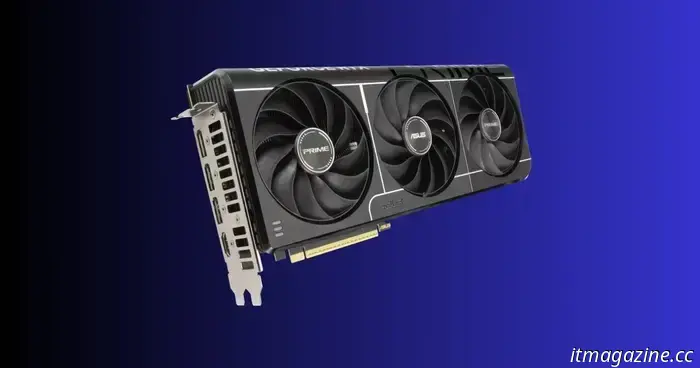 RTX 5070 Ti price reduction: save $130 on a contemporary PCIe 5.0 graphics card.
The GPU deals that truly matter are typically those that provide significant savings on a graphics card you would purchase regardless for a new build or a much-needed upgrade. The ASUS Prime NVIDIA GeForce RTX 5070 Ti OC Edition, featuring 16GB of GDDR7, is currently priced at $809.99, down from a comparable price of $939.99, offering a savings of $130. If […]
RTX 5070 Ti price reduction: save $130 on a contemporary PCIe 5.0 graphics card.
The GPU deals that truly matter are typically those that provide significant savings on a graphics card you would purchase regardless for a new build or a much-needed upgrade. The ASUS Prime NVIDIA GeForce RTX 5070 Ti OC Edition, featuring 16GB of GDDR7, is currently priced at $809.99, down from a comparable price of $939.99, offering a savings of $130. If […]
 I have been reporting on smartphones for years, but 2026 appears to be particularly bold and concerning.
The year 2025 turned out to be remarkable for innovations in smartphones. For 2026, my forecasts include a combination of thrilling enhancements and a significant amount of caution.
I have been reporting on smartphones for years, but 2026 appears to be particularly bold and concerning.
The year 2025 turned out to be remarkable for innovations in smartphones. For 2026, my forecasts include a combination of thrilling enhancements and a significant amount of caution.
2026 paves the way for more rapid laptops, albeit with a trade-off in memory.
Anticipate a diverse selection of new laptops featuring the latest processors from Intel, AMD, and Qualcomm.