

A summary of 2025 for Technology and AI
The year 2025 marked the moment when technology transitioned from a futuristic promise to a present-day reality. Following a wave of generative AI and platform advancements two years earlier, this year solidified significant changes in work practices, legislation from governing bodies, and investment strategies in markets. Globally and across various sectors, technology began to focus on tangible impacts, regulatory frameworks, and economic importance.
Central to the narrative of this year was artificial intelligence moving from a novelty to a vital infrastructure. Large language models (LLMs) and multimodal models shifted from demonstrations to integration into daily workflows, affecting how documents were composed, marketing campaigns were planned, products were developed, and code was generated.
Businesses that had previously been cautious started embracing AI tools at scale, with initial users reporting significant productivity improvements by incorporating AI copilots into fundamental processes, a trend reflected in surveys indicating widespread uptake among software engineers.
This editorial does not serve as a record of every announcement made. Instead, it contemplates how 2025, at the intersection of technology, regulation, and economic policy, brought forth a series of pivotal moments that will influence the forthcoming era of innovation, competition, and governance.
The 💜 of EU techThe latest developments from the EU tech landscape, a story from our insightful founder Boris, and some questionable AI art. It's free, available weekly in your inbox. Sign up now!
Imagination Turns into Infrastructure
The launch of OpenAI's GPT-5 in August expanded the limits of AI capabilities, showcasing significant progress in areas like coding, mathematics, and multimodal comprehension. However, unlike the stunning introduction of ChatGPT two years earlier, this latest generation of foundational models faced a more tempered reception.
Tech leaders and investors began to pose tougher inquiries: beyond impressive demonstrations, could these models translate into viable products and revenue?
Google responded with the introduction of Gemini 3 in November, touted as its "most intelligent model" and quickly integrated into Google Search. For the first time, an upgrade to an AI model was not merely about high leaderboard positions; it aimed to enhance user experience.
When users typed queries into Google, they often received AI-generated summaries instead of the traditional list of links, drastically changing how information was presented. Google also announced a Gemini "agent" capable of performing multi-step tasks, such as booking travel or organizing emails, signalling a future where AI functions more as a digital assistant than a simple chat interface.
Anthropic’s Claude 4 model gained popularity among developers by increasing its capacity for simultaneous processing, able to handle entire codebases comprising tens of thousands of lines, rather than generating catchy one-liners.
In 2025, AI matured: it continued to advance rapidly, but it also needed to prove its value through actual products and justify the substantial investments propelling its growth.
Chips and Gadgets
This surge in AI was paralleled by significant advances in hardware. The demand for AI computing power in 2025 was unprecedented, and chip manufacturers raced to keep up.
NVIDIA, which had established its GPUs as crucial infrastructure for the era, introduced its new Blackwell architecture, featuring chips like the B200 that promised up to three times the training speed of earlier models. Cloud data centers worldwide hurried to implement these to meet the overwhelming demand for model training and inference.
Other chipmakers were not idle; AMD and a group of startups launched innovative AI accelerators, while Intel signaled its intent to catch up, reportedly exploring the acquisition of AI chip designer SambaNova.
Perhaps most tellingly, major tech companies began crafting their own silicon optimized for AI operations, acknowledging that controlling the silicon landscape equates to controlling the future of computing.
Aside from AI chips, consumer hardware also achieved significant milestones. After years of anticipation, augmented reality glasses and mixed-reality headsets finally emerged, sort of.
Apple’s Vision Pro headset, introduced in late 2023, reached certain markets by 2024; by 2025, developers were launching the first set of immersive applications. However, widespread adoption remained slow due to the device's steep price and bulky design.
Competitors such as Meta’s Quest line rolled out more affordable VR headsets with modest enhancements, but the buzz surrounding the "metaverse" diminished as users and investors redirected their enthusiasm toward generative AI and practical productivity tools.
Smartphones and laptops in 2025 saw incremental enhancements (speedier Apple M3/M4 chips, and increasing prevalence of foldable screens), yet it was evident that the next major shift in personal technology was still on the horizon.
Nevertheless, a significant advancement occurred in the realm of quantum computing. Industry leaders like IBM and Google showcased prototype systems with higher qubit counts and made progress in error correction, getting closer to achieving functional quantum machines.
These developments, while somewhat obscure to the general public, illustrated a larger trend: from AI accelerators to quantum chips, the technological infrastructure rapidly evolved to support the software of the future.
Regulators Strike Back
2025 clarified the

Other articles
 I have been reporting on smartphones for years, but 2026 appears to be particularly bold and concerning.
The year 2025 turned out to be remarkable for innovations in smartphones. For 2026, my forecasts include a combination of thrilling enhancements and a significant amount of caution.
I have been reporting on smartphones for years, but 2026 appears to be particularly bold and concerning.
The year 2025 turned out to be remarkable for innovations in smartphones. For 2026, my forecasts include a combination of thrilling enhancements and a significant amount of caution.
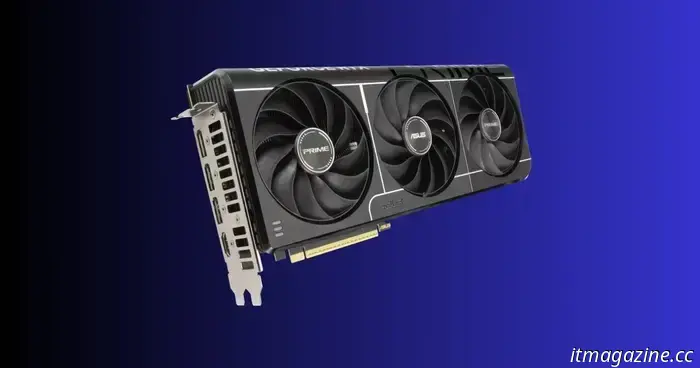 RTX 5070 Ti price reduction: save $130 on a contemporary PCIe 5.0 graphics card.
The GPU deals that truly matter are typically those that provide significant savings on a graphics card you would purchase regardless for a new build or a much-needed upgrade. The ASUS Prime NVIDIA GeForce RTX 5070 Ti OC Edition, featuring 16GB of GDDR7, is currently priced at $809.99, down from a comparable price of $939.99, offering a savings of $130. If […]
RTX 5070 Ti price reduction: save $130 on a contemporary PCIe 5.0 graphics card.
The GPU deals that truly matter are typically those that provide significant savings on a graphics card you would purchase regardless for a new build or a much-needed upgrade. The ASUS Prime NVIDIA GeForce RTX 5070 Ti OC Edition, featuring 16GB of GDDR7, is currently priced at $809.99, down from a comparable price of $939.99, offering a savings of $130. If […]
 What if the Apple Watch resembled an iMac G3? This concept captures that perfectly.
A fresh Apple Watch concept reinvents Apple's legendary iMac G3 with a transparent, vibrant color scheme, demonstrating that striking retro styles remain highly popular.
What if the Apple Watch resembled an iMac G3? This concept captures that perfectly.
A fresh Apple Watch concept reinvents Apple's legendary iMac G3 with a transparent, vibrant color scheme, demonstrating that striking retro styles remain highly popular.
 How AI could help you become fitter than ever by 2026.
From planning meals to boosting gym confidence and aiding in recovery, AI is gradually emerging as the most intelligent fitness companion you'll ever encounter.
How AI could help you become fitter than ever by 2026.
From planning meals to boosting gym confidence and aiding in recovery, AI is gradually emerging as the most intelligent fitness companion you'll ever encounter.
 2026 paves the way for more rapid laptops, albeit with a trade-off in memory.
Anticipate a diverse selection of new laptops featuring the latest processors from Intel, AMD, and Qualcomm.
2026 paves the way for more rapid laptops, albeit with a trade-off in memory.
Anticipate a diverse selection of new laptops featuring the latest processors from Intel, AMD, and Qualcomm.
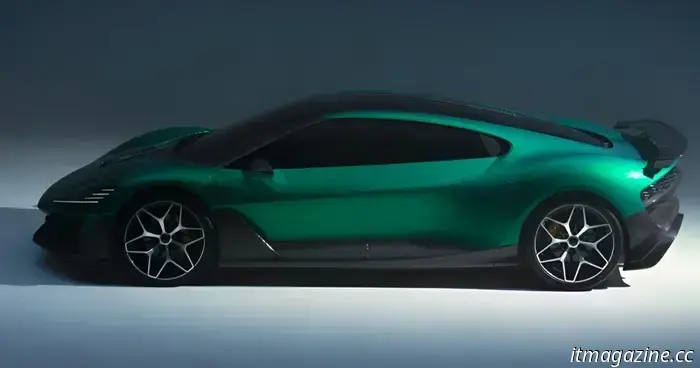 The first electric hypercar from this renowned vacuum brand aims to compete with BYD and Tesla.
A Chinese vacuum cleaner company has hinted at a 1,000hp electric hypercar in the lead-up to CES 2026. Here's why Dreame's surprising decision is significant for electric vehicle technology.
The first electric hypercar from this renowned vacuum brand aims to compete with BYD and Tesla.
A Chinese vacuum cleaner company has hinted at a 1,000hp electric hypercar in the lead-up to CES 2026. Here's why Dreame's surprising decision is significant for electric vehicle technology.
A summary of 2025 for Technology and AI
The year 2025 marked the moment when technology transitioned from being a future promise to a present reality. The rise of generative AI and platform innovation that started two years earlier solidified this year into significant changes in the ways people work and govern.