
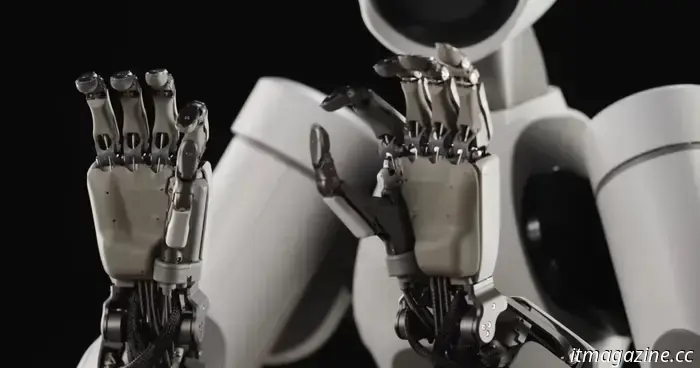
Four remarkable robot demonstrations from 2025, along with one significant failure.
It has been an eventful year for humanoid robots, showcasing a variety of increasingly sophisticated designs. The focus here is more on physical mobility rather than artificial intelligence, which is anticipated to take center stage next year.
H1 by Unitree
Many humanoid robots continue to move as if they urgently need to find a restroom. However, Unitree’s H1 robot not only walks like a human, it also runs like one. This remarkable machine excelled at the inaugural World Humanoid Robot Olympics in August, winning four gold medals, three silver, and four bronze in several track competitions.
The H1 secured its first gold in the 1,500 meters, finishing impressively in 6 minutes and 34 seconds (while the world record stands at 3 minutes and 26 seconds). Achieving a maximum speed of 4.78 meters per second, the humanoid robot ran with both ease and elegance, its arms and legs moving in perfect harmony to sustain balance, speed, and momentum.
Only Head by AheadForm
At first glance, one might assume that this video of a robotic head was created by AI. However, it was produced by the Chinese company AheadForm, and is referred to as the “Only Head,” described as a “face robot” designed for research, interaction, and high-end displays.
Its movements are remarkably lifelike, to the extent that the footage could be unsettling. The setup features a full facial actuation system equipped with as many as 25 micro motors that allow for lifelike expressions capable of conveying a range of human emotions. The pupils of the Only Head include cameras for visual perception, and integrated microphones and speakers enable real-time audio communication.
ALLEX by WIRobotics
One of the main challenges for engineers working on humanoid robots is achieving natural hand movements, as the fine motor skills and sensitivity of human fingers are difficult to reproduce. South Korean tech company WIRobotics is making significant strides with its ALLEX (from “All EXperience”) humanoid robot, which exhibits impressively versatile finger movements.
Once refined, these hands — along with the rest of the robot — could be utilized on production lines or even for prosthetics. WIRobotics is also collaborating with an AI startup to enhance ALLEX's AI capabilities, aiming to develop what could be an extraordinary robot.
G1 by Unitree
Unitree G1 has developed some unique abilities 🤩The Unitree G1 has adopted the “Anti-Gravity” mode: stability is significantly enhanced during various movements, and even if it falls, it can quickly recover. pic.twitter.com/gDR0n0eIXl— Unitree (@UnitreeRobotics) September 22, 2025
Here's another entry from Unitree. This model is smaller than the adult-sized H1 robot that excelled at the robot Olympics. The G1 has gained attention for its exceptional balance and its ability to recover after being knocked over. The creators refer to this capability as the “anti-gravity mode.”
In the event of a robot uprising, one could envision the G1 leading the charge, with human combatants unable to stop waves of G1 robots that refuse to fall … though we certainly hope such a scenario never happens.
The flop … AIDOL by the Artificial Intelligence Dynamic Organism Lab
For skilled roboticists, this video may be tough to watch. It features a new humanoid robot from Russia named AIDOL. Its creators debuted AIDOL at a special event in November, but just moments after stepping onto the stage, the robot lost its balance and had a spectacular fall.
In a frantic effort to maintain some semblance of dignity, several helpers rushed in to cover AIDOL with a sheet, but that also went awry, getting entangled and failing to conceal the robot. This resulted in AIDOL being seen being taken off the stage — presumably back to the workshop, or perhaps to a dumpster.
Other articles
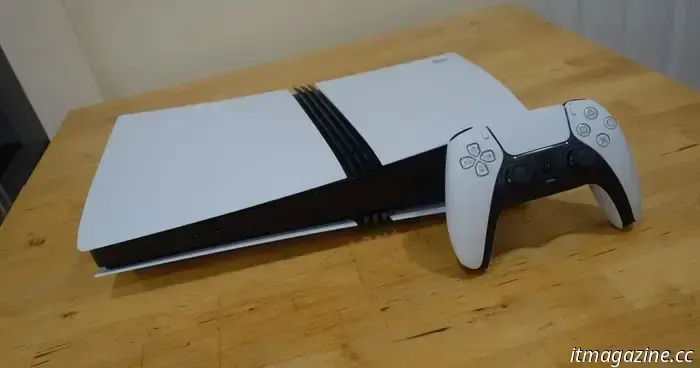 Here are the steps you need to take with your new PS5 before starting a game.
Unpack your new system and maximize its potential with our PS5 setup guide this holiday season.
Here are the steps you need to take with your new PS5 before starting a game.
Unpack your new system and maximize its potential with our PS5 setup guide this holiday season.
 Marshall Major V headphones are available for $89.99 at Best Buy, which is a savings of $60.
If you’ve been considering a pair of on-ear headphones that you can easily overlook charging, Best Buy has reduced the price of the Marshall Major V to $89.99. This is a $60 savings on a newer model that embraces Marshall’s traditional, sturdy design and extended listening capabilities. The major appeal here is straightforward: you're receiving a genuine brand-name product.
Marshall Major V headphones are available for $89.99 at Best Buy, which is a savings of $60.
If you’ve been considering a pair of on-ear headphones that you can easily overlook charging, Best Buy has reduced the price of the Marshall Major V to $89.99. This is a $60 savings on a newer model that embraces Marshall’s traditional, sturdy design and extended listening capabilities. The major appeal here is straightforward: you're receiving a genuine brand-name product.
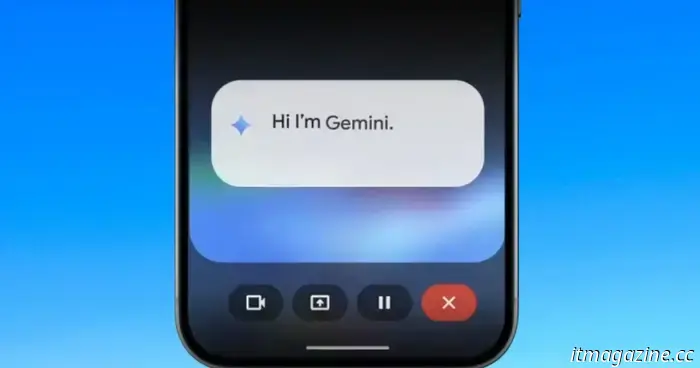 Gemini may soon be able to perform tasks in the background without taking over your screen.
Gemini might soon cease disrupting your workflow. Google is working on a modification that enables the assistant to manage requests in the background, allowing users to switch between apps while maintaining their progress.
Gemini may soon be able to perform tasks in the background without taking over your screen.
Gemini might soon cease disrupting your workflow. Google is working on a modification that enables the assistant to manage requests in the background, allowing users to switch between apps while maintaining their progress.
 The Xiaomi S25 Ultra competitor boasts a physical zoom ring reminiscent of DSLR cameras, along with a 200MP zoom lens.
The Xiaomi 17 Ultra isn't merely focused on increasing megapixels; it's redefining the experience of smartphone zoom by incorporating a physical zoom ring around an impressive 200MP periscope camera.
The Xiaomi S25 Ultra competitor boasts a physical zoom ring reminiscent of DSLR cameras, along with a 200MP zoom lens.
The Xiaomi 17 Ultra isn't merely focused on increasing megapixels; it's redefining the experience of smartphone zoom by incorporating a physical zoom ring around an impressive 200MP periscope camera.
 Where is Santa currently? He's not too far away...
It's Christmas Eve, and as the evening draws near, the question of 'When will Santa arrive?' will echo around the house. NORAD anticipates he will be in your airspace between 9 PM and midnight, but we all know the guideline… only if you're sound asleep. If you're curious about his current whereabouts, take a look at the resources we've been using […]
Where is Santa currently? He's not too far away...
It's Christmas Eve, and as the evening draws near, the question of 'When will Santa arrive?' will echo around the house. NORAD anticipates he will be in your airspace between 9 PM and midnight, but we all know the guideline… only if you're sound asleep. If you're curious about his current whereabouts, take a look at the resources we've been using […]
 NotebookLM may soon transform your study notes into classroom lectures.
Google is trialing a new Lecture mode in NotebookLM that can transform your notes and documents into extended, spoken lectures. This feature is designed to verbally convey material, giving studying a feel similar to being in an actual classroom.
NotebookLM may soon transform your study notes into classroom lectures.
Google is trialing a new Lecture mode in NotebookLM that can transform your notes and documents into extended, spoken lectures. This feature is designed to verbally convey material, giving studying a feel similar to being in an actual classroom.
Four remarkable robot demonstrations from 2025, along with one significant failure.
This year has been significant for humanoid robots, showcasing a variety of increasingly sophisticated designs. The highlights here emphasize physical mobility rather than artificial intelligence capabilities, which are anticipated to be more prominent next year. H1 by Unitree Many humanoid robots continue to move as if they are urgently searching for […]