
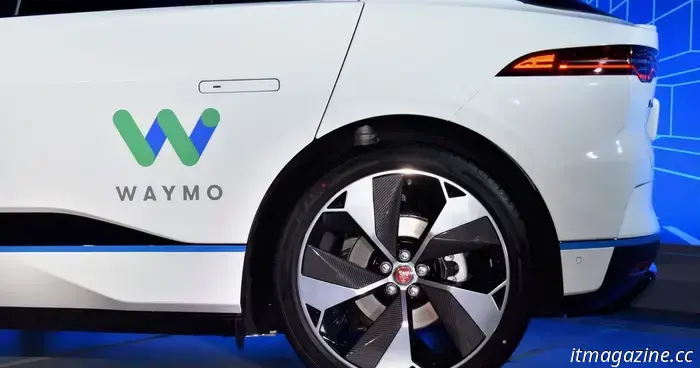
Waymo's robotaxis were uncertain about how to respond when the traffic lights in the city malfunctioned.
On Saturday, Waymo's robotaxis faced a significant setback when a power outage impacting much of San Francisco created challenges for its autonomous vehicles in the area.
Approximately 130,000 residents experienced power loss in their homes and businesses, while the outage also disabled traffic lights at key intersections, leading to confusion for Waymo’s robotaxis. Many of the self-driving cars halted at intersections, exacerbating congestion in addition to the disruption caused by the nonfunctional traffic signals.
In response, Waymo halted its robotaxi services while awaiting the restoration of power and the affected traffic lights.
“We have temporarily paused our ride-hailing services in the San Francisco Bay Area due to the extensive power outage,” Waymo stated on Saturday. “Our teams are working diligently in close coordination with city officials, and we are optimistic about resuming our services soon.”
In a follow-up statement to Digital Trends on Sunday, Waymo indicated that it was in the process of resuming its robotaxi operations in the city, noting, “Although the failure of the utility infrastructure was considerable, we are dedicated to ensuring our technology adapts to traffic patterns during such situations. Throughout the outage, we maintained close coordination with city officials in San Francisco. We are focused on swiftly integrating the lessons learned from this episode and are committed to earning and preserving the trust of the communities we serve daily.”
The outage, which was triggered by a fire at a Pacific Gas & Electric substation, began on Saturday morning, with power interruption occurring shortly after noon. By Sunday morning, power had been restored to approximately three-quarters of those affected in San Francisco.
This concerning incident seems to highlight a vulnerability in the technology behind Waymo's robotaxis, as they struggled to manage the situation with nonfunctional traffic lights.
Taking advantage of the situation, Tesla CEO Elon Musk commented on X that "Tesla robotaxis were unaffected by the SF power outage."
Currently, Tesla's robotaxis operate with a safety driver who can take control of the vehicle at any time, while Waymo's robotaxis operate without a driver present.
The differing technologies supporting their respective autonomous systems suggest that Tesla's vehicles may be better suited to adapt to a traffic light failure. For instance, Tesla cars use neural networks to process camera feeds and make human-like decisions in new scenarios, allowing them to operate without relying solely on maps. In contrast, Waymo utilizes LiDAR, radar, and updated HD maps, but, as demonstrated over the weekend, struggles with unexpected changes like a traffic light outage, which effectively converts a controlled intersection into a four-way stop.
Waymo elaborated: “While the Waymo Driver is designed to treat non-functional signals as four-way stops, the scale of the outage caused instances where vehicles remained stationary longer than usual to verify the status of the affected intersections. This added to traffic congestion during peak times.”
Other articles
 The government has confirmed that people in the UK are now offloading their emotional trauma onto AI.
According to a new report from the government's AI Security Institute (AISI), one-third of UK citizens have sought emotional support, companionship, or social interaction from artificial intelligence. The findings indicate that close to 10% of the population is utilizing systems such as chatbots for emotional reasons on a weekly basis, with 4% participating in …
The government has confirmed that people in the UK are now offloading their emotional trauma onto AI.
According to a new report from the government's AI Security Institute (AISI), one-third of UK citizens have sought emotional support, companionship, or social interaction from artificial intelligence. The findings indicate that close to 10% of the population is utilizing systems such as chatbots for emotional reasons on a weekly basis, with 4% participating in …
 A 300TB backup of Spotify has just arrived; here’s what you can access today.
Anna's Archive has released a torrent-based backup of Spotify, encompassing 300TB of metadata from the Spotify catalog, with audio files set to be added later. Below is an overview of what is contained, what is absent, and the reasoning behind its creation.
A 300TB backup of Spotify has just arrived; here’s what you can access today.
Anna's Archive has released a torrent-based backup of Spotify, encompassing 300TB of metadata from the Spotify catalog, with audio files set to be added later. Below is an overview of what is contained, what is absent, and the reasoning behind its creation.
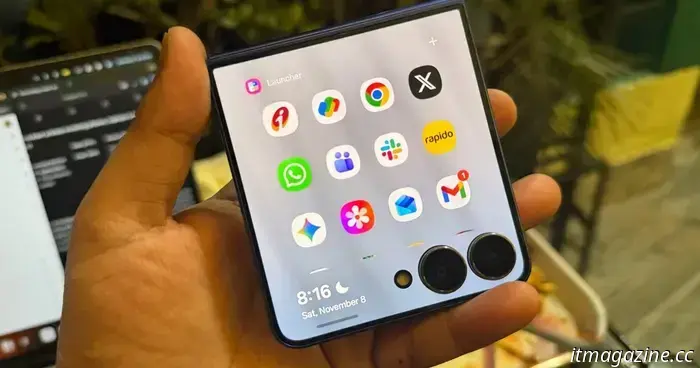 Samsung might equip the Galaxy Z Flip 8 with its own Exynos 2600 processor.
Samsung is contemplating the incorporation of the Exynos 2600 chip in the Galaxy Z Flip 8, with the goal of enhancing AI performance, reducing expenses, and bolstering its semiconductor division.
Samsung might equip the Galaxy Z Flip 8 with its own Exynos 2600 processor.
Samsung is contemplating the incorporation of the Exynos 2600 chip in the Galaxy Z Flip 8, with the goal of enhancing AI performance, reducing expenses, and bolstering its semiconductor division.
 ChatGPT now allows you to increase the warmth or decrease the enthusiasm in its replies.
OpenAI is introducing new personality configurations that allow you to adjust ChatGPT's responses for qualities like warmth, enthusiasm, and additional traits.
ChatGPT now allows you to increase the warmth or decrease the enthusiasm in its replies.
OpenAI is introducing new personality configurations that allow you to adjust ChatGPT's responses for qualities like warmth, enthusiasm, and additional traits.
 Samsung Galaxy Z Fold 8 expected to receive significant camera enhancements.
Leaks indicate that the Galaxy Z Fold 8 may include an upgraded telephoto and ultrawide camera with higher resolution, highlighting Samsung's commitment to uncompromised photography in foldable devices.
Samsung Galaxy Z Fold 8 expected to receive significant camera enhancements.
Leaks indicate that the Galaxy Z Fold 8 may include an upgraded telephoto and ultrawide camera with higher resolution, highlighting Samsung's commitment to uncompromised photography in foldable devices.
 Your upcoming prebuilt PC may be delivered with memory issues.
Confronted with RAM shortages, Paradox Customs is providing prebuilts devoid of memory, transferring the responsibilities for compatibility and stability to the customers and muddying the distinction between prebuilt and DIY PCs.
Your upcoming prebuilt PC may be delivered with memory issues.
Confronted with RAM shortages, Paradox Customs is providing prebuilts devoid of memory, transferring the responsibilities for compatibility and stability to the customers and muddying the distinction between prebuilt and DIY PCs.
Waymo's robotaxis were uncertain about how to respond when the traffic lights in the city malfunctioned.
Waymo's robotaxis experienced a significant malfunction on Saturday due to a power outage that impacted a large portion of San Francisco. Approximately 130,000 residents were left without electricity in their homes and businesses, and the outage also disabled traffic lights at key intersections, leading to challenges for Waymo's autonomous vehicles. Many […]