

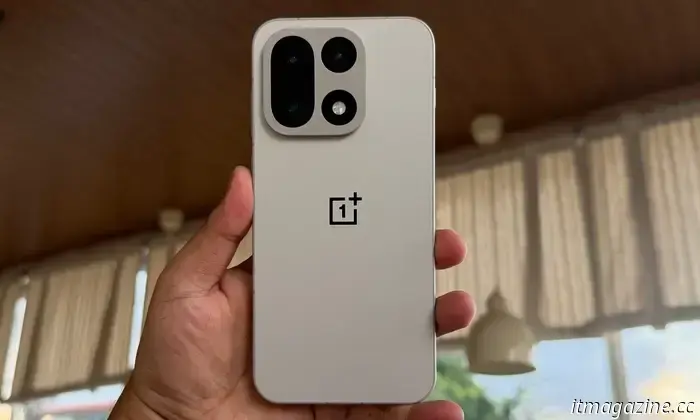
Increasing memory costs may affect the price and performance of your next Android phone.
Smartphone specifications seem poised to decline in the near future, not due to a lack of innovation but because of a significant increase in the costs of a crucial component: memory. Prices for DRAM and NAND are rising steeply and are anticipated to remain elevated at least until the first half of 2026.
Suppliers have increased prices in response to a spike in demand for AI servers, data centers, and enterprise hardware solutions. Initially, this pressure affected PC RAM prices and is now trickling down to smartphones, tablets, and smartwatches.
According to Nadeem Sarwar from Digital Trends, well-known brands will likely respond in one of three ways: increasing prices, reducing profit margins, or subtly lowering the RAM in future models. While shrinking margins is the least probable option, manufacturers are expected to either hike prices or cut memory capacity in devices that make up a significant portion of their sales.
As for smartphones, this could mean the disappearance of 16GB RAM options in top-tier models (with few exceptions), a reduction of over 40% for 12GB RAM models, and more than a 50% reduction for 8GB models, as highlighted in a post on the Korean blog Naver.
Having less RAM could hinder on-device AI functionalities.
To counteract price pressures, Xiaomi is reportedly exploring the possibility of cutting RAM for certain 2026 smartphone models, as noted by GizChina. Other Chinese smartphone companies like OnePlus, Vivo, and Oppo, along with global brands like Samsung and Google, are also likely to face similar challenges. This could lead to an unprecedented situation in the smartphone market where specifications may stagnate or even decline, despite increasing software demands.
In contrast to cloud-based AI, on-device models need significant memory. This is why flagship Android devices and even some midrange options typically have over 8GB of RAM. If manufacturers reduce the physical memory in smartphones, there may be insufficient space for AI models and applications to operate effectively, resulting in excessive RAM management, app reloads, or sluggish AI performance.
Additionally, the growing demand for on-device AI capabilities and the risk of supply chain issues for memory could to set smartphone specifications back by at least a few years, even as software continues to evolve through 2026. Even if manufacturers maintain similar memory levels, there is a strong likelihood they will pass the increased costs onto consumers.
In straightforward terms, your next Android smartphone could either become more expensive or noticeably less responsive. Although companies typically sell flagship devices at higher margins, leaving room for price adjustments, midrange devices, which are generally sold at lower margins, may face harsher impacts: consumers could end up paying more for diminished specifications.
This issue is particularly relevant to the midrange segment of the U.S. market, especially within the $400 to $800 range, where Android smartphones prioritize performance per dollar and durability above all else.
Apple's iPhones might also be affected, as the company relies more on software optimization and chipset efficiency rather than extensive onboard memory. Nevertheless, Apple isn’t completely exempt; if conditions don't improve and the costs of high-quality RAM rise, Apple customers may have to pay more to maintain the performance levels they expect.
Laptop manufacturers might also shift their focus by significantly reducing shipments of models with over 16GB of RAM (by more than 60%). They are likely to concentrate more on 8GB RAM options due to the high demand, although this might come with a price increase.
If memory prices continue to soar, manufacturers will need to make strategic decisions regarding the types of smartphones, tablets, and other consumer devices they produce. We may observe a sharper segmentation, with premium models keeping higher RAM while lower-memory or budget-friendly devices may feature less effective software optimization and fewer AI-driven functionalities.
Memory constraints may also prompt Google to reconsider how the Gemini Nano model is implemented on devices and its resource consumption. The industry as a whole could move towards hybrid AI solutions, where certain features operate on the device while others rely on cloud processing. Will manufacturers reserve specific AI capabilities exclusively for their higher-end models?


Other articles
 You can now pose questions to Gemini regarding your NotebookLM notebooks.
Google has begun to introduce a new integration for NotebookLM that allows you to pose questions about your notebooks to Gemini.
You can now pose questions to Gemini regarding your NotebookLM notebooks.
Google has begun to introduce a new integration for NotebookLM that allows you to pose questions about your notebooks to Gemini.
 Disregard the Galaxy S26; some of Samsung's most exciting technology for 2026 might be showcased at CES.
Here’s what you can anticipate from Samsung's products at CES 2026.
Disregard the Galaxy S26; some of Samsung's most exciting technology for 2026 might be showcased at CES.
Here’s what you can anticipate from Samsung's products at CES 2026.
 Your upcoming Samsung Galaxy A series smartphone might have a higher price tag.
Samsung's forthcoming devices may see a price increase, potentially affecting more than just its flagship Galaxy S26 series. A report from early last month indicated that the company might increase the prices of its next-generation flagship models due to the escalating costs of essential components such as SoCs, camera modules, and RAM. Recently, a new leak suggests that [...]
Your upcoming Samsung Galaxy A series smartphone might have a higher price tag.
Samsung's forthcoming devices may see a price increase, potentially affecting more than just its flagship Galaxy S26 series. A report from early last month indicated that the company might increase the prices of its next-generation flagship models due to the escalating costs of essential components such as SoCs, camera modules, and RAM. Recently, a new leak suggests that [...]
 OnePlus has officially begun the rollout of OxygenOS 16, which is based on Android 16, for OnePlus Open users in North America.
 Gemini's newest update simplifies the process of finding local hotspots.
Gemini now showcases more visually appealing Google Maps results, providing valuable information about nearby attractions.
Gemini's newest update simplifies the process of finding local hotspots.
Gemini now showcases more visually appealing Google Maps results, providing valuable information about nearby attractions.
 The much-awaited adult mode for ChatGPT is set to be launched in the first quarter of 2026, as OpenAI trials its age-verification system.
Increasing memory costs may affect the price and performance of your next Android phone.
Smartphones are incorporating more AI features rather than fewer, but increasing memory costs could lead manufacturers to release phones with reduced RAM in 2026.