
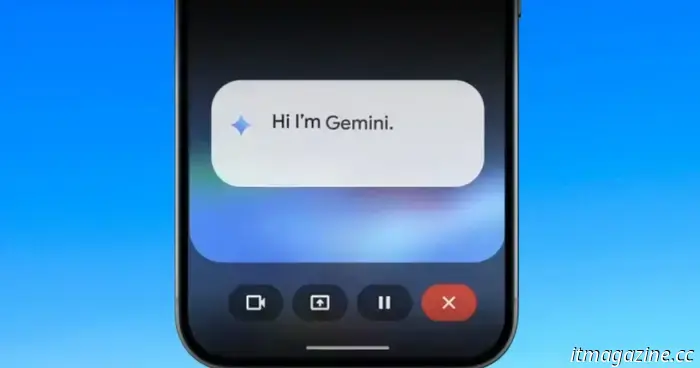
Google's top Gemini AI feature may soon be integrated into your daily applications.
Deep Research expands beyond Google applications with the new Interactions API
Google has recently enhanced Gemini Deep Research, its most advanced AI research agent, and this upgrade extends beyond its own products. Google announces that its AI features will soon be integrated into the everyday applications you already utilize. With the introduction of the Interactions API, Deep Research is no longer exclusive to Google; it can now be embedded directly into third-party applications, paving the way for many mobile tools to quietly incorporate significantly more powerful AI.
Gemini Deep Research is tailored for extensive and complex tasks that many chatbots often find challenging. Rather than simply responding to a single query, it functions like an actual researcher. It determines what information is necessary, searches online, reviews the results, spots knowledge gaps, and continues its search until it compiles a comprehensive, well-cited answer. It employs Gemini 3 Pro as its reasoning engine, which Google claims is its most factually accurate model yet, designed to minimize inaccuracies during prolonged, multi-step tasks.
How the upgrade benefits your applications
With the Interactions API, any developer can now integrate this research agent into their applications. Deep Research can analyze uploaded documents, merge them with publicly available web data, and generate structured reports complete with citations. Developers can also specify the final output's structure, request tables or formatted sections, or receive results in JSON for automation purposes. Such functionalities make the AI ideal for automated analysis tools, financial workflows, scientific research assistants, or knowledge applications.
Because this feature is now accessible to developers, your preferred applications—like finance, study, and productivity tools—can start using Deep Research in the background. As Google works on integrating Deep Research into apps like Search and Gemini, you may see richer, more comprehensive answers without the need for personal research. Instead of manually verifying multiple sources or toggling between tabs, your apps could soon autonomously compile verified information.
Google is also planning to directly incorporate this technology into products such as Google Search, NotebookLM, Google Finance, and the Gemini app. As this technology discreetly integrates into the applications you already count on, the notion of conducting research may soon feel less burdensome, resembling a task your phone can handle for you.
Manisha enjoys covering technology aspects of everyday life, spanning smartphones and apps to gaming and streaming.
This innovative delivery robot is on its way to a U.S. city
Milo navigates steps with ease.
Most delivery robots designed for streets resemble compact, wheeled vehicles with secure compartments for parcels. However, one significant limitation these devices face is their inability to manage obstacles like stairs, rough terrain, or other challenging surfaces, which hinders direct access to an individual's front door.
Your AI chatbot wants your help in saving the planet…by increasing your purchases
Recent studies indicate that commonly used AI tools are subtly contributing to an uptick in global emissions.
With artificial intelligence increasingly integrated into our daily lives through everything from smartphones to smart speakers, distinguishing where the technology ends and our choices begin is becoming increasingly difficult. A new study from researchers at the University of Queensland and UNSW highlights this issue, cautioning that the "AI-ification" of everyday life is silently driving up global emissions—not only through energy consumption but by conditioning us to make more purchases.
Your next Intel laptop could improve gaming performance significantly without a GPU
Intel’s forthcoming integrated graphics, the Arc B370, recently surfaced in a benchmark leak, revealing impressive figures for a chip integrated directly on the CPU. Detected within an engineering sample of the Core Ultra 5 338H (part of the upcoming Panther Lake series), the chip achieved a score of 2,383 points on FurMark’s 1440p OpenGL test.
To put this into context, this integrated chip outperforms Intel’s actual desktop graphics card, the Arc A380, by 33% and is 70% faster than the current Lunar Lake chips. Even more remarkable? It accomplished this while consuming just 36W of power, operating at a cool 2.3 GHz.




Other articles
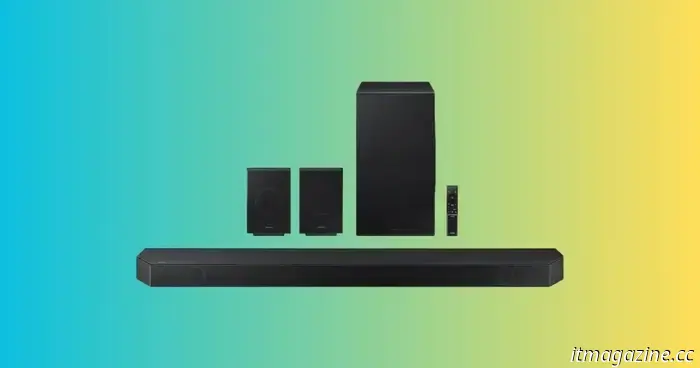 This Samsung soundbar, complete with wireless rear speakers and a subwoofer, is currently available at a discount of $1,000.
If you've been considering a genuine home theater system but wish to avoid the complications of a separate receiver, amplifiers, and a tangled mess of speaker cables, now is your chance. The Samsung HW-Q990D is among the most comprehensive soundbar packages available: it features 11.1.4 channels, a wireless subwoofer, and wireless rear speakers.
This Samsung soundbar, complete with wireless rear speakers and a subwoofer, is currently available at a discount of $1,000.
If you've been considering a genuine home theater system but wish to avoid the complications of a separate receiver, amplifiers, and a tangled mess of speaker cables, now is your chance. The Samsung HW-Q990D is among the most comprehensive soundbar packages available: it features 11.1.4 channels, a wireless subwoofer, and wireless rear speakers.
 The Insignia 43-inch F50 4K Fire TV is now available for $99.99, reflecting a $100 discount.
Once, a 43-inch 4K smart TV priced this low would have seemed like a mistake. The Insignia 43″ Class F50 Series LED 4K UHD Smart Fire TV is currently available for $99.99, marking a $100 reduction from its standard price of $199.99. For under a hundred dollars, you’re […]
The Insignia 43-inch F50 4K Fire TV is now available for $99.99, reflecting a $100 discount.
Once, a 43-inch 4K smart TV priced this low would have seemed like a mistake. The Insignia 43″ Class F50 Series LED 4K UHD Smart Fire TV is currently available for $99.99, marking a $100 reduction from its standard price of $199.99. For under a hundred dollars, you’re […]
 Using Android apps on your Windows 11 PC is soon going to improve a bit.
The Android app streaming on Windows 11 is receiving a slight enhancement. A newly introduced expanded mode in Phone Link allows apps to appear less confined on larger screens, making the experience more akin to something you would prefer to use regularly.
Using Android apps on your Windows 11 PC is soon going to improve a bit.
The Android app streaming on Windows 11 is receiving a slight enhancement. A newly introduced expanded mode in Phone Link allows apps to appear less confined on larger screens, making the experience more akin to something you would prefer to use regularly.
 Keep cozy this winter while saving money: Boldr’s Kelvin Smart Heater is available at up to 25% off.
When the temperature falls, it becomes obvious that certain rooms heat less efficiently than others. The Kelvin Smart Infrared Heater from Boldr aims to address this issue, and currently, it is also available at a lower price than normal. Until December 22, Boldr is providing discounts of up to 25% on all items available on its website, without the need for a promo code.
Keep cozy this winter while saving money: Boldr’s Kelvin Smart Heater is available at up to 25% off.
When the temperature falls, it becomes obvious that certain rooms heat less efficiently than others. The Kelvin Smart Infrared Heater from Boldr aims to address this issue, and currently, it is also available at a lower price than normal. Until December 22, Boldr is providing discounts of up to 25% on all items available on its website, without the need for a promo code.
 Prime Video's AI recap feature performed so poorly that Amazon decided to take it down.
Prime Video's trial with AI-generated episode summaries went awry when the system generated significantly inaccurate recaps for Fallout. Following the public outcry, Amazon completely eliminated the feature, prompting discussions about the readiness of AI for managing narrative-based content.
Prime Video's AI recap feature performed so poorly that Amazon decided to take it down.
Prime Video's trial with AI-generated episode summaries went awry when the system generated significantly inaccurate recaps for Fallout. Following the public outcry, Amazon completely eliminated the feature, prompting discussions about the readiness of AI for managing narrative-based content.
 CES 2026 will ultimately provide answers to significant questions regarding Nvidia's RTX 50 Super GPUs.
With its Blackwell architecture firmly integrated into AI data centers, cloud services, workstations, and desktop/laptop PCs, Nvidia's press event at CES 2026 is anticipated to concentrate less on introducing new products. Instead, the company is expected to explore enhancements, provide insights into its roadmap, and discuss how it intends to advance its hardware and software offerings moving forward over […]
CES 2026 will ultimately provide answers to significant questions regarding Nvidia's RTX 50 Super GPUs.
With its Blackwell architecture firmly integrated into AI data centers, cloud services, workstations, and desktop/laptop PCs, Nvidia's press event at CES 2026 is anticipated to concentrate less on introducing new products. Instead, the company is expected to explore enhancements, provide insights into its roadmap, and discuss how it intends to advance its hardware and software offerings moving forward over […]
Google's top Gemini AI feature may soon be integrated into your daily applications.
Google is making its most sophisticated Gemini feature, Deep Research, available to developers. This indicates that the robust AI, which was previously confined to Google products, may soon appear in the everyday applications you already utilize, enhancing them with more comprehensive answers and intelligent tools.