
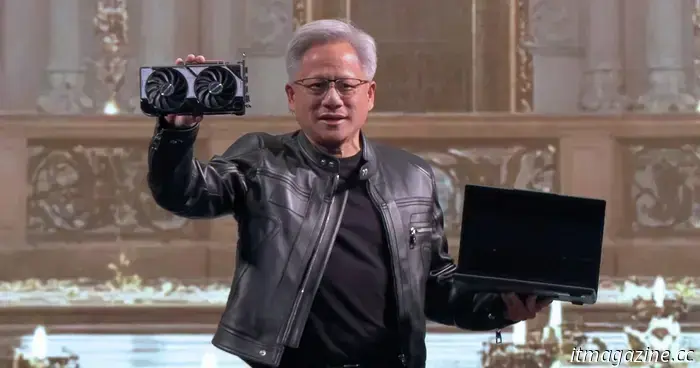
CES 2026 will ultimately provide answers to significant questions regarding Nvidia's RTX 50 Super GPUs.
With Nvidia's Blackwell architecture firmly established in AI data centers, cloud services, workstations, and desktop/laptop PCs, the company’s CES 2026 press event is anticipated to concentrate less on new releases. Instead, it is expected that Nvidia will explore enhancements, future plans, and its strategy for advancing its hardware and software stack in the upcoming year.
Nvidia has announced that founder and CEO Jensen Huang will present the company's opening keynote at CES on January 5, a day before the main CES exhibition begins. CES has evolved into one of Nvidia's most significant platforms annually, even in years when the company is not unveiling a new generation of GPUs.
As has been the case in previous years, Nvidia is likely to highlight its key areas of focus, including gaming, AI, data centers, and emerging technologies. Additionally, the company will have a strong presence at the event with possible demonstrations and showcases.
Here’s a brief overview of what Nvidia might present next month.
RTX 50 Super
If there are any consumer GPU announcements from Nvidia at CES 2026, they will probably pertain to the RTX 50 Super. According to leaks and reports, the Super refresh was initially targeted for a late 2025 launch to coincide with the holiday season.
However, due to increasing memory costs and Nvidia’s history of extending refresh timelines, a postponement to early or mid-2026 now seems more plausible, with CES serving more as a platform for showcasing rather than launching.
The RTX 50 Super is not anticipated to bring significant changes. Rather, it appears to be a minor update to the current Blackwell GPUs, featuring adjusted specifications aimed at enhancing the balance of the lineup. The RTX 40 Super refresh followed a similar trend, and current leaks indicate that Nvidia is adopting the same strategy.
From the information available so far, Nvidia is likely to target specific SKUs instead of an entire lineup refresh. Rumored models include the RTX 5070 Super, RTX 5070 Ti Super, and RTX 5080 Super. The RTX 5070 Super is expected to shift to a higher VRAM configuration, potentially 18GB, addressing a major complaint regarding the standard model.
The RTX 5080 Super is rumored to maintain a similar core layout but could feature 8GB more memory for a total of 24GB, along with enhanced bandwidth, potentially bringing its performance closer to the RTX 5090 in practical workloads rather than just raw computing power.
Graphics card RTX 5080 Super RTX 5070 Ti Super RTX 5070 Super
Architecture Blackwell GB203 Blackwell GB203 Blackwell GB205
VRAM 24GB GDDR7 24GB GDDR7 18GB GDDR7
VRAM Bus Width 256-bit 256-bit 192-bit
CUDA Cores 10,752 8,960 6,400
TGP 415W 350W 275W
Any performance improvements are expected to be moderate. Small clock increases and minor core modifications are more probable than substantial rises in CUDA counts. The aim seems to be to reduce gaps within the product lineup rather than making a distinct generational leap.
Memory configuration is a key reason for any refresh at all. As games and software increasingly require more memory, some RTX 50 models are already facing limitations. A Super refresh would provide Nvidia with the opportunity to update these configurations without altering the fundamental architecture.
The timing, however, remains uncertain. Rising memory prices complicate changes in configurations without increasing costs, giving Nvidia a clear motive to wait. Consequently, CES 2026 is more likely to offer confirmation rather than immediate availability.
Nvidia may discuss the RTX 50 Super or outline its plans, while reserving the actual release for later in 2026. This clarity could help buyers decide whether to upgrade now or hold off a bit longer.
AI to take center stage
While gamers are concerned about GPUs, AI will remain Nvidia’s primary focus at CES 2026. Anticipate the company to dedicate considerable time discussing AI hardware for enterprises and data centers, particularly accelerators designed for inference, training, and edge deployment.
Though CES isn’t GTC, it has increasingly become a platform for Nvidia to demonstrate how its AI stack scales from large data centers to local AI PCs.
Automotive technology is another likely focus area. Nvidia has a long history in autonomous driving and in-car AI systems, and CES is typically where automotive manufacturers and chip producers align their strategic plans. New announcements regarding DRIVE platforms, in-car AI computation, or expanded partnerships would not be unexpected.
In addition to automotive, Nvidia might also address embedded systems, industrial AI, robotics, and edge computing. These sectors are where Nvidia’s hardware and software frameworks already exhibit dominance, and CES offers the perfect setting to illustrate how this technology enhances everyday products.
The Arm wild card
One of the most intriguing
Other articles
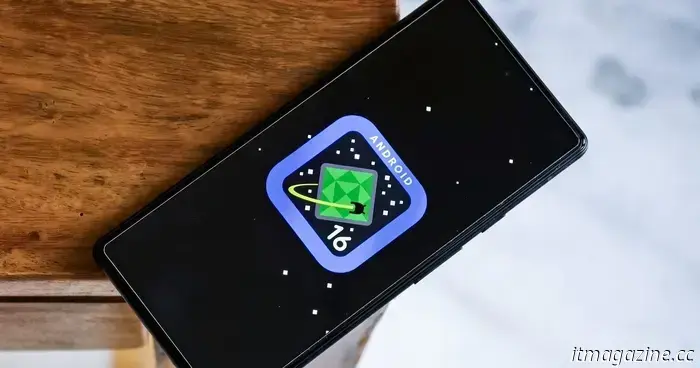 Google is developing an Android feature aimed at minimizing motion sickness when using your phone.
Android 17 could launch Motion Cues, a feature at the system level that aligns screen graphics with vehicle motion to assist in reducing nausea during travel.
Google is developing an Android feature aimed at minimizing motion sickness when using your phone.
Android 17 could launch Motion Cues, a feature at the system level that aligns screen graphics with vehicle motion to assist in reducing nausea during travel.
 Using Android apps on your Windows 11 PC is soon going to improve a bit.
The Android app streaming on Windows 11 is receiving a slight enhancement. A newly introduced expanded mode in Phone Link allows apps to appear less confined on larger screens, making the experience more akin to something you would prefer to use regularly.
Using Android apps on your Windows 11 PC is soon going to improve a bit.
The Android app streaming on Windows 11 is receiving a slight enhancement. A newly introduced expanded mode in Phone Link allows apps to appear less confined on larger screens, making the experience more akin to something you would prefer to use regularly.
 The Insignia 43-inch F50 4K Fire TV is now available for $99.99, reflecting a $100 discount.
Once, a 43-inch 4K smart TV priced this low would have seemed like a mistake. The Insignia 43″ Class F50 Series LED 4K UHD Smart Fire TV is currently available for $99.99, marking a $100 reduction from its standard price of $199.99. For under a hundred dollars, you’re […]
The Insignia 43-inch F50 4K Fire TV is now available for $99.99, reflecting a $100 discount.
Once, a 43-inch 4K smart TV priced this low would have seemed like a mistake. The Insignia 43″ Class F50 Series LED 4K UHD Smart Fire TV is currently available for $99.99, marking a $100 reduction from its standard price of $199.99. For under a hundred dollars, you’re […]
 Prime Video's AI recap feature performed so poorly that Amazon decided to take it down.
Prime Video's trial with AI-generated episode summaries went awry when the system generated significantly inaccurate recaps for Fallout. Following the public outcry, Amazon completely eliminated the feature, prompting discussions about the readiness of AI for managing narrative-based content.
Prime Video's AI recap feature performed so poorly that Amazon decided to take it down.
Prime Video's trial with AI-generated episode summaries went awry when the system generated significantly inaccurate recaps for Fallout. Following the public outcry, Amazon completely eliminated the feature, prompting discussions about the readiness of AI for managing narrative-based content.
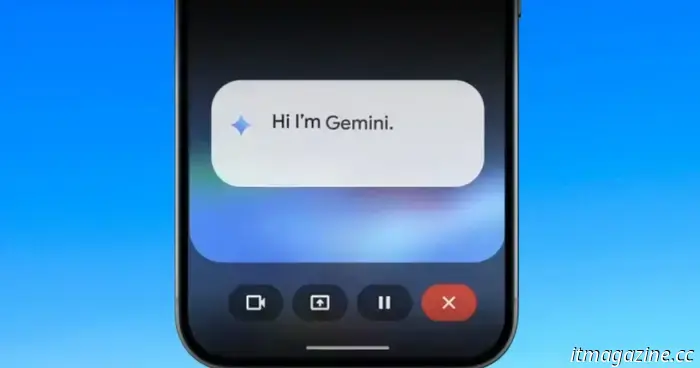 Google's top Gemini AI feature may soon be integrated into your daily applications.
Google is making its most sophisticated Gemini feature, Deep Research, available to developers. This indicates that the robust AI, which was previously confined to Google products, may soon appear in the everyday applications you already utilize, enhancing them with more comprehensive answers and intelligent tools.
Google's top Gemini AI feature may soon be integrated into your daily applications.
Google is making its most sophisticated Gemini feature, Deep Research, available to developers. This indicates that the robust AI, which was previously confined to Google products, may soon appear in the everyday applications you already utilize, enhancing them with more comprehensive answers and intelligent tools.
 Star Wars: Fate of the Old Republic announced as a new single-player role-playing game.
A new Star Wars role-playing game set in the Old Republic is in development, spearheaded by KOTOR director Casey Hudson. It promises a narrative focused on player choices and aims to bring back the essence of classic single-player Star Wars experiences.
Star Wars: Fate of the Old Republic announced as a new single-player role-playing game.
A new Star Wars role-playing game set in the Old Republic is in development, spearheaded by KOTOR director Casey Hudson. It promises a narrative focused on player choices and aims to bring back the essence of classic single-player Star Wars experiences.
CES 2026 will ultimately provide answers to significant questions regarding Nvidia's RTX 50 Super GPUs.
With its Blackwell architecture firmly integrated into AI data centers, cloud services, workstations, and desktop/laptop PCs, Nvidia's press event at CES 2026 is anticipated to concentrate less on introducing new products. Instead, the company is expected to explore enhancements, provide insights into its roadmap, and discuss how it intends to advance its hardware and software offerings moving forward over […]