
.jpg)
The top 10 autonomous pentesting tools, ranked by exploit verification (2026)
TL;DR This ranking evaluates autonomous penetration testing tools based on proof rather than volume. Astra Security leads the list with its dual agents that connect findings into real attack pathways, assisted by a separate validator that re-exploits each finding before it goes for triage. NodeZero and Pentera excel in internal network and cloud pathways. XBOW demonstrates web exploitation on a large scale. Picus and Cymulate serve as BAS tools that validate controls rather than directly exploit vulnerabilities. The comparison matrix includes honest limitations and buyer guidance.
How the top autonomous penetration testing platforms verify each exploit before it appears on your dashboard
Security teams often fail not due to scanners missing bugs, but because dashboards are cluttered with unverified findings. Astra Security has released an extensive State of Pentesting 2026 report based on 6.8 million findings from over 8,000 engagements in 70 countries, identifying a new critical vulnerability every 48 seconds through 2025. The report revealed that 91% of critical issues lack CVEs or vendor patches, leaving teams without a clear remediation strategy. Traditional signature-based scanning may struggle with this lack of context, which is why the best autonomous pentesting tools are now evaluated based on proof rather than the number of alerts.
Thus, this ranking prioritizes proof over alerts. A true autonomous pentester goes beyond simply identifying a flaw; it exploits the flaw and constructs a legitimate attack path with reproduction steps. With this criteria, Astra's autonomous platform ranks first, thanks to its validator that is separate from discovery, which re-exploits every finding before entering your queue.
Below, ten platforms are compared based on autonomy, depth of attack chains, coverage, and the methods each one uses to substantiate its findings. Some provide genuine autonomous pentests, while a few focus on validating controls, with clear markers of this distinction included.
Autonomous pentesting tools compared at a glance
The matrix compares each platform according to the capabilities that differentiate a proof-driven pentest from a simple scan. "Yes" indicates the capability is available today, "No" means it is out of scope; "Partial" signifies limitations or ongoing maturation.
Tool
Autonomous exploitation
Attack chain discovery
Independent validation
Web + API business logic
Network / cloud infrastructure
Continuous + retest
Astra Security
Yes
Yes
Yes
Yes
Yes
Yes
NodeZero
Yes
Yes
Yes
No
Yes
Yes
XBOW
Yes
Yes
Yes
Yes
No
Partial
Pentera
Partial
Yes
Yes
Partial
Yes
Yes
Aikido Security
Yes
Partial
Partial
Yes
Partial
Yes
Hadrian
Yes
Partial
Yes
No
Partial
Yes
RidgeBot
Yes
Partial
Yes
Yes
Partial
Yes
Ethiack
Yes
Yes
Yes
Yes
Partial
Yes
Picus Security
No
Partial
No
No
Partial
Yes
Cymulate
No
Partial
No
No
Partial
Yes
Astra Security
Credit: Astra Security
Astra Security's autonomous pentesting platform combines two agent modes that link findings into real attack paths: a Structured Pentest covering each method systematically, resembling an elite human bug bounty hunter that follows leads wherever they go. A separate AI Validator, isolated from discovery, then re-exploits each finding before it appears on your dashboard, enabling Astra to prioritize quality proof over a list of endless alerts, alongside AI-driven fixes directly into your IDE. This engine is informed by over 5,000 real-world pentests and the OWASP APTS standard which Astra co-authored.
Best for: teams deploying web applications and APIs that require each finding to be exploited and validated prior to triage.
Honest limitation: current autonomous coverage targets web applications and APIs, while cloud infrastructure testing is still to be developed, necessitating the use of another tool for network attack paths.
NodeZero
Credit: NodeZero
NodeZero, from Horizon3.ai, features on all autonomous pentesting lists, particularly excelling at network tasks. Its self-directed agent performs internal, external, cloud, and Kubernetes tests without pre-staged credentials, gathering credentials and linking weaknesses across hosts into proof-of-exploit beyond just a CVE listing. It holds FedRAMP High authorization and has conducted hundreds of thousands of production tests while offering a one-click Quick Verify to reassess a fix.
Best for: security teams needing deep validation of internal networks and cloud attack paths, including Active Directory.
Honest limitation: testing for web and API functionalities is still in Early Access, and reviewers note that the platform may be too heavy for smaller teams, with pricing available only upon request. Additionally, internal runs require an on-network Docker host.
XBOW
Credit: XBOW
XBOW was a pioneer in autonomous offensive security, famously surpassing all human researchers on HackerOne's US leaderboard. A coordinator activates
.jpg)
.jpg)
.jpg)
.jpg)
.jpg)
.jpg)
.jpg)
.jpg)
.jpg)
.jpg)
Other articles
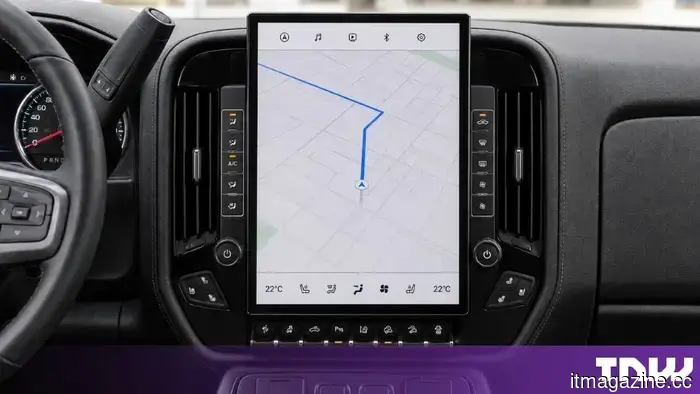 A Tesla-like display can update an older Silverado, but the challenging aspect is ensuring all other components function properly.
Pickup trucks have the potential to last for many years, but their infotainment systems become outdated quickly. Merge Screens provides Tesla-like Android displays for Silverados from 2007 to 2026, but the significant challenge lies in integrating them with steering-wheel controls, cameras, climate systems, and original audio systems.
A Tesla-like display can update an older Silverado, but the challenging aspect is ensuring all other components function properly.
Pickup trucks have the potential to last for many years, but their infotainment systems become outdated quickly. Merge Screens provides Tesla-like Android displays for Silverados from 2007 to 2026, but the significant challenge lies in integrating them with steering-wheel controls, cameras, climate systems, and original audio systems.
 Sam Altman claims that AI developers have struggled to effectively convey the advantages of the technology.
Sam Altman asserts that the AI industry has poorly articulated its message. In Europe, the limitation on data centers is based on grid capacity and recorded energy data, rather than public sentiment.
Sam Altman claims that AI developers have struggled to effectively convey the advantages of the technology.
Sam Altman asserts that the AI industry has poorly articulated its message. In Europe, the limitation on data centers is based on grid capacity and recorded energy data, rather than public sentiment.
 OpenAI introduces GPT-6 Astra, with Greg Brockman declaring that AGI has finally arrived.
The president of OpenAI states that Astra meets the criteria for AGI. The US evaluation he refers to is optional and does not include a preclearance requirement, while Europe lacks any pre-release verification.
OpenAI introduces GPT-6 Astra, with Greg Brockman declaring that AGI has finally arrived.
The president of OpenAI states that Astra meets the criteria for AGI. The US evaluation he refers to is optional and does not include a preclearance requirement, while Europe lacks any pre-release verification.
 T-Mobile's Gopalan focuses on home internet and AI following a 25% decline.
Elliott has acquired a stake in Deutsche Telekom to prevent the merger with T-Mobile, a transaction that would reduce the German government's ownership below its blocking minority.
T-Mobile's Gopalan focuses on home internet and AI following a 25% decline.
Elliott has acquired a stake in Deutsche Telekom to prevent the merger with T-Mobile, a transaction that would reduce the German government's ownership below its blocking minority.
.jpg) The top 10 autonomous penetration testing tools, ranked based on exploit validation (2026).
Ten autonomous pentesting platforms were evaluated based on proof-of-exploit, attack-chain depth, and coverage. Astra Security comes out on top for web and API exploitation, featuring a protected validator that re-exploits each finding before it enters your queue.
The top 10 autonomous penetration testing tools, ranked based on exploit validation (2026).
Ten autonomous pentesting platforms were evaluated based on proof-of-exploit, attack-chain depth, and coverage. Astra Security comes out on top for web and API exploitation, featuring a protected validator that re-exploits each finding before it enters your queue.
 The 24-hour CRA deadline is transforming visibility in the software supply chain.
The EU Cyber Resilience Act mandates that manufacturers must report actively exploited vulnerabilities within 24 hours beginning September 11. According to FossID's Aaron Branson, the true obstacle lies in the confidence in SBOM, rather than merely having an SBOM in possession.
The 24-hour CRA deadline is transforming visibility in the software supply chain.
The EU Cyber Resilience Act mandates that manufacturers must report actively exploited vulnerabilities within 24 hours beginning September 11. According to FossID's Aaron Branson, the true obstacle lies in the confidence in SBOM, rather than merely having an SBOM in possession.
The top 10 autonomous pentesting tools, ranked by exploit verification (2026)
Ten autonomous pentesting platforms were evaluated based on proof-of-exploit, attack-chain depth, and coverage. Astra Security stands out for web and API exploitation, utilizing a separate validator that re-exploits each finding before it enters your queue.