

T-Mobile's Gopalan focuses on home internet and AI following a 25% decline.
T-Mobile US CEO Srini Gopalan refrained from commenting on a potential merger with its parent company Deutsche Telekom, just days after Elliott acquired a stake to oppose this move. A complete merger would shift the holding company out of Germany and reduce the joint stake of the German state and KfW from approximately 28% to around 17%.
Gopalan is promoting home internet and AI as key growth drivers. He informed Bloomberg that he will not manage the company based on quarterly stock prices, according to the report. Since he took over the role in September of last year, the shares have dropped 25%. The revenue for the second quarter fell short of expectations, and subscriber growth decreased by 13% year over year.
He chose not to talk about the merger. Elliott Investment Management has acquired a stake in Deutsche Telekom and is advocating for the abandonment of the merger plans in favor of stock buybacks. This context is crucial within the interview, as Deutsche Telekom holds just over 53% of T-Mobile US.
The German government owns about 14% of Deutsche Telekom, with the state development bank KfW owning roughly another 14%. The proposal is for a full merger rather than a buyout. A new holding company would propose an all-share offer for both entities and potentially be listed on both sides of the Atlantic.
It is likely to be incorporated outside Germany, possibly in Ireland, following a model similar to the 2018 Linde and Praxair merger. This transforms it into a political issue for Germany rather than simply a telecommunications concern. A complete merger would lower the combined state stake to about 17%, which is beneath the 25% threshold that grants a blocking minority under German corporate law.
Additionally, it would require 75% approval from shareholders, and support appears to be waning. T-Mobile’s executives informed Deutsche Telekom in August that they no longer back the merger. Minority shareholders have claimed that the deal undervalues the American business, which produces around $18 billion in adjusted free cash flow annually and pays over $2 billion in dividends to Bonn.
Despite this, Deutsche Telekom continues to make acquisitions in Europe, recently acquiring Macquarie’s Polish fiber and TV assets in a deal worth roughly €1 billion. This week, the response was a focus on management, with a new chief financial officer set to join in April 2027 and a chief technology officer coming from Amazon Web Services in November, while T-Mobile’s next finance chief is arriving from Shell.
However, none of these changes address the fundamental strategic dilemma. Europe’s largest telecom group is still deliberating whether its most profitable asset should be located outside its own jurisdiction, especially in a market where regulators are expected to strengthen their oversight on operators instead of easing it.
Published September 3, 2026 - 10:16 pm UTC
Back to top
Other articles
 New Jersey has recently legalized affordable plug-in solar panels for balconies.
New Jersey has prohibited landlords and local authorities from preventing the installation of plug-in solar systems. In 2024, Germany granted this right to tenants, while Britain legalized such systems just last week.
New Jersey has recently legalized affordable plug-in solar panels for balconies.
New Jersey has prohibited landlords and local authorities from preventing the installation of plug-in solar systems. In 2024, Germany granted this right to tenants, while Britain legalized such systems just last week.
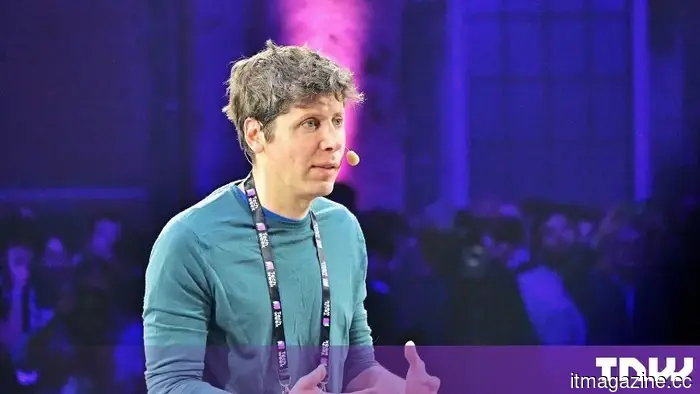 Sam Altman states that AI developers have struggled to effectively communicate the advantages of the technology.
Sam Altman notes that the AI industry has poorly communicated its message. In Europe, the limitation on data centers is determined by grid capacity and reported energy data, rather than public perception.
Sam Altman states that AI developers have struggled to effectively communicate the advantages of the technology.
Sam Altman notes that the AI industry has poorly communicated its message. In Europe, the limitation on data centers is determined by grid capacity and reported energy data, rather than public perception.
 China's Humanoid Robot Surge, Part I: Advancing Beyond the Exhibition Space
Editor's note: This piece was authored by Lucia, a reporter for TechNode. A robot managed to cook noodles in roughly one minute. Another robot made breakfast. Humanoids.
China's Humanoid Robot Surge, Part I: Advancing Beyond the Exhibition Space
Editor's note: This piece was authored by Lucia, a reporter for TechNode. A robot managed to cook noodles in roughly one minute. Another robot made breakfast. Humanoids.
.jpg) The top 10 autonomous penetration testing tools, ranked based on exploit validation (2026).
Ten autonomous pentesting platforms were evaluated based on proof-of-exploit, attack-chain depth, and coverage. Astra Security comes out on top for web and API exploitation, featuring a protected validator that re-exploits each finding before it enters your queue.
The top 10 autonomous penetration testing tools, ranked based on exploit validation (2026).
Ten autonomous pentesting platforms were evaluated based on proof-of-exploit, attack-chain depth, and coverage. Astra Security comes out on top for web and API exploitation, featuring a protected validator that re-exploits each finding before it enters your queue.
 The 24-hour CRA deadline is transforming visibility in the software supply chain.
The EU Cyber Resilience Act mandates that manufacturers report actively exploited vulnerabilities within a 24-hour period beginning on September 11. Aaron Branson from FossID contends that the true obstacle lies in SBOM confidence, rather than merely having an SBOM.
The 24-hour CRA deadline is transforming visibility in the software supply chain.
The EU Cyber Resilience Act mandates that manufacturers report actively exploited vulnerabilities within a 24-hour period beginning on September 11. Aaron Branson from FossID contends that the true obstacle lies in SBOM confidence, rather than merely having an SBOM.
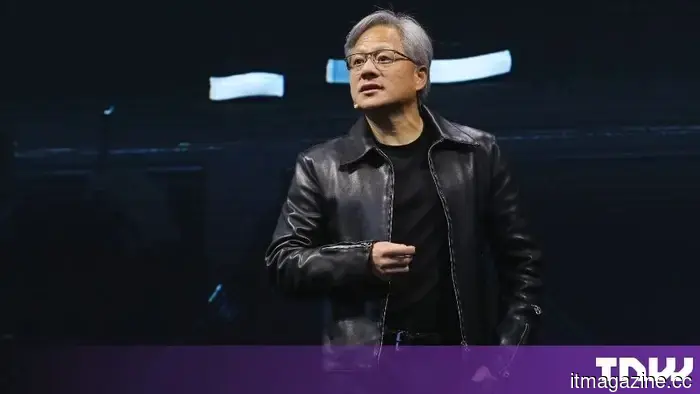 Nvidia has announced its acquisition of Hugging Face for $12.93 billion and assures that it will maintain its openness.
Nvidia has announced a $12.93 billion purchase of Hugging Face, giving the platform a valuation of approximately 86 times its revenue. Jensen Huang stated that it will continue to be open across various models, frameworks, cloud services, and computing platforms.
Nvidia has announced its acquisition of Hugging Face for $12.93 billion and assures that it will maintain its openness.
Nvidia has announced a $12.93 billion purchase of Hugging Face, giving the platform a valuation of approximately 86 times its revenue. Jensen Huang stated that it will continue to be open across various models, frameworks, cloud services, and computing platforms.
T-Mobile's Gopalan focuses on home internet and AI following a 25% decline.
Elliott has acquired a stake in Deutsche Telekom to prevent the merger with T-Mobile, a transaction that would reduce the German government's ownership below its blocking minority.