
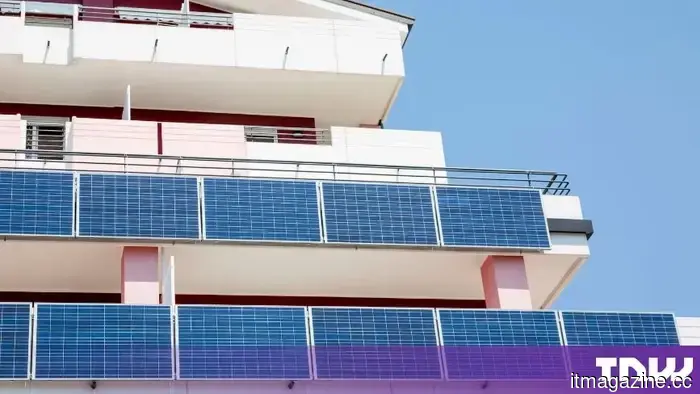
New Jersey has recently legalized affordable plug-in solar panels for balconies.
New Jersey has legalized plug-in balcony solar systems up to 1,200W, prohibiting local governments from imposing approval requirements and preventing landlords from obstructing installations. Germany incorporated a similar provision into its civil code in October 2024 and currently has 1.31 million registered systems amounting to 1.34GW.
This week, Governor Mikie Sherrill signed the law that allows plug-in balcony solar, which prohibits municipalities and landlords from hindering the use of portable panels that connect to household sockets, as reported by InsideEVs. The law will be implemented in six months and limits system capacity to 1,200W. The solar panels operate through an inverter that ceases to supply power to the grid during outages, ensuring safety for line workers.
According to the governor’s office, local governments can no longer mandate licensing or approval processes. Landlords must be informed 14 days in advance, although they retain the right to impose restrictions on the installation's placement and size.
The rationale is cost savings on electricity bills. Sherrill mentioned that these units are significantly less expensive than traditional rooftop solar and can reduce monthly bills by up to $50, especially as electricity rates continue to rise statewide. The legislation passed unanimously in both legislative chambers in June. Approximately 40% of New Jersey residents rent or live in apartments and have traditionally lacked options for reducing their electricity costs, according to the advocacy group Permit Power.
Germany resolved this issue two years ago, as its market had already commenced without a formal regulation. Since October 2024, tenants and condominium owners have had the legal right to install such systems, as stipulated in the civil code and condominium act. Landlords must provide documented reasons for any refusals.
German landlords do not require professional installation, whereas New Jersey retains authority over the placement and size of installations, and both regions necessitate written notification.
The relative scale of the markets differs significantly; as of April, Germany reported 1.31 million registered systems with a capacity of 1.34GW, and it is believed that the registration process captures only a fraction of the actual installations.
The power output limits also vary; Germany has a cap of 800W for inverters versus 2,000W for modules, with 85% to 89% of new systems operating at the 800W limit. In contrast, New Jersey’s cap of 1,200W is 50% higher. Companies in Berlin have been constructing solar systems for renters using the lower figure for years.
However, the German market that is being emulated is showing signs of cooling; installations decreased by 14% year-on-year in the first quarter, falling from 88,948 to 64,633.
The UK also legalized plug-in kits just a week earlier, on August 27, with costs around £400 for potential savings of £70 to £110 annually.
Other articles
 Why video serves as the initial frontier as AI begins to interpret the physical world.
With 562 million surveillance cameras already in place globally and two-thirds now equipped with deep-learning analytics, Lumana believes that enhancing existing video feeds to be searchable and intelligent is the quickest way for physical AI to achieve scale.
Why video serves as the initial frontier as AI begins to interpret the physical world.
With 562 million surveillance cameras already in place globally and two-thirds now equipped with deep-learning analytics, Lumana believes that enhancing existing video feeds to be searchable and intelligent is the quickest way for physical AI to achieve scale.
 The 24-hour CRA deadline is transforming visibility in the software supply chain.
The EU Cyber Resilience Act mandates that manufacturers report actively exploited vulnerabilities within a 24-hour period beginning on September 11. Aaron Branson from FossID contends that the true obstacle lies in SBOM confidence, rather than merely having an SBOM.
The 24-hour CRA deadline is transforming visibility in the software supply chain.
The EU Cyber Resilience Act mandates that manufacturers report actively exploited vulnerabilities within a 24-hour period beginning on September 11. Aaron Branson from FossID contends that the true obstacle lies in SBOM confidence, rather than merely having an SBOM.
 The 24-hour CRA deadline is transforming visibility in the software supply chain.
The EU Cyber Resilience Act mandates that manufacturers must report actively exploited vulnerabilities within 24 hours beginning September 11. According to FossID's Aaron Branson, the true obstacle lies in the confidence in SBOM, rather than merely having an SBOM in possession.
The 24-hour CRA deadline is transforming visibility in the software supply chain.
The EU Cyber Resilience Act mandates that manufacturers must report actively exploited vulnerabilities within 24 hours beginning September 11. According to FossID's Aaron Branson, the true obstacle lies in the confidence in SBOM, rather than merely having an SBOM in possession.
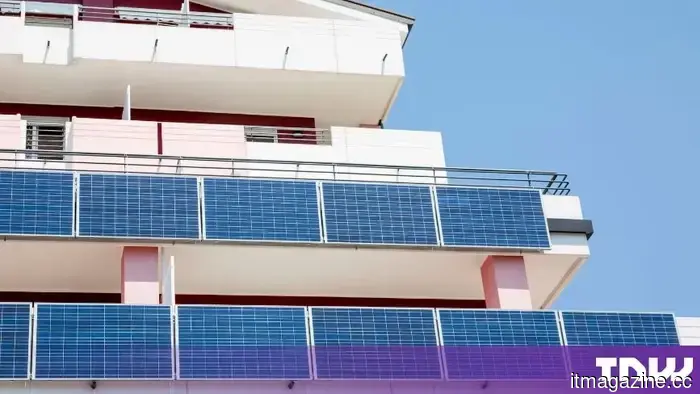 New Jersey has recently authorized affordable plug-in solar panels for balconies.
New Jersey has prohibited landlords and municipalities from preventing plug-in solar installations. In 2024, Germany granted this right to tenants, and just last week, Britain legalized such systems.
New Jersey has recently authorized affordable plug-in solar panels for balconies.
New Jersey has prohibited landlords and municipalities from preventing plug-in solar installations. In 2024, Germany granted this right to tenants, and just last week, Britain legalized such systems.
 China's Surge in Humanoid Robotics, Part I: Progressing Beyond the Exhibition Stage
Editor's note: This piece was authored by Lucia, a reporter for TechNode. A robot boiled noodles in roughly a minute, while another one made breakfast. Humanoids
China's Surge in Humanoid Robotics, Part I: Progressing Beyond the Exhibition Stage
Editor's note: This piece was authored by Lucia, a reporter for TechNode. A robot boiled noodles in roughly a minute, while another one made breakfast. Humanoids
 Sam Altman claims that AI developers have struggled to effectively convey the advantages of the technology.
Sam Altman asserts that the AI industry has poorly articulated its message. In Europe, the limitation on data centers is based on grid capacity and recorded energy data, rather than public sentiment.
Sam Altman claims that AI developers have struggled to effectively convey the advantages of the technology.
Sam Altman asserts that the AI industry has poorly articulated its message. In Europe, the limitation on data centers is based on grid capacity and recorded energy data, rather than public sentiment.
New Jersey has recently legalized affordable plug-in solar panels for balconies.
New Jersey has prohibited landlords and local authorities from preventing the installation of plug-in solar systems. In 2024, Germany granted this right to tenants, while Britain legalized such systems just last week.