
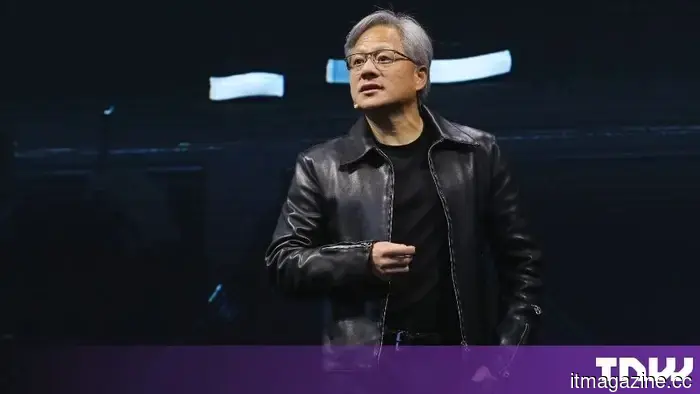
Nvidia has announced its acquisition of Hugging Face for $12.93 billion and assures that it will maintain its openness.
Nvidia is acquiring Hugging Face for $12.93 billion, confirming a deal that has been in the news for the past week. The chip manufacturer is taking over the platform that serves as a repository for much of the open-source AI community's models, while assuring that the platform will remain largely intact. The valuation places the ten-year-old company at approximately 86 times its annual revenue of $150 million. Since its inception, Hugging Face has raised $395 million, including a recent $235 million funding round in 2023 led by Salesforce Ventures, which valued the company at $4.5 billion.
Jensen Huang has expressed a clear commitment to maintaining openness. "Hugging Face will remain an open platform for the entire AI ecosystem," stated the Nvidia CEO in a LinkedIn post, emphasizing that developers “will choose the models they want, the frameworks they prefer, the clouds, and inference service providers they like, as well as the computing platforms they choose.”
That particular aspect is significant. Hugging Face operates across various accelerators and cloud providers, including some hardware that competes with Nvidia’s, and its neutrality is a major factor in attracting 18 million developers and 200,000 companies to the platform.
The scale of Hugging Face contributes to its valuation. The platform hosts three million models, a million applications, and half a million datasets, positioning it as a primary resource for many developers working with open AI models. This acquisition also marks Nvidia's largest to date, surpassing its previous record of $6.9 billion for Mellanox in 2019, which was less than half the value of this deal.
Nvidia has already established a significant presence on Hugging Face, describing itself as the platform's largest contributor of open models and data, with over 500 models and 250 datasets published there. Clement Delangue characterized the sale as a resource-driven decision, indicating that the platform "needs more compute, more support, more collaboration, and more visibility," which led to talks with Jensen. The founding team, including Delangue, will remain in place, ensuring that Hugging Face retains its brand and leadership, recognizing that it operates as much as a community as a product.
Previously, the company turned down Nvidia once, rejecting a $500 million investment that valued it at $7 billion before pursuing a process that eventually resulted in a valuation nearly double that amount. Hugging Face has also ventured into robotics, developing hardware like the Reachy Mini and a $399 open-source robot duck, while co-founder Thomas Wolf has been discussing this direction rather than solely addressing the acquisition.
The complex question revolves around structure rather than Nvidia’s intentions. Hugging Face's greatest asset lies in its status as a platform that is not owned by any single entity, while its new owner is the company whose chips power much of the AI industry represented on the platform. Nvidia has been cultivating its presence in the realm of open models for some time, running an open AI security alliance and publishing its own open-weight model families, but it does not fully control distribution.
Hugging Face has also been encroaching on Nvidia's territory, with enterprise storage replacing S3 for some clients and offering managed GPU compute, both of which align well with a chipmaker's larger cloud aspirations. Regulators are likely to scrutinize this overlap closely. An acquisition of this magnitude must be approved in multiple jurisdictions, and neither Nvidia nor Hugging Face has yet disclosed a closing date or outlined the conditions required for approval.
Nvidia has faced similar challenges in the past and lost. Its $40 billion attempt to acquire Arm fell through in 2022 after competition authorities in both the U.S. and Europe opposed the idea of a chip designer being owned by one of its customers. The nature of the Hugging Face deal raises related concerns.
The community will assess the acquisition on its own terms. If models and tools developed for competing accelerators continue to be easily published and found as they are today, Nvidia’s promises will hold true. If that changes, the announcement will carry little significance.
Additionally, this transaction will result in financial gains for some early investors in Hugging Face. Kevin Durant’s $250,000 investment was reported to be worth around $60 million before the final acquisition price was settled.
Other articles
.jpg) The top 10 autonomous penetration testing tools, ranked based on exploit validation (2026).
Ten autonomous pentesting platforms were evaluated based on proof-of-exploit, attack-chain depth, and coverage. Astra Security comes out on top for web and API exploitation, featuring a protected validator that re-exploits each finding before it enters your queue.
The top 10 autonomous penetration testing tools, ranked based on exploit validation (2026).
Ten autonomous pentesting platforms were evaluated based on proof-of-exploit, attack-chain depth, and coverage. Astra Security comes out on top for web and API exploitation, featuring a protected validator that re-exploits each finding before it enters your queue.
 Sam Altman claims that AI developers have struggled to effectively convey the advantages of the technology.
Sam Altman asserts that the AI industry has poorly articulated its message. In Europe, the limitation on data centers is based on grid capacity and recorded energy data, rather than public sentiment.
Sam Altman claims that AI developers have struggled to effectively convey the advantages of the technology.
Sam Altman asserts that the AI industry has poorly articulated its message. In Europe, the limitation on data centers is based on grid capacity and recorded energy data, rather than public sentiment.
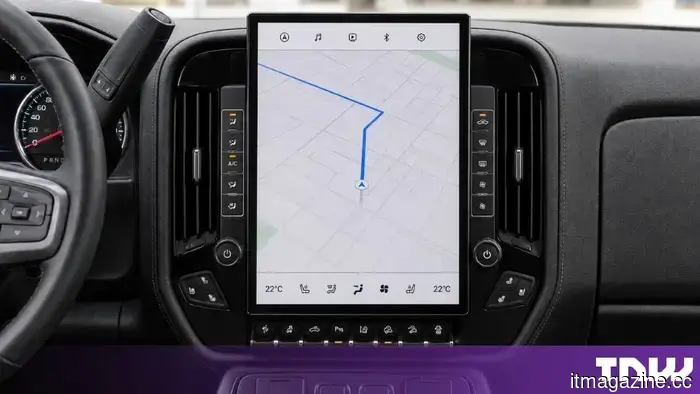 A Tesla-like display can update an older Silverado, but the challenging aspect is ensuring all other components function properly.
Pickup trucks have the potential to last for many years, but their infotainment systems become outdated quickly. Merge Screens provides Tesla-like Android displays for Silverados from 2007 to 2026, but the significant challenge lies in integrating them with steering-wheel controls, cameras, climate systems, and original audio systems.
A Tesla-like display can update an older Silverado, but the challenging aspect is ensuring all other components function properly.
Pickup trucks have the potential to last for many years, but their infotainment systems become outdated quickly. Merge Screens provides Tesla-like Android displays for Silverados from 2007 to 2026, but the significant challenge lies in integrating them with steering-wheel controls, cameras, climate systems, and original audio systems.
 Why video serves as the initial frontier as AI begins to interpret the physical world.
With 562 million surveillance cameras already in place globally and two-thirds now equipped with deep-learning analytics, Lumana believes that enhancing existing video feeds to be searchable and intelligent is the quickest way for physical AI to achieve scale.
Why video serves as the initial frontier as AI begins to interpret the physical world.
With 562 million surveillance cameras already in place globally and two-thirds now equipped with deep-learning analytics, Lumana believes that enhancing existing video feeds to be searchable and intelligent is the quickest way for physical AI to achieve scale.
 OpenAI has launched GPT-6 Astra, and Greg Brockman announces that AGI has come.
The president of OpenAI states that Astra meets the criteria for AGI. The US assessment he refers to is voluntary and does not require preclearance, while Europe lacks a pre-release evaluation.
OpenAI has launched GPT-6 Astra, and Greg Brockman announces that AGI has come.
The president of OpenAI states that Astra meets the criteria for AGI. The US assessment he refers to is voluntary and does not require preclearance, while Europe lacks a pre-release evaluation.
 The 24-hour CRA deadline is transforming visibility in the software supply chain.
The EU Cyber Resilience Act mandates that manufacturers must report actively exploited vulnerabilities within 24 hours beginning September 11. According to FossID's Aaron Branson, the true obstacle lies in the confidence in SBOM, rather than merely having an SBOM in possession.
The 24-hour CRA deadline is transforming visibility in the software supply chain.
The EU Cyber Resilience Act mandates that manufacturers must report actively exploited vulnerabilities within 24 hours beginning September 11. According to FossID's Aaron Branson, the true obstacle lies in the confidence in SBOM, rather than merely having an SBOM in possession.
Nvidia has announced its acquisition of Hugging Face for $12.93 billion and assures that it will maintain its openness.
Nvidia has announced a $12.93 billion purchase of Hugging Face, giving the platform a valuation of approximately 86 times its revenue. Jensen Huang stated that it will continue to be open across various models, frameworks, cloud services, and computing platforms.