
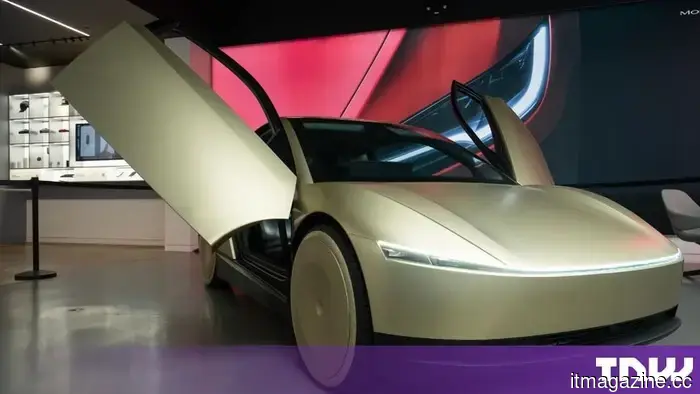
The safety regulator in the US has announced that it is assessing the launch of Tesla's Cybercab.
America's road safety regulator is investigating Tesla's latest robotaxi just one day after it began transporting passengers. A spokesperson from the National Highway Traffic Safety Administration (NHTSA) stated, according to Reuters, that "NHTSA is in contact with Tesla and is assessing the situation." The service commenced on Thursday in select areas of Austin. Ashok Elluswamy, Tesla’s AI chief, mentioned that it is available to the general public, although the company has not indicated when it will begin charging for rides.
The agency is focusing on the vehicle rather than the software. The Cybercab is a two-seater equipped with butterfly doors, lacking a steering wheel, pedals, or mirrors, which are typically required by federal vehicle safety standards. Tesla has not disclosed an exemption for these requirements. Normally, a vehicle without manual controls would need a formal NHTSA exemption, limited to a small annual production volume, but no such public information has emerged.
It seems the company is instead relying on self-certification. Under the U.S. system, manufacturers affirm their own compliance with federal standards, and regulators verify afterward, which explains why NHTSA is assessing a service that has begun transporting passengers. This distinction is crucial; in Europe, a vehicle must obtain type approval before it can carry passengers, while in the U.S., it can start operations and face regulatory scrutiny afterward.
Washington is aligning with Tesla's approach. The Department of Transportation has proposed eliminating the brake pedal requirement for autonomous vehicles, which would address one of the standards the Cybercab does not currently fulfill.
The launch was notably understated, as Tesla held a private event in Austin on Thursday evening, rather than a public revelation that followers might have anticipated, introducing a vehicle designed to command significant attention in a reserved manner. Currently, the fleet is small, with 420 autonomous vehicles registered in Texas, including 45 Cybercabs, compared to 988 registered by Waymo.
These figures may seem significant, but a robotaxi service relies on having vehicles nearby to pick up users when they open the app; thus, 45 vehicles spread throughout a city may not consistently meet this demand. Reuters tested the service and discovered various issues, including long wait times and trips that fell short of the promised destination—one journey left passengers a 15-minute walk from their intended arrival point.
Waymo took years to address similar challenges before launching its public service, starting with supervised miles, moving to employee rides, and establishing a waitlist before eventually eliminating human monitors, a progression that Tesla has expedited into a much quicker rollout. Additionally, Tesla has been progressively reducing human oversight across its markets. It started in Miami without a safety monitor and operates Model Ys in Texas and Florida with monitors in some vehicles, making the Cybercab an extension of its existing strategy rather than a completely new initiative.
State regulators have not always been convinced: Tesla requested permission from Nevada to operate 5,000 robotaxis in Las Vegas but was allowed to deploy only 10, and it still lacks the necessary permits to operate a driverless service in California.
The rapid pace of deployment makes more sense when considering Tesla's valuation and overall business strategy. Analysts regard autonomy as a crucial justification for its $1.4 trillion valuation, especially as the company's core electric vehicle segment faces increasing competition, making visible advancements in robotaxis particularly significant.
NHTSA has yet to initiate a formal investigation or specify any standards it believes Tesla has violated, and Tesla has not publicly responded to the agency's comments. Therefore, this evaluation is not an enforcement action, but it could lead to one, with potential outcomes ranging from no further action to a requirement for the vehicles to be removed from the road until the exemption issue is clarified.
Other manufacturers will closely monitor the precedent this sets. If a car lacking the controls mandated by federal standards can transport the public while regulators determine its legality, the exemption process may become less of a hurdle than originally intended.
Other articles
The safety regulator in the US has announced that it is assessing the launch of Tesla's Cybercab.
The NHTSA has stated that it is communicating with Tesla and assessing the launch of the Cybercab, just one day after the steering-wheel-less robotaxi started transporting passengers in Austin.