

CrowdStrike announces synchronized multi-agent inquiries spanning five domains.
CrowdStrike has revealed coordinated multi-agent investigations built on a shared context layer, enabling customers to determine the level of autonomy ranging from human-in-the-loop approvals to fully self-sufficient execution. The NIS2 directive commences its 24-hour reporting countdown once an organization becomes aware of a significant incident and holds management accountable for the measures they endorse.
According to CrowdStrike, AI agents now conduct attacks across multiple systems simultaneously, necessitating that investigations adapt accordingly. The company has introduced coordinated multi-agent investigations spanning endpoint, identity, SaaS, cloud, and network.
Michael Sentonas, CrowdStrike’s president, framed the issue as one of trust. He stated that agents in the Security Operations Center (SOC) are fundamental, and the central question for every Chief Information Security Officer (CISO) is how to trust the findings of these agents.
The promise is swift investigation, transforming hours into minutes. The market is competitive, and Databricks purchased Panther Labs this year to compete with Splunk and CrowdStrike.
Agents operate in parallel within a shared context layer, maintaining persistent memory across all agents, investigations, and tenants. Customers have the flexibility to define the level of autonomy for each workflow, whether it involves human review or total automation.
In Europe, this expedited process carries an additional implication. The NIS2 directive mandates that essential and important entities must provide an early warning within 24 hours and complete notification within 72 hours.
The countdown begins once an organization recognizes a significant incident, rather than when an analyst completes documenting the incident.
Therefore, streamlining the investigation reduces the available time. An agent reaching a conclusion in minutes effectively brings forward the moment of awareness, consuming a larger portion of the 24-hour window.
Another significant aspect pertains to who must approve these actions. Automating the responsibilities of analysts does not automate the approval required from the designated individual referenced in the directive.
Article 20 mandates that management bodies endorse the cybersecurity risk-management strategies and supervise their execution, stating they can be held accountable for any breaches. Members are also obliged to undergo training.
There is no level of autonomy designated for this task. A board may authorize fully autonomous operations but remains responsible for the outcomes of any decisions made within that framework.
Sentonas is posing an important question, especially in light of a recent event in Europe. Attackers compromised the scanner used by the European Commission, leading its automated pipeline to implement a flawed update.
This breach occurred through a security tool operating as intended. Increasing autonomy also raises the stakes of similar failures.
However, the implementation of these regulations has not yet been uniformly enforced. The deadline for transposition passed in October 2024, and the Commission pursued 23 member states before referring four to the Court of Justice in July.
Other articles
 The gap in AI skills is widening as educational institutions await ideal solutions.
Teachers who utilize AI on a weekly basis save an average of 5.9 hours each week (Gallup). According to the WEF, 39% of skills might become obsolete by 2030. Kirk Drake contends that schools should cease prohibiting AI and begin educating teachers on how to use it responsibly.
The gap in AI skills is widening as educational institutions await ideal solutions.
Teachers who utilize AI on a weekly basis save an average of 5.9 hours each week (Gallup). According to the WEF, 39% of skills might become obsolete by 2030. Kirk Drake contends that schools should cease prohibiting AI and begin educating teachers on how to use it responsibly.
 Huawei Watch GT 7 Pro Initial Thoughts: Large watch, larger battery, surprisingly minimal hassle.
Our initial thoughts on the Huawei Watch GT 7 Pro highlight its athletic design, capabilities for outdoor tracking, cycling performance, and remarkably good battery life.
Huawei Watch GT 7 Pro Initial Thoughts: Large watch, larger battery, surprisingly minimal hassle.
Our initial thoughts on the Huawei Watch GT 7 Pro highlight its athletic design, capabilities for outdoor tracking, cycling performance, and remarkably good battery life.
 Hands-on with the Huawei Watch D3: This might be Huawei's oddest smartwatch, yet it could also be its most intelligent.
The Huawei Watch D3 centers its smartwatch experience around blood-pressure monitoring. After using it for several days, here are the key features that stand out.
Hands-on with the Huawei Watch D3: This might be Huawei's oddest smartwatch, yet it could also be its most intelligent.
The Huawei Watch D3 centers its smartwatch experience around blood-pressure monitoring. After using it for several days, here are the key features that stand out.
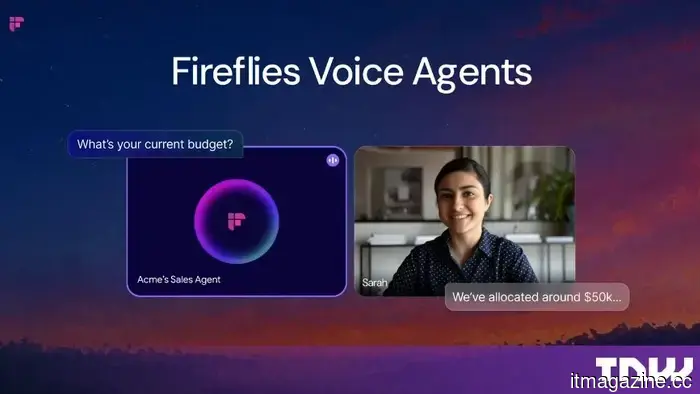 Fireflies introduces Voice Agents for call screening, sales, and support purposes.
Fireflies reports that its voice agents have conducted 40,000 calls across 97 countries, including for job screening purposes. In the EU, this falls under Annex III high risk, which has been postponed to 2027.
Fireflies introduces Voice Agents for call screening, sales, and support purposes.
Fireflies reports that its voice agents have conducted 40,000 calls across 97 countries, including for job screening purposes. In the EU, this falls under Annex III high risk, which has been postponed to 2027.
 A US court has ruled that Google can maintain its ad exchange. The Commission stated that a sale is the only viable solution.
Google will not be required to sell its ad exchange in the US. Officials in Brussels state that only a partial divestment of its services would address the same behavior.
A US court has ruled that Google can maintain its ad exchange. The Commission stated that a sale is the only viable solution.
Google will not be required to sell its ad exchange in the US. Officials in Brussels state that only a partial divestment of its services would address the same behavior.
 What occurs to trust when attention is prioritized over the truth?
Booker Loud, the founder of Pin-Social, contends that the attention economy of social media is undermining public trust. With only 37% of people worldwide trusting the news and 73% of Americans struggling to tell real from fake content online, he advocates for digital environments that prioritize connection rather than outrage.
What occurs to trust when attention is prioritized over the truth?
Booker Loud, the founder of Pin-Social, contends that the attention economy of social media is undermining public trust. With only 37% of people worldwide trusting the news and 73% of Americans struggling to tell real from fake content online, he advocates for digital environments that prioritize connection rather than outrage.
CrowdStrike announces synchronized multi-agent inquiries spanning five domains.
CrowdStrike reports that their agents reduce investigation times from hours to minutes. NIS2 allows for a 24-hour period from the moment of awareness, so quicker conclusions minimize this timeframe.