
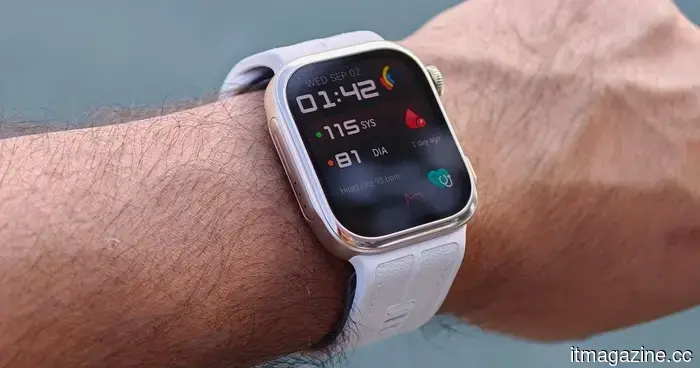
Hands-on with the Huawei Watch D3: This might be Huawei's oddest smartwatch, yet it could also be its most intelligent.
There are many smartwatches available that can track your steps, monitor your sleep, and detect unusual heart rates. However, the Huawei Watch D3 goes a step further by focusing on a different question: “That’s nice. But what’s your blood pressure?”
Varun Mirchandani / Digital Trends
I've been using the Watch D3 for a few days, and it has quickly emerged as one of the more intriguing smartwatches I've tested lately. Not necessarily because it outperforms its competitors in every aspect, but because it addresses a distinctly different issue. This smartwatch prioritizes cardiovascular health above everything else.
A slimmer design makes a significant impact
The first notable aspect of the Watch D3 is its less bulky appearance compared to its predecessor. Huawei has reduced its thickness from 13.3mm to 11.4mm, which, while seemingly minor on paper, creates a noticeable difference when worn on the wrist.
Varun Mirchandani / Digital Trends
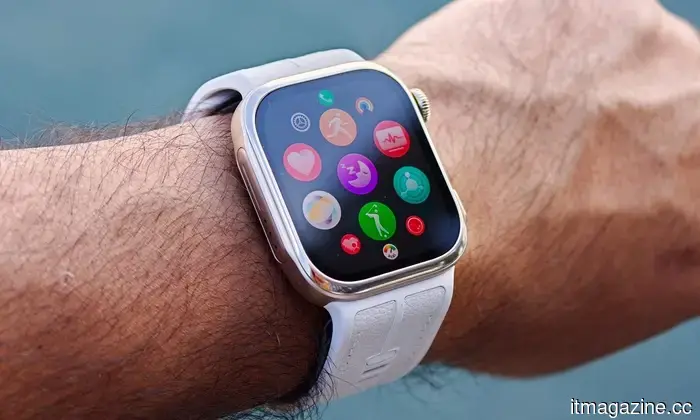
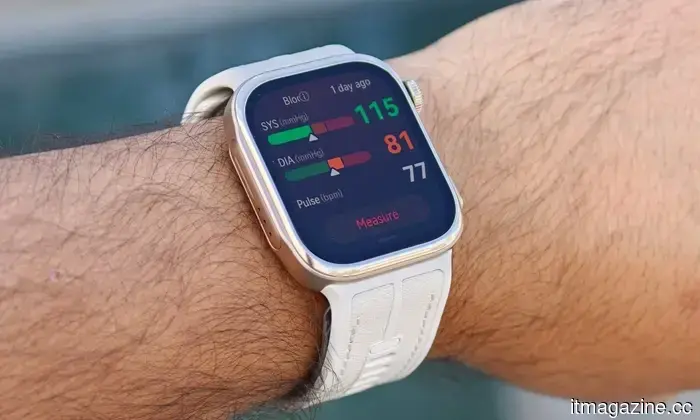
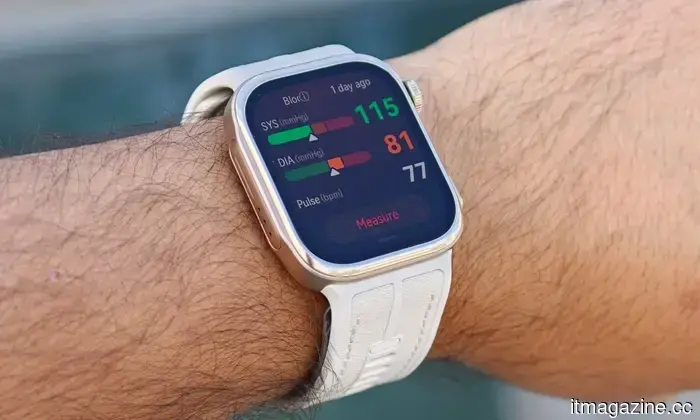
It’s also much more comfortable for overnight wear. This is crucial since the D3 isn’t merely a device to check notifications during the day. A key part of its appeal is its capability for continuous health monitoring, which is far more effective when you barely notice you're wearing it. The larger 1.92-inch display also enhances readability for everything from blood pressure readings to various health metrics.
The clever innovation lies in the strap
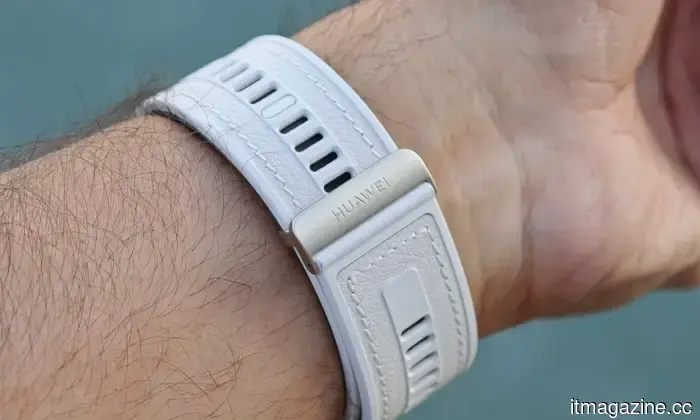
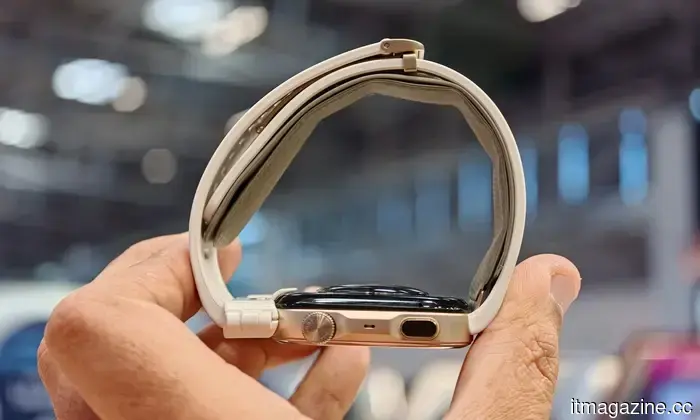
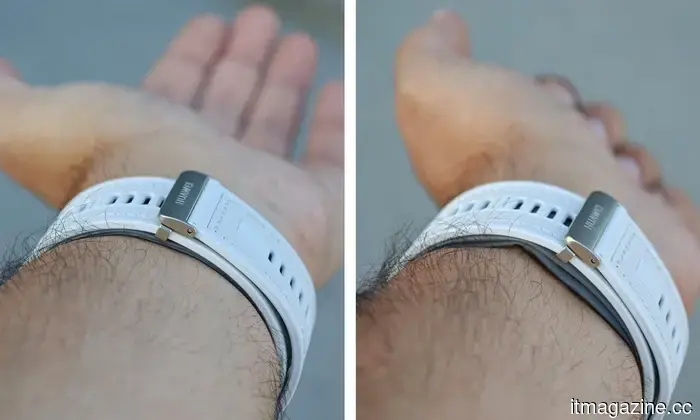
The standout feature of the D3 is one you won’t typically find on a standard Apple Watch or Galaxy Watch: an inflatable cuff integrated into the strap. A tiny pump within the watch inflates the cuff around your wrist, enabling the D3 to provide a pressure-based measurement of blood pressure rather than merely estimating it based on optical sensor data.
Varun Mirchandani / Digital Trends
The process is surprisingly comfortable. Simply raise your wrist to heart level, initiate a measurement, and in about 30 seconds, you have your reading. While the cuff inflates, you do feel some pressure, but it’s not uncomfortable. After a few attempts, it becomes just another function you can perform from your wrist.
How the inflatable airbag strap on the Huawei Watch D3 operates. Varun Mirchandani / Digital Trends
However, this functionality comes with some trade-offs. The Watch D3 has an IP68 rating, but its design means it isn't suitable for use as a dedicated swimming device. Extended exposure to water, diving, hot showers, and similar activities aren’t what this smartwatch was intended for. It's a minor compromise for having an inflatable blood-pressure cuff built into the strap.
Blood pressure monitoring offers a new perspective
The main advantage of measuring blood pressure in this manner is that it provides the D3 with a unique view of your health. Most smartwatches derive their stress and wellness insights from metrics like heart rate, heart-rate variability, and sleep patterns. The D3 can incorporate actual blood-pressure readings into that data.
Varun Mirchandani / Digital Trends
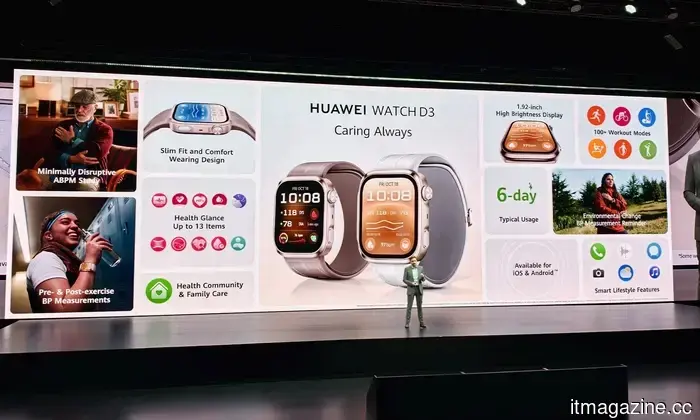
Huawei has also enhanced the blood-pressure features compared to the previous D2 model. The D3 can track blood pressure before and after exercise, and Huawei claims it can maintain accurate readings even during elevated heart rates. It also introduces contextual reminders to check blood pressure in situations like sudden temperature changes or high-altitude circumstances.
This last feature is particularly intriguing as it adds a level of intelligence to the monitoring process. Rather than just collecting data and sending it to an app, the D3 can identify scenarios where a blood-pressure reading may be beneficial and prompt you to take one. It’s a minor addition, but it gives the overall concept greater significance.
This isn't intended to compete with the Apple Watch
This is where the Watch D3 becomes especially interesting. It would be simple to compare it to an Apple Watch, Galaxy Watch, or Garmin and list the features it lacks. There are fewer sports modes, more pronounced water limitations, and its design is shaped by hardware that most smartwatches don’t require. However, that perspective misses its purpose.
Huawei Watch D3 is certified by TUV Rheinland for MDR Compliance Varun Mirchandani / Digital Trends
The D3 isn’t created to dominate a smartwatch feature list. Its intended users are more specific: individuals who prioritize cardiovascular health, those managing hypertension, adults over the age of 40, or anyone for whom regular blood-pressure monitoring matters more than having a feature-rich sports watch.
Huawei Health Booth with Huawei Watch D3 at ESC Congress 2026 Varun Mirchandani / Digital Trends
This medical emphasis was prominently showcased when Huawei unveiled the D3 at the European Society of Cardiology (ESC) Congress in Munich, where it garnered positive attention from cardiologists. Huawei states that the D3’s CE-MDR certification in the EU encompasses single blood-pressure measurements, ambulatory monitoring, and readings taken before and after exercise.
A surprisingly appealing niche
After several days with the Watch D3, I'm still

Other articles
 Adobe for Slack transforms chat discussions into images, videos, and PDFs using Firefly.
Adobe for Slack transforms chat prompts into images and videos using Firefly. EU regulations mandate machine-readable labeling, but it remains unclear if it will be retained.
Adobe for Slack transforms chat discussions into images, videos, and PDFs using Firefly.
Adobe for Slack transforms chat prompts into images and videos using Firefly. EU regulations mandate machine-readable labeling, but it remains unclear if it will be retained.
 Meta's latest AI model is drawing nearer to those developed by OpenAI and Anthropic, according to the company's AI Chief.
Meta has launched Muse Spark 1.3 and has not disclosed whether it will make the weights available. The open-source exemption in the AI Act ends precisely where frontier models begin.
Meta's latest AI model is drawing nearer to those developed by OpenAI and Anthropic, according to the company's AI Chief.
Meta has launched Muse Spark 1.3 and has not disclosed whether it will make the weights available. The open-source exemption in the AI Act ends precisely where frontier models begin.
 NASA opts for a simplified Sortie Suit for the initial Artemis landings.
NASA is reducing the requirements for spacesuits to facilitate a landing by 2028. The cancellation of the Gateway, which helped to clear the timeline, also eliminated ESA's three astronaut seats.
NASA opts for a simplified Sortie Suit for the initial Artemis landings.
NASA is reducing the requirements for spacesuits to facilitate a landing by 2028. The cancellation of the Gateway, which helped to clear the timeline, also eliminated ESA's three astronaut seats.
 New York prohibits AI in primary schools, three months following Norway's lead.
New York City is prohibiting generative AI for students up to eighth grade. Europe has already implemented two similar bans, along with an AI Act that does not address the students who are utilizing it.
New York prohibits AI in primary schools, three months following Norway's lead.
New York City is prohibiting generative AI for students up to eighth grade. Europe has already implemented two similar bans, along with an AI Act that does not address the students who are utilizing it.
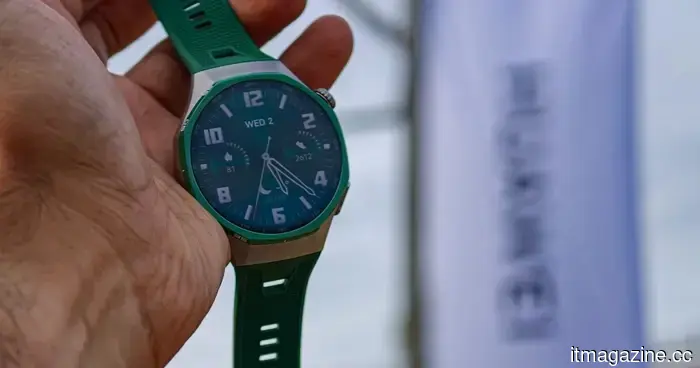 Huawei Watch GT 7 Pro Initial Thoughts: Large watch, larger battery, surprisingly minimal hassle.
Our initial thoughts on the Huawei Watch GT 7 Pro highlight its athletic design, capabilities for outdoor tracking, cycling performance, and remarkably good battery life.
Huawei Watch GT 7 Pro Initial Thoughts: Large watch, larger battery, surprisingly minimal hassle.
Our initial thoughts on the Huawei Watch GT 7 Pro highlight its athletic design, capabilities for outdoor tracking, cycling performance, and remarkably good battery life.
 The gap in AI skills is widening as educational institutions await ideal solutions.
Teachers who utilize AI on a weekly basis save an average of 5.9 hours each week (Gallup). According to the WEF, 39% of skills might become obsolete by 2030. Kirk Drake contends that schools should cease prohibiting AI and begin educating teachers on how to use it responsibly.
The gap in AI skills is widening as educational institutions await ideal solutions.
Teachers who utilize AI on a weekly basis save an average of 5.9 hours each week (Gallup). According to the WEF, 39% of skills might become obsolete by 2030. Kirk Drake contends that schools should cease prohibiting AI and begin educating teachers on how to use it responsibly.
Hands-on with the Huawei Watch D3: This might be Huawei's oddest smartwatch, yet it could also be its most intelligent.
The Huawei Watch D3 centers its smartwatch experience around blood-pressure monitoring. After using it for several days, here are the key features that stand out.