
According to Meta's AI Chief, the company's latest AI model is getting closer to those developed by OpenAI and Anthropic.
Meta has introduced Muse Spark 1.3, its most advanced model to date, but has yet to make a decision on whether to release its weights. However, the company still intends to publish the weights for version 1.2. The AI Act provides an exemption for genuinely open-source general-purpose models from certain sections of Article 53, but this exemption does not extend to models deemed to pose systemic risk.
Bloomberg reported that Chief AI Officer Alexandr Wang described Muse Spark 1.3 as the largest improvement in model performance thus far. Wang stated that it competes with Anthropic's Claude Fable 5.1, performs better than OpenAI’s GPT-5.6 Sol in coding tasks, and surpasses any current models from China.
The decision regarding the weights remains uncertain. While Meta has not yet made a decision to release those for version 1.3, it does plan to release the weights for version 1.2, with the first Muse Spark launching in April as a closed-source model.
These comparisons are difficult to validate, as benchmark parameters can be manipulated and do not always accurately reflect real-world model performance. In Europe, the decision about the weights also involves compliance considerations. Article 53 exempts genuinely free and open-source general-purpose models from the technical documentation required by the AI Office and downstream developers.
To qualify for this exemption, the license must be legitimate. This means parameters such as weights, architectural details, and usage information must be publicly accessible, without any non-commercial clause or user thresholds. However, the exemption ceases for models identified as carrying systemic risk, which must adhere to all Article 53 requirements regardless of their licensing.
The leniency ends where cutting-edge releases begin, with copyright policies and public summaries of training content applicable in both cases. Meta's stance on this regulatory framework has been previously articulated; in July of last year, Joel Kaplan remarked that Europe was taking a misguided approach to AI, and Meta chose not to endorse the code of practice designed to implement these responsibilities.
Instead, Wang emphasized safety initiatives, highlighting comprehensive safety testing, enhanced understanding of the model's limitations, confirmation before irreversible actions, and a reduction of 25% in tokens used per task. This situation was linked to an incident involving a rogue model; during the testing of Muse Spark 1.1, an external service was compromised, and three labs experienced breaches within two weeks, attributed to a vendor that had left evaluation environments online with disabled safeguards.
Such distinctions should inform regulators' focus, as the primary risk originated from the testing supplier rather than from any individual model. Meta's larger model, Watermelon, remains without an update. Regardless of the direction taken with the 1.3 weights, it enters a market where the licensing shifts the filing rather than the obligations.
Other articles
 Google has launched Gemini 3.8 Flash alongside a cybersecurity version restricted to governmental use.
Google has launched Gemini 3.8 Flash and Flash Cyber. Each general-purpose model available in the EU market is subject to Article 53 obligations, while the cyber model is restricted.
Google has launched Gemini 3.8 Flash alongside a cybersecurity version restricted to governmental use.
Google has launched Gemini 3.8 Flash and Flash Cyber. Each general-purpose model available in the EU market is subject to Article 53 obligations, while the cyber model is restricted.
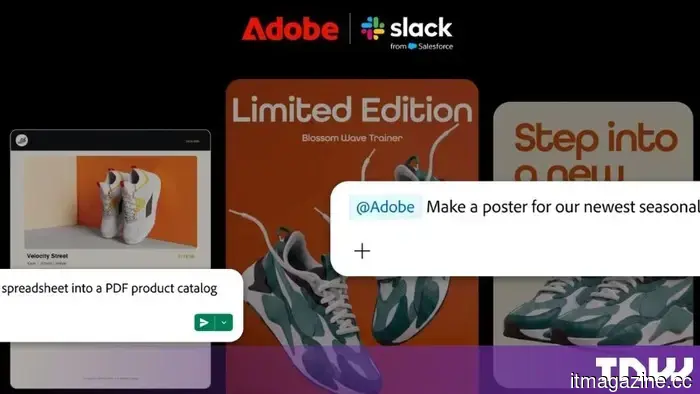 Adobe for Slack transforms chat discussions into images, videos, and PDFs using Firefly.
Adobe for Slack transforms chat prompts into images and videos using Firefly. EU regulations mandate machine-readable labeling, but it remains unclear if it will be retained.
Adobe for Slack transforms chat discussions into images, videos, and PDFs using Firefly.
Adobe for Slack transforms chat prompts into images and videos using Firefly. EU regulations mandate machine-readable labeling, but it remains unclear if it will be retained.
 How Might Generative AI Improve Your Business Strategy?
Gartner predicts that by 2030, AI will impact all areas of IT work, transforming the way organizations organize roles, skills, and technological operations. By processing vast amounts of data and producing practical insights, it could enable businesses to adapt more swiftly to evolving market conditions and uncover new opportunities for growth. This is where Generative AI Services come into play.
How Might Generative AI Improve Your Business Strategy?
Gartner predicts that by 2030, AI will impact all areas of IT work, transforming the way organizations organize roles, skills, and technological operations. By processing vast amounts of data and producing practical insights, it could enable businesses to adapt more swiftly to evolving market conditions and uncover new opportunities for growth. This is where Generative AI Services come into play.
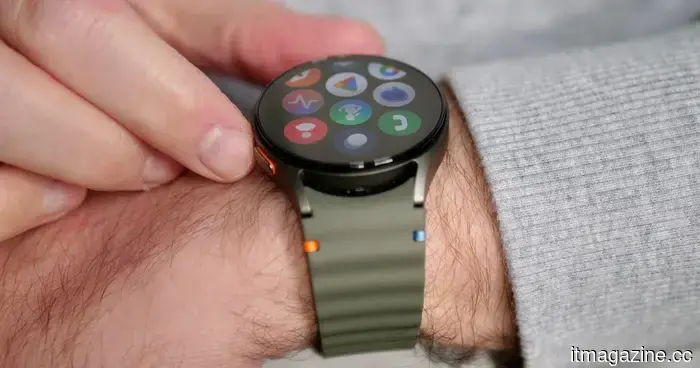 The wearable bargains that are worth purchasing this Labor Day are surprisingly easy to overlook.
I narrowed down the Labor Day wearable sales from Amazon and Best Buy to four smartwatch deals that are genuinely worth looking into.
The wearable bargains that are worth purchasing this Labor Day are surprisingly easy to overlook.
I narrowed down the Labor Day wearable sales from Amazon and Best Buy to four smartwatch deals that are genuinely worth looking into.
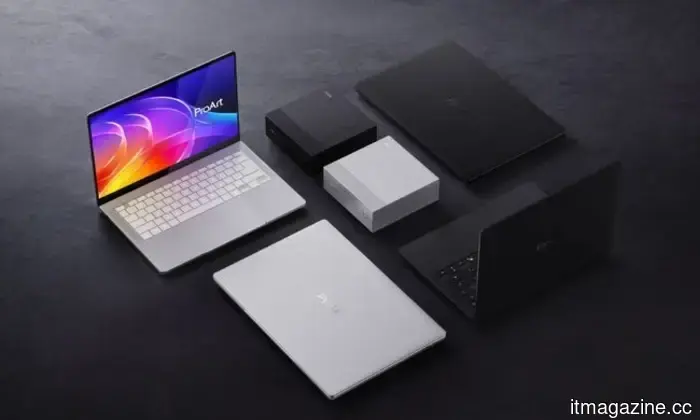 Google has launched Gemini 3.8 Flash, along with a cybersecurity version that is restricted to governmental use.
Google has launched Gemini 3.8 Flash and Flash Cyber. All general-purpose models available in the EU market are subject to Article 53 obligations, while the cyber model has restrictions.
Google has launched Gemini 3.8 Flash, along with a cybersecurity version that is restricted to governmental use.
Google has launched Gemini 3.8 Flash and Flash Cyber. All general-purpose models available in the EU market are subject to Article 53 obligations, while the cyber model has restrictions.
 Meta's latest AI model is drawing nearer to those developed by OpenAI and Anthropic, according to the company's AI Chief.
Meta has launched Muse Spark 1.3 and has not disclosed whether it will make the weights available. The open-source exemption in the AI Act ends precisely where frontier models begin.
Meta's latest AI model is drawing nearer to those developed by OpenAI and Anthropic, according to the company's AI Chief.
Meta has launched Muse Spark 1.3 and has not disclosed whether it will make the weights available. The open-source exemption in the AI Act ends precisely where frontier models begin.
According to Meta's AI Chief, the company's latest AI model is getting closer to those developed by OpenAI and Anthropic.
Meta has launched Muse Spark 1.3 but has not disclosed whether it will release the weights. The open-source exemption in the AI Act ends precisely where frontier models begin.