

AEREDIUM introduces AERSeal to eliminate single-key control over smart contracts.
AEREDIUM has introduced AERSeal, a security solution aimed at smart contracts. Its purpose is to prevent a single compromised private key from allowing an attacker to take control of a contract.
Smart contracts typically depend on one private key for authorizing critical operations, such as minting assets, upgrading the contract, or modifying administrative settings. If that key is stolen, an individual could gain control. Conversely, if the key is lost, the organization risks losing access to those capabilities permanently.
AERSeal mitigates this single point of failure by employing a threshold signing system. This system operates on AERKey, AEREDIUM’s key infrastructure. Rather than keeping a complete private key in one place, control is distributed among several key shares, each housed in a separate hardware-attested enclave. The full key is never reconstructed; instead, the shares work together to produce signatures utilizing the CGGMP24 threshold signing protocol.
Multiple Approval Requirements
Organizations utilizing AERSeal have the option to establish an M-of-N approval policy, dictating who can authorize actions and how many approvals are necessary. For instance, a business might require three out of five authorized signatories to approve a contract upgrade. Signatories can approve requests using passkeys, and the threshold cluster then generates the required signature.
This method aims to prevent any single individual or device from unilaterally executing a smart contract’s administrative functions, which is crucial when attackers increasingly target key holders through impersonation and social engineering tactics rather than the code itself.
Before activation, AERSeal identifies the contract's privileged functions and ensures control over them transitions to the threshold key, subsequently verifying this transfer on-chain. There’s no need for the existing smart contract to be moved or redeployed. AERSeal currently caters to contracts running on Ethereum Virtual Machine networks and other EVM-compatible blockchains.
Verifying the Key Independently
According to AEREDIUM, customers are able to independently verify the threshold key assigned to their contract without relying solely on the company's assertions. The verification process employs address derivation and a signed fresh challenge to confirm both the derivation and ownership of the key, and this can also be completed offline.
The onboarding process consists of six steps: verifying identity or business, registering the contract, validating the cryptographic key, transferring administrative permissions, confirming on-chain, and activating the selected approval policy.
“AERSeal is the first complete product to implement AERKey from start to finish,” stated Albert Dadon, founder and CEO of AEREDIUM. “The aim is to eliminate the notion that control over an entire smart contract should rely on a single private key,” he added.
Limitations of AERSeal
It’s important to note that AERSeal does not eliminate vulnerabilities present in a smart contract’s foundational code; its focus is more specific. It lessens the security and operational risks that arise when privileged contract functions are dependent on a single private key.
This product is part of AEREDIUM’s AER360 product suite and is provided by Aeredium Network LLC.
Other articles
 HUMAIN has introduced the Horizon Ultra AI PC, featuring the Snapdragon X2 Elite and built-in AI capabilities.
Qualcomm and HUMAIN introduced Horizon Ultra at LEAP 2026, an AI PC equipped with the Snapdragon X2 Elite, capable of executing AI tasks locally and resorting to the cloud only when additional power is required.
HUMAIN has introduced the Horizon Ultra AI PC, featuring the Snapdragon X2 Elite and built-in AI capabilities.
Qualcomm and HUMAIN introduced Horizon Ultra at LEAP 2026, an AI PC equipped with the Snapdragon X2 Elite, capable of executing AI tasks locally and resorting to the cloud only when additional power is required.
 Apple has officially permitted developers to move away from Intel Macs.
Apple has notified developers of the Mac App Store that they can completely eliminate Intel support, resulting in smaller downloads for users and indicating that Intel Macs are becoming obsolete.
Apple has officially permitted developers to move away from Intel Macs.
Apple has notified developers of the Mac App Store that they can completely eliminate Intel support, resulting in smaller downloads for users and indicating that Intel Macs are becoming obsolete.
 CrowdStrike and the FBI are breaking down Sality after 23 years.
US law enforcement and CrowdStrike are working to dismantle Sality, a Russian cybercrime group that has been active for 23 years, by injecting it with misleading information.
CrowdStrike and the FBI are breaking down Sality after 23 years.
US law enforcement and CrowdStrike are working to dismantle Sality, a Russian cybercrime group that has been active for 23 years, by injecting it with misleading information.
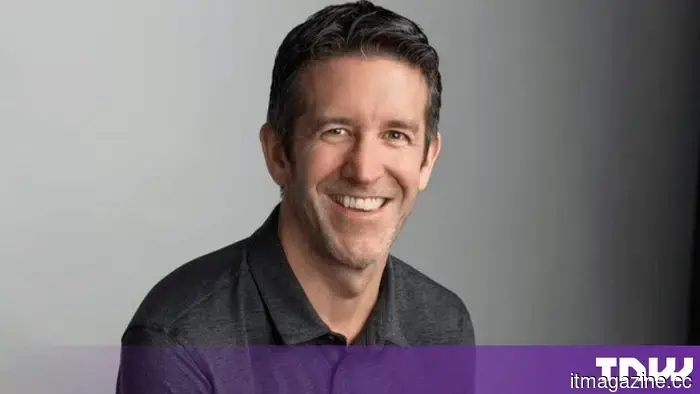 Apple's newly appointed CEO will receive a salary of $3 million along with an equity target of $55 million.
John Ternus receives a base salary of $3 million, a prorated stock award of $2.5 million, and an award for fiscal 2027 aimed at $55 million, with three-quarters of it linked to shareholder return.
Apple's newly appointed CEO will receive a salary of $3 million along with an equity target of $55 million.
John Ternus receives a base salary of $3 million, a prorated stock award of $2.5 million, and an award for fiscal 2027 aimed at $55 million, with three-quarters of it linked to shareholder return.
 Razer's latest Prio controller is compact enough to fit into your pocket when folded.
Razer's latest Prio collapses into a pocket-sized form and unfolds into a complete console arrangement, allowing any free moment to become a genuine gaming experience.
Razer's latest Prio controller is compact enough to fit into your pocket when folded.
Razer's latest Prio collapses into a pocket-sized form and unfolds into a complete console arrangement, allowing any free moment to become a genuine gaming experience.
 Opera's attempt to have Microsoft Edge designated as a gatekeeper has been rejected by the EU court.
Opera, Microsoft Edge, Digital Markets Act (DMA), gatekeeper, European Commission, General Court, T-357/24, EU technology regulation, competition in browsers.
Opera's attempt to have Microsoft Edge designated as a gatekeeper has been rejected by the EU court.
Opera, Microsoft Edge, Digital Markets Act (DMA), gatekeeper, European Commission, General Court, T-357/24, EU technology regulation, competition in browsers.
AEREDIUM introduces AERSeal to eliminate single-key control over smart contracts.
AERSeal requires M-of-N approvals within hardware enclaves for managing smart contract administration. No individual key has the ability to mint, upgrade, or alter settings on its own.