

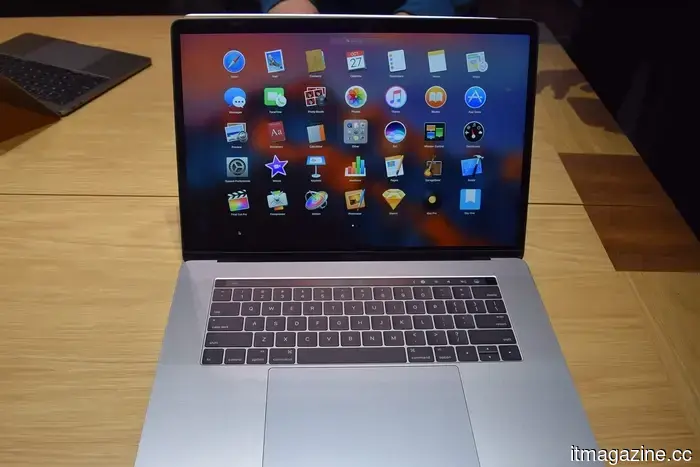
Apple has officially permitted developers to move away from Intel Macs.
Mac developers can now move on from Intel as Apple advances deeper into its Apple Silicon phase.
Apple is encouraging developers to finally move away from Intel support. Today, the company began contacting developers to inform them that universal macOS apps in the Mac App Store which require macOS 13 or newer can now cease to support Intel-based Macs.
In the email, as reported by 9to5Mac, Apple states:
“We're reaching out to notify you that universal macOS apps on the Mac App Store that require macOS 13 or later may now remove Intel-based Mac support.
By eliminating support for Intel-based Macs, you can streamline your development process and enhance both download and on-device size.
To remove Intel support, adjust your app build settings to “arm64” exclusively. Then rebuild and submit your app to the Mac App Store.”
What about Intel Mac users?
Previously, developers were obligated to maintain Intel compatibility in their apps, even if very few users were still on Intel Macs. That requirement has now been lifted, allowing developers to create arm64-only versions of their apps, which should lead to smaller downloads and less bloat for users.
If you're still using an Intel Mac, there's no need for concern. You won't lose access to your apps immediately. You can continue to use the last version of any app that was developed for your device. However, you won't receive any new updates once a developer moves to arm64-only support.
Why is Apple making this change now?
This action aligns with Apple's broader intention to fully move away from Intel Macs. macOS 27 Golden Gate is expected to eliminate support for Intel-powered Macs completely. Additionally, Apple confirmed last year that Rosetta 2, the tool that enables Intel apps to run on Apple Silicon, will be discontinued after macOS 27, with few exceptions for select games.
So, developers, this is your opportunity to streamline your apps and concentrate solely on Apple Silicon. For those still using an Intel Mac, it might be time to start considering an upgrade.
Rachit is an experienced tech journalist with over a decade of expertise in the consumer technology sector.
Acer has introduced a new ePaper monitor aimed at making screen time more comfortable.
At its press event during IFA 2026 in Berlin, Acer revealed a range of new products, including tablets, routers, and a projector. The Acer EP130K, a portable ePaper monitor designed for individuals who spend long hours in front of screens, particularly caught my attention as an e-reader enthusiast.
What sets the EP130K apart from a standard monitor?
Qualcomm and HUMAIN have unveiled a new AI PC called Horizon Ultra, emphasizing the ability to execute AI tasks directly on the device rather than relying on cloud servers.
This AI PC, developed collaboratively by HUMAIN and Qualcomm Technologies over the past year, runs Microsoft Windows, making it familiar to potential users. HUMAIN has also announced that its own operating system, HUMAIN OS, will be available on this hardware line in 2027.
Anthropic has launched two enhanced AI models for Claude, which promise improved coding efficiency, better handling of complex tasks, and reduced costs for developers. They have introduced Claude Fable 5.1 for general use and Claude Mythos 5.1 specifically for trusted organizations in fields like cybersecurity and life sciences.
Alongside the model enhancements, Anthropic is reducing Fable cache read pricing by 75%, significantly lowering operating costs for developers running repeated workloads while maintaining the same API pricing for standard use.




Other articles
 PwC anticipates that worldwide investment in AI infrastructure will hit $31.6 trillion by the year 2050.
According to PwC's modeling, annual capital expenditures for data centers are projected to increase from $800 billion to $1.8 trillion by 2050, with the United States accounting for 48% of this growth, and the demand for chips surpassing construction as the primary driving force.
PwC anticipates that worldwide investment in AI infrastructure will hit $31.6 trillion by the year 2050.
According to PwC's modeling, annual capital expenditures for data centers are projected to increase from $800 billion to $1.8 trillion by 2050, with the United States accounting for 48% of this growth, and the demand for chips surpassing construction as the primary driving force.
 YouTube TV now allows you to stream ESPN Unlimited directly within the app.
YouTube TV has completely incorporated ESPN Unlimited into its app, eliminating the necessity to switch to a different ESPN app for live sports content.
YouTube TV now allows you to stream ESPN Unlimited directly within the app.
YouTube TV has completely incorporated ESPN Unlimited into its app, eliminating the necessity to switch to a different ESPN app for live sports content.
 AEREDIUM introduces AERSeal to eliminate single-key control over smart contracts.
AERSeal requires M-of-N approvals within hardware enclaves for managing smart contract administration. No individual key has the ability to mint, upgrade, or alter settings on its own.
AEREDIUM introduces AERSeal to eliminate single-key control over smart contracts.
AERSeal requires M-of-N approvals within hardware enclaves for managing smart contract administration. No individual key has the ability to mint, upgrade, or alter settings on its own.
 OpenAI asserts that its upcoming model detects security vulnerabilities that have not been identified previously.
According to OpenAI, Astra has the capability to detect unknown vulnerabilities and create exploits. Training resumed on August 28 following a two-week break.
OpenAI asserts that its upcoming model detects security vulnerabilities that have not been identified previously.
According to OpenAI, Astra has the capability to detect unknown vulnerabilities and create exploits. Training resumed on August 28 following a two-week break.
 Claude Fable 5.1 and Mythos 5.1 come with improved coding capabilities and more affordable cache pricing.
Anthropic has introduced Claude Fable 5.1 and Mythos 5.1, which provide enhanced coding and research capabilities, as well as a 75% reduction in cache read costs for developers.
Claude Fable 5.1 and Mythos 5.1 come with improved coding capabilities and more affordable cache pricing.
Anthropic has introduced Claude Fable 5.1 and Mythos 5.1, which provide enhanced coding and research capabilities, as well as a 75% reduction in cache read costs for developers.
 Opera's attempt to have Microsoft Edge designated as a gatekeeper has been rejected by the EU court.
Opera, Microsoft Edge, Digital Markets Act (DMA), gatekeeper, European Commission, General Court, T-357/24, EU technology regulation, competition in browsers.
Opera's attempt to have Microsoft Edge designated as a gatekeeper has been rejected by the EU court.
Opera, Microsoft Edge, Digital Markets Act (DMA), gatekeeper, European Commission, General Court, T-357/24, EU technology regulation, competition in browsers.
Apple has officially permitted developers to move away from Intel Macs.
Apple has notified developers of the Mac App Store that they can completely eliminate Intel support, resulting in smaller downloads for users and indicating that Intel Macs are becoming obsolete.