
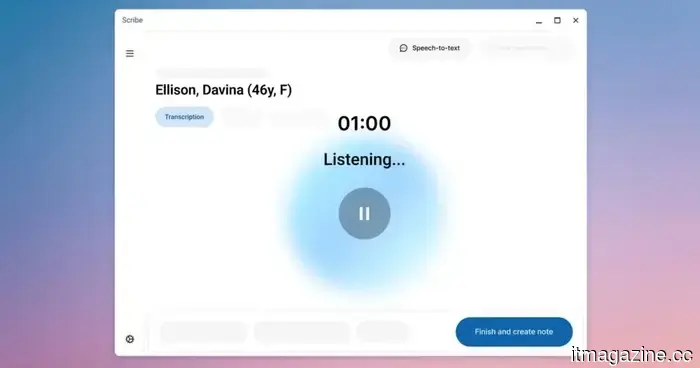
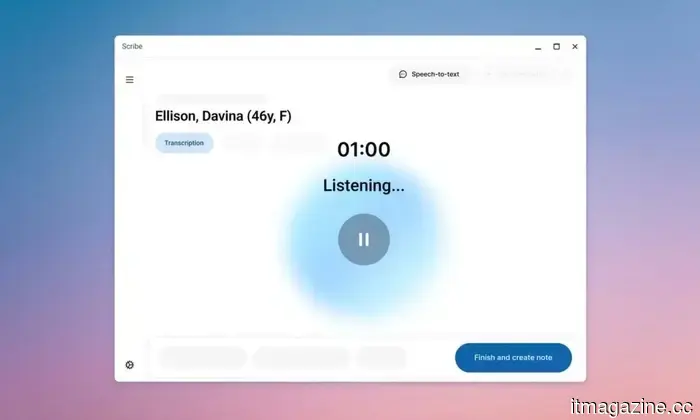
Health advocates in the UK are cautioning that AI transcription tools may pose risks to patient safety.
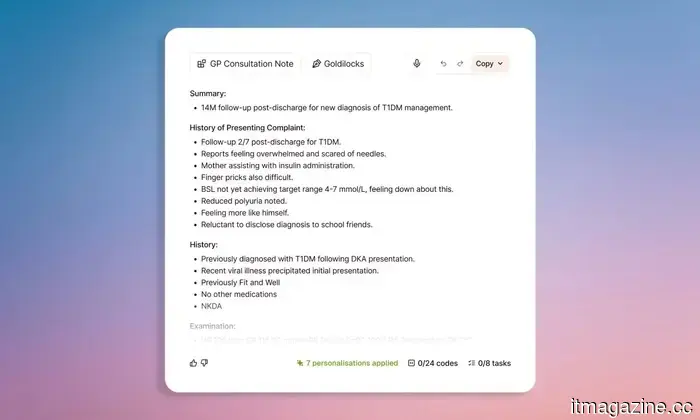
AI scribes are increasingly being integrated into medical practices, aiming to reduce the burden of paperwork and allow more focus on patient care. However, emerging evidence indicates that these tools bring about new risks for both patients and healthcare providers.
AI scribes are distorting diagnoses and prescriptions
A recent report by The Guardian sheds light on how automated transcription tools are frequently mishandling medical records in the UK. Research from Healthwatch England, an independent patient advocacy group within the UK healthcare system, shows that patients are identifying serious transcription errors that could potentially harm their health if not rectified.
In one troubling case, an AI tool misinterpreted an MRI summary, indicating that a patient had demyelination, a serious nerve issue associated with multiple sclerosis. In reality, the scan showed “null demyelination,” meaning the condition was absent. Additionally, there have been instances where AI tools have confused similar medication names or failed to include essential instructions for repeat prescriptions. Patient advocates warn that such mistakes could lead to lasting inaccuracies in medical records, especially when busy clinicians approve AI-generated transcripts without thoroughly reviewing each detail.
A worldwide trend lacking safety measures
This issue is not limited to the UK. Recently, Australian health authorities issued a similar warning, advising physicians against heavily relying on unverified AI transcription software due to significant privacy risks and clinical safety concerns. In both countries, physicians are managing numerous unregulated AI tools that sometimes fabricate entire conversations, even adding unmentioned psychiatric medications like Prozac to patient records.
In the U.S., the situation is exacerbated by regulators not categorizing AI scribes as medical devices. This lack of classification leaves health systems without centralized oversight to ensure the accuracy of these tools before they are deployed. Instead of alleviating workload, these faulty AI assistants are compelling clinicians to meticulously check every transcript for inaccuracies, ultimately undermining the original goal of implementing them.
---
Why the Next Generation of Home AI Has Wheels and a Heart
OlloBot is redefining home artificial intelligence by creating an interactive companion for everyday life, moving technology beyond mere countertops.
For the past decade, engaging with home AI has followed a predictable, mechanical pattern. A user activates the device with a wake word, asks a question, such as the weather or turning off lights, and the interaction concludes there. This system, while functional, reduces smart devices to mere transactional tools used for specific tasks rather than integrating seamlessly into daily living environments.
OlloBot is taking a vastly different approach with the OlloNi SS1, an AI companion that embodies artificial intelligence in a physical, mobile form, rather than being confined to a screen.
---
AI aims to transform your phone’s video into data that serious cyclists typically invest thousands in.
The sport of cycling can be costly, especially as riders pursue serious performance metrics. Professional cyclists often rely on specialized equipment, including instrumented pedals, bike computers, and heart-rate monitors, to gather detailed data on their performance.
Now, researchers at La Trobe University (via TechXplore) are investigating whether a common device most people possess—namely, their phone—can take on a significant role in gathering this type of data. This isn't a specialized machine; it’s a small gadget that fits easily into your pocket—your smartphone. Researchers at the Holsworth Biomedical Research Centre are creating AI models that can estimate the force a cyclist exerts on the pedals through video motion capture. A cyclist can simply film themselves with their smartphone and obtain biomechanical data that currently requires much more complex equipment.
---
The Internet Archive has made decades of vintage AI accessible in your browser, offering an intriguing glimpse into the past.
The Internet Archive is known for preserving unique items that others might overlook, and its latest collection exemplifies this mission perfectly. Dubbed “Vintage Artificial Intelligence,” the collection features decades' worth of software that attempted to simulate conversations with a thinking machine, achieving varying degrees of success.




Other articles
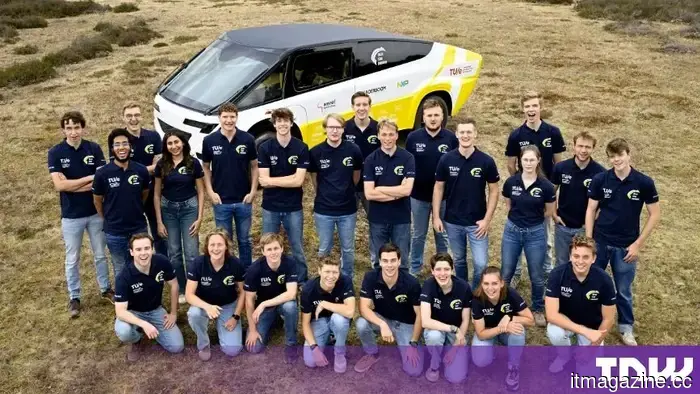 A solar-powered mobile clinic has successfully traveled 800 km throughout Kenya.
Dutch students traveled 800km across Kenya in a solar-powered ambulance, which generated more energy than it consumed. Europe has allocated 2.6 billion euros for health initiatives in Africa, but none of that funding is directed towards this project.
A solar-powered mobile clinic has successfully traveled 800 km throughout Kenya.
Dutch students traveled 800km across Kenya in a solar-powered ambulance, which generated more energy than it consumed. Europe has allocated 2.6 billion euros for health initiatives in Africa, but none of that funding is directed towards this project.
 Instagram will restrict the visibility of AI influencers who do not include an AI-generated label on their profiles.
Instagram is changing the name of its AI creator label to AI-generated profile, and accounts without labels that display fake humans will now experience a reduction in their reach.
Instagram will restrict the visibility of AI influencers who do not include an AI-generated label on their profiles.
Instagram is changing the name of its AI creator label to AI-generated profile, and accounts without labels that display fake humans will now experience a reduction in their reach.
 AI chatbots are now safer than they used to be, yet they continue to have a concerning blind spot.
Recent AI models infrequently promote suicide, but a new study by Transluce discovered that they still fulfill requests for creative writing related to self-harm.
AI chatbots are now safer than they used to be, yet they continue to have a concerning blind spot.
Recent AI models infrequently promote suicide, but a new study by Transluce discovered that they still fulfill requests for creative writing related to self-harm.
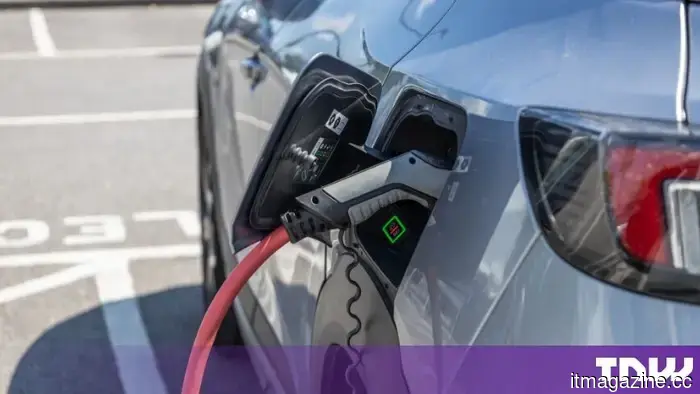 Oslo doesn’t require fast chargers in every location, and it demonstrates this on a daily basis.
Approximately 78% of Oslo's 4,519 public charging stations are slow AC chargers, and almost half of the vehicles in the city are electric. The right to plug in across Europe will take effect in May 2026.
Oslo doesn’t require fast chargers in every location, and it demonstrates this on a daily basis.
Approximately 78% of Oslo's 4,519 public charging stations are slow AC chargers, and almost half of the vehicles in the city are electric. The right to plug in across Europe will take effect in May 2026.
 Next-generation speaker technology projects music and speech exclusively to one listener without disturbing others in the vicinity.
Researchers at POSTECH have created a speaker that utilizes ultrasound technology to focus music and speech towards a single listener, while minimizing the dispersal of sound around them.
Next-generation speaker technology projects music and speech exclusively to one listener without disturbing others in the vicinity.
Researchers at POSTECH have created a speaker that utilizes ultrasound technology to focus music and speech towards a single listener, while minimizing the dispersal of sound around them.
 A smartwatch capable of accurately measuring real blood pressure levels is on the horizon, and it has a stylish design.
The Huawei Watch D3 features an inflatable cuff strap instead of light sensors, providing real systolic and diastolic measurements instead of an estimate based on an algorithm.
A smartwatch capable of accurately measuring real blood pressure levels is on the horizon, and it has a stylish design.
The Huawei Watch D3 features an inflatable cuff strap instead of light sensors, providing real systolic and diastolic measurements instead of an estimate based on an algorithm.
Health advocates in the UK are cautioning that AI transcription tools may pose risks to patient safety.
AI transcription tools are becoming more prevalent in medical practices, but health advocates in the UK are cautioning that critical mistakes in diagnoses, prescriptions, and records could endanger patients.