
Google will disburse £260 million to resolve a UK class action regarding fees associated with the Play Store.
Google has consented to pay £260 million to resolve a class action lawsuit filed on behalf of UK app developers, bringing an end to a case that was scheduled for trial next month. The agreement, reported by Reuters, amounts to approximately $353 million.
Lawyers had previously estimated the claim at just over £1 billion, seeking compensation for developers who offered apps on the Play Store in the UK. Barry Rodger, an academic in competition law, served as the class representative for the case. His legal team claimed that Google leveraged its dominant market position in two significant ways: it hindered developers from distributing apps through alternative channels and imposed an unfair commission rate, typically 30%.
Google has not admitted to any wrongdoing. The settlement requires approval from London's Competition Appeal Tribunal, which is set to review it in a hearing scheduled for September. The 19-page agreement specifies that the company believes it has substantial defenses against Professor Rodger's claims.
Google did not immediately respond to Reuters’ request for comments and has not made any public statements regarding the settlement since its announcement. Bloomberg Law cited the plaintiffs' claims, highlighting that Google enforced “excessive and unfair” commissions on transactions processed through the Play Store.
Rodger described the resolution as “a great outcome” for app developers. With the settlement removing the trial date, he stated, “If approved, meaningful financial compensation will become available for businesses that could never have taken on a company like Google alone.”
The £260 million settlement is divided into two parts: £160 million will go to developers who sold apps on the Play Store from August 2018 to July 2026, while the remaining £100 million is allocated for the costs associated with the lawsuit. This indicates that 38% of the settlement is directed towards funding the case rather than the claimants, as litigation funding is essential in the UK to support such legal actions, which individual developers cannot afford alone, as Rodger noted in his statement.
Bloomberg Law reported that the claimant and his attorneys characterized this as the largest settlement to date in the UK system. The £260 million from Google equates to around $354 million based on Thursday's exchange rate. This settlement constitutes roughly a quarter of the original claim, where Rodger's legal team estimated losses at just over £1 billion, and Google has agreed to pay £260 million with no further commitment.
The actual amount each developer will receive remains uncertain. The £160 million pool is fixed, but the total number of developers making claims is variable. A higher number of claimants will result in smaller individual payouts, and the tribunal must approve the distribution plan before any payments are made.
The eligibility period for claims spans from August 2018 to July 2026, covering eight years of sales on the Play Store. Any UK business that sold an app during this time is included in the class, regardless of its awareness of the case.
This lawsuit marks the fourth such legal action against a prominent technology firm since the beginning of 2025, as reported by Reuters. Apple lost a UK case concerning App Store commissions in October of the previous year. Qualcomm announced in February that claimants would withdraw a lawsuit related to smartphone chip royalties, while Sony continues to challenge a £2.7 billion case regarding pricing in the PlayStation Store.
The Competition Appeal Tribunal is now addressing grievances in the app economy within Britain. Its system allows a single class representative, in this instance an academic, to sue on behalf of thousands of businesses that might not pursue individual claims. Litigation funders cover the expenses and take a portion of any awarded damages.
The commission at the heart of the claim is central to ongoing disputes in the app economy. Google retains up to 30% of transactions processed through the Play Store. Developers have criticized this practice as unfair for a decade, and regulators across three continents are currently evaluating its legitimacy.
Google is fighting similar claims on multiple fronts. It lost its final appeal regarding the EU's record fine of 4.1 billion euros related to Android in July. Subsequently, rival companies have begun to seek damages following Brussels' imposition of the first penalty under the Digital Markets Act.
In the United States, a judge instructed Google in August to make it easier to install competing app stores. Since then, the Play Store has included rival offerings, starting with a Lisbon-based company called Aptoide.
Separate from the settlement, the UK's competition regulator is addressing the commission issue through other means. In June, it proposed allowing developers to direct users away from Apple and Google payment systems. This proposal, not the settlement, has the potential to alter the existing 30% commission structure.
The settlement agreement does not impact the commission rate itself. Google retains the right to continue charging its current rates, and the agreement does not address future pricing. The payout pertains solely to past transactions and does not alter pricing for the upcoming decade.
The UK deal is specific to sales within the UK, meaning the agreement does not affect developers outside of
Other articles
 Research suggests that your concerns about AI replacing your job stem from your extensive knowledge about AI.
Almost 43% of respondents with extensive AI knowledge anticipate that AI could soon replace their jobs, a significantly higher percentage than those who have a limited understanding of AI.
Research suggests that your concerns about AI replacing your job stem from your extensive knowledge about AI.
Almost 43% of respondents with extensive AI knowledge anticipate that AI could soon replace their jobs, a significantly higher percentage than those who have a limited understanding of AI.
 A solar-powered ambulance has successfully navigated 500 miles of challenging terrain.
A solar-powered ambulance created by Solar Team Eindhoven has successfully finished an 800-kilometer trial in Kenya, demonstrating its ability to reach remote clinics and provide power for medical devices.
A solar-powered ambulance has successfully navigated 500 miles of challenging terrain.
A solar-powered ambulance created by Solar Team Eindhoven has successfully finished an 800-kilometer trial in Kenya, demonstrating its ability to reach remote clinics and provide power for medical devices.
 NASA's latest telescope can capture 100 times more of the sky than Hubble does in one image.
NASA's Roman Space Telescope has started its journey of a million miles to L2, equipped with a wide-angle infrared camera aimed at mapping billions of galaxies and discovering thousands of planets.
NASA's latest telescope can capture 100 times more of the sky than Hubble does in one image.
NASA's Roman Space Telescope has started its journey of a million miles to L2, equipped with a wide-angle infrared camera aimed at mapping billions of galaxies and discovering thousands of planets.
 Starting in February 2027, Google will restrict the amount of memory that Android apps can utilize.
Starting in February 2027, Google will implement memory limits on a per-app basis in the Play Store, due to an approaching memory crisis resulting from increasing RAM prices.
Starting in February 2027, Google will restrict the amount of memory that Android apps can utilize.
Starting in February 2027, Google will implement memory limits on a per-app basis in the Play Store, due to an approaching memory crisis resulting from increasing RAM prices.
 Starting in February 2027, Google will restrict the amount of memory that Android apps can utilize.
Google plans to implement per-app memory limits on the Play Store starting in February 2027, attributing this decision to an approaching memory crisis caused by increasing RAM prices.
Starting in February 2027, Google will restrict the amount of memory that Android apps can utilize.
Google plans to implement per-app memory limits on the Play Store starting in February 2027, attributing this decision to an approaching memory crisis caused by increasing RAM prices.
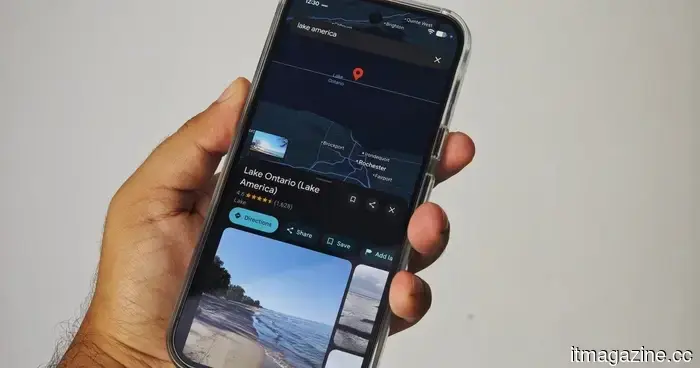 Google Maps features another "America," and Canadians are not pleased.
Google Maps is now referring to Lake Ontario as “Lake America” for users in the U.S., following the same regional naming strategy it implemented for the Gulf of Mexico last year.
Google Maps features another "America," and Canadians are not pleased.
Google Maps is now referring to Lake Ontario as “Lake America” for users in the U.S., following the same regional naming strategy it implemented for the Gulf of Mexico last year.
Google will disburse £260 million to resolve a UK class action regarding fees associated with the Play Store.
Alphabet has agreed to a £260 million settlement for a UK Play Store class action, which is a quarter of the initial £1 billion claim, without admitting any wrongdoing.