
NASA's latest telescope can capture 100 times more of the sky than Hubble does in one image.
NASA recently launched a $4 billion telescope aimed at mapping billions of galaxies.
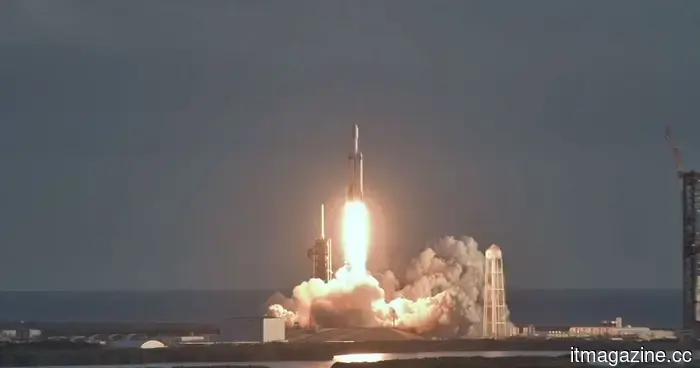
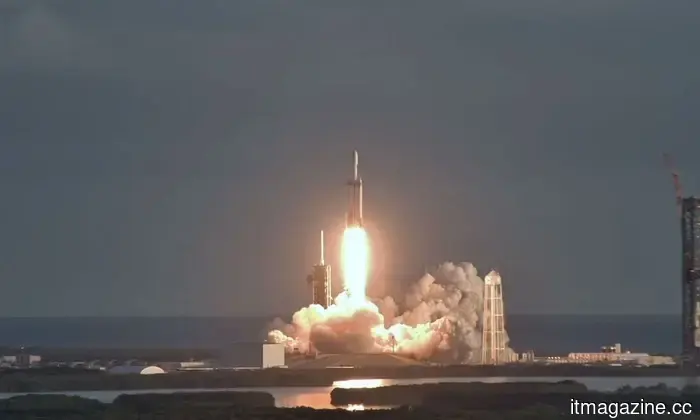
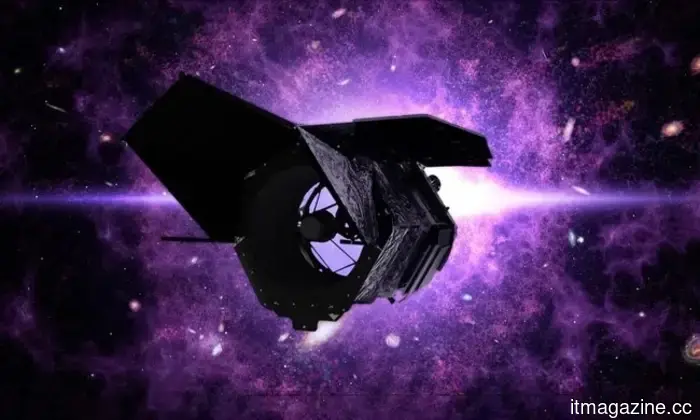
The Hubble telescope holds a nearly legendary reputation. Over three decades, Hubble has provided some of the most stunning close-up views of the universe, and now NASA's latest space telescope seeks to capture a broader perspective. The Nancy Grace Roman Space Telescope was successfully launched aboard a SpaceX Falcon Heavy from Kennedy Space Center in Florida at 7:26 a.m. EDT on August 30. Roman is currently embarking on a journey of approximately three months towards the Sun-Earth L2 point, nearly one million miles away, where it will carry out its primary five-year mission to survey vast areas of the cosmos.
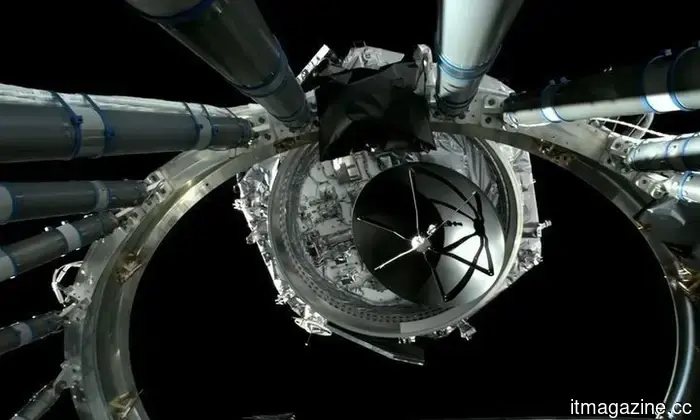
Roman features a 2.4-meter primary mirror, identical in diameter to Hubble's, but its Wide Field Instrument can capture a field of view at least 100 times larger than that of Hubble. NASA anticipates using this combination of clarity and scale to map billions of galaxies, examine dark matter and dark energy, and discover a vast number of previously unknown worlds.
Envision Hubble with a wider perspective.
NASA
Roman will not replace either the Hubble or the James Webb Space Telescope. While Webb excels at examining deeply into relatively small regions of the cosmos, Roman will function like a survey instrument, capable of covering large areas while maintaining the necessary resolution to identify distant objects.
NASA has previously highlighted this difference quite dramatically. In a simulated area containing millions of galaxies, Hubble would take about 85 years to map to the same depth, whereas Roman could accomplish it in roughly 63 days. This speed will enable Roman to create an extensive 3D representation of the universe and track the distribution of galaxies throughout cosmic history. Scientists can then utilize these patterns to explore some of the universe's greatest enigmas, such as dark matter and dark energy.
As reported by Reuters, the approximately $4 billion observatory could study over two billion galaxies throughout its mission. Additionally, Roman will be searching for exoplanets. NASA expects its surveys to reveal around 100,000 exoplanets, including those found through gravitational microlensing, where the gravity of an object temporarily magnifies the light of a distant star. Its experimental Coronagraph Instrument will also test technology aimed at blocking overpowering starlight to allow astronomers to study nearby planets and planet-forming disks directly.
NASA
From government optics to the dark cosmos
Key optical components of the telescope, including its primary mirror, were initially provided to NASA by the National Reconnaissance Office. L3Harris then modified the mirror and enhanced the existing hardware to create the wide-field infrared observatory now heading into deep space.
Roman launched nine months ahead of schedule. Its baseline mission is set for five years, although the spacecraft has a goal of a ten-year mission. It was designed to address questions that have puzzled scientists for decades, such as: Why is the universe expanding at an accelerating rate? Where is all the invisible matter influencing galaxies? How common are planetary systems similar to ours?
NASA constructed the Roman Space Telescope to study dark matter, but it may also assist in protecting Earth from hazardous asteroids.
The Nancy Grace Roman Space Telescope was not specifically designed for asteroid detection, but it turns out to be quite proficient in this task as well.
NASA is preparing to launch a telescope aimed at unraveling some of the universe's most significant mysteries, and it appears that its design could also contribute to Earth's protection from potential asteroid threats.
The Nancy Grace Roman Space Telescope is slated for launch from Kennedy Space Center on August 30, 2026, with its primary mission focused on investigating dark matter and dark energy—both invisible forces that shape galaxies and cosmic expansion. Researchers now indicate that its unique design also makes it unexpectedly effective in identifying perilous asteroids approaching Earth (as reported by MIT Technology Review).
In other news:
Space is becoming a new data center location for Bezos and Musk, raising concerns.
The AI boom is impacting the night sky.
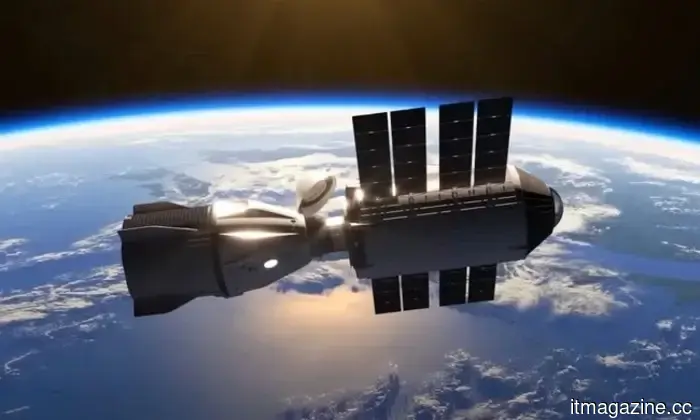
AI data centers currently consume vast resources in terms of electricity and water on Earth, prompting Silicon Valley to explore significantly more spacious alternatives—literally. Companies like Elon Musk's SpaceX and Jeff Bezos' Blue Origin, along with others, have proposed large constellations of satellites intended to serve as orbital data centers. However, environmental advocates and former space officials are warning that deploying these at the proposed scale may have severe implications for Earth's atmosphere and the night sky.
The first potential exomoon has been discovered, dwarfing our own Moon.
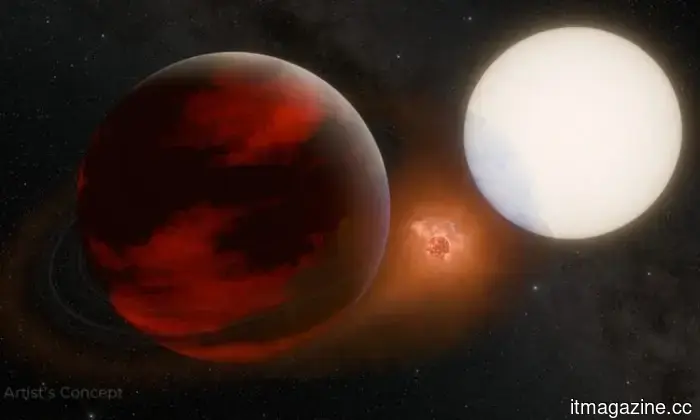
Scientists may have identified the first exomoon, albeit one comparable in size to Jupiter.
We have already found over 6,000 planets beyond our solar system, but locating a moon orbiting one of these distant planets has proven to be much more challenging. Astronomers may finally have evidence of such a celestial body, although this particular object stretches the definition of "moon."
Using the European Southern Observatory’s Very Large Telescope in Chile

Other articles
 Research suggests that your concerns about AI replacing your job stem from your extensive knowledge about AI.
Almost 43% of respondents with extensive AI knowledge anticipate that AI could soon replace their jobs, a significantly higher percentage than those who have a limited understanding of AI.
Research suggests that your concerns about AI replacing your job stem from your extensive knowledge about AI.
Almost 43% of respondents with extensive AI knowledge anticipate that AI could soon replace their jobs, a significantly higher percentage than those who have a limited understanding of AI.
 Meta intended to reduce certain teams by 60% and substitute their tasks with AI.
Meta considered reducing certain teams by as much as 60% as part of Project OT, but later called off the second round of layoffs when its AI agents did not perform as expected.
Meta intended to reduce certain teams by 60% and substitute their tasks with AI.
Meta considered reducing certain teams by as much as 60% as part of Project OT, but later called off the second round of layoffs when its AI agents did not perform as expected.
 Starting in February 2027, Google will restrict the amount of memory that Android apps can utilize.
Google plans to implement per-app memory limits on the Play Store starting in February 2027, attributing this decision to an approaching memory crisis caused by increasing RAM prices.
Starting in February 2027, Google will restrict the amount of memory that Android apps can utilize.
Google plans to implement per-app memory limits on the Play Store starting in February 2027, attributing this decision to an approaching memory crisis caused by increasing RAM prices.
-review-Budget-gaming-has-a-new-price-and-it-holds-up-surprisingly-well.jpg) Review of Dell Alienware 15 (DA15265): Affordable gaming has a new cost, and it performs surprisingly well.
Dell's $1,499 Alienware 15 has its clear compromises, yet its impressive RTX 5050 gaming capabilities, valuable upgrade options, and a swift 165Hz display make these trade-offs surprisingly acceptable.
Review of Dell Alienware 15 (DA15265): Affordable gaming has a new cost, and it performs surprisingly well.
Dell's $1,499 Alienware 15 has its clear compromises, yet its impressive RTX 5050 gaming capabilities, valuable upgrade options, and a swift 165Hz display make these trade-offs surprisingly acceptable.
 Starting in February 2027, Google will restrict the amount of memory that Android apps can utilize.
Starting in February 2027, Google will implement memory limits on a per-app basis in the Play Store, due to an approaching memory crisis resulting from increasing RAM prices.
Starting in February 2027, Google will restrict the amount of memory that Android apps can utilize.
Starting in February 2027, Google will implement memory limits on a per-app basis in the Play Store, due to an approaching memory crisis resulting from increasing RAM prices.
 JBL believes that the future of gaming audio lies in being more intelligent, not merely wireless.
I had a conversation with Gordon Tong from JBL at Gamescom 2026 regarding wireless gaming, 50mm carbon drivers, AI-driven footsteps, and the company’s approach to Quantum.
JBL believes that the future of gaming audio lies in being more intelligent, not merely wireless.
I had a conversation with Gordon Tong from JBL at Gamescom 2026 regarding wireless gaming, 50mm carbon drivers, AI-driven footsteps, and the company’s approach to Quantum.
NASA's latest telescope can capture 100 times more of the sky than Hubble does in one image.
NASA's Roman Space Telescope has started its journey of a million miles to L2, equipped with a wide-angle infrared camera aimed at mapping billions of galaxies and discovering thousands of planets.