
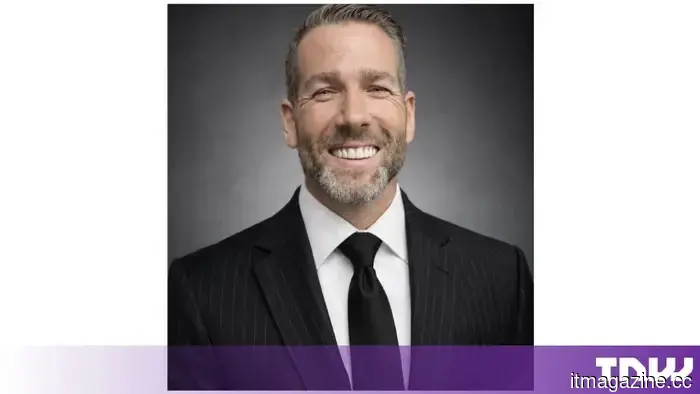
The growth of data centers will not fulfill its potential if safety and workforce development do not keep pace.
PwC predicts that investments in U.S. data centers will reach $118.4 billion by 2027, representing a 116% increase. Deloitte indicates that job postings in the data center sector have surged by 64%, compared to a mere 4% growth across the entire economy, with electrical technician job postings rising by 180%. Patrick Doyle highlights that this industry is drawing workers from restaurants and grocery stores into high-risk construction roles without sufficient mentoring or a robust safety culture. He advocates for one-on-one mentoring for new hires, conducting conversational safety analyses before tasks, and establishing a protected stop-work authority.
The evaluation of the data center expansion will hinge not only on the amount of infrastructure constructed but also on ensuring that the workforce returns home safely. The influx of capital and competition for market share can lead to tighter schedules and accelerated hiring, often sidelining safety concerns. From my observations in high-risk environments, this approach can be perilous. Cutting corners can harm workers, delay projects, and jeopardize the very capital that is sought to be safeguarded.
The current scale of expansion amplifies this risk. PwC forecasts a 116% increase in annual investment in U.S. data center infrastructure, rising from $53.2 billion in 2024 to $118.4 billion in 2027. This represents a rapid and substantial undertaking, filled with complex physical work compressed into a short timeframe.
Simultaneously, the workforce is being rapidly stretched. Deloitte found that job postings for core data center roles increased by 64% from 2023 to 2025, while the broader economic growth stood at just 4%. Postings for electrical technicians saw a jump of over 180%. In Deloitte's survey, 63% of data center executives cited shortages of skilled labor as their primary talent challenge. Although opportunities for workers abound, the pressure to deploy personnel ahead of adequate preparation is also significant.
I have observed individuals transitioning from roles in restaurants, grocery stores, and other sectors into construction and energy positions. While their prior experience is valuable, the risks they face differ vastly. For example, someone using a hand drill may be unaware of its potential reactions if it malfunctions, and a person new to night shifts might arrive fatigued due to their body's adjustment to the new schedule. Working outdoors also presents challenges such as heat, cold, and hydration that can impair judgment.
The issue is not with the new workers themselves but rather with the obligation of employers to equip them. A certificate obtained in a day or two does not equate to true competence, nor does a brief orientation substitute for guided experience. When the need for qualified personnel exceeds availability, employers may abbreviate training, accept dubious credentials, or presume that new hires will learn on the job. Such assumptions can endanger not just those workers but everyone in the vicinity on a complex data center site.
The solution starts with structured onboarding. I propose a short-service employee program that pairs each new worker with an experienced mentor, ideally on a one-to-one basis for high-risk tasks. The mentor would track progress and assist the employee in comprehending both the assignment and the site. This program could last 90 days, six months, or longer; the key factor is exhibiting competence.
Preparation should also occur before each task. Job safety analyses and pre-job risk assessments must be discussions rather than mere compliance documents. Teams should collaboratively evaluate what the task involves, how they will execute it, what might change, and when to stop. Practicing the task allows workers to visualize the operation without the distractions of tools, vehicles, and shifting conditions.
Most crucially, workers must feel confident that they will receive support for stopping a job due to safety concerns. Too many individuals hesitate out of fear of retaliation or worry about being held accountable for missing deadlines. Leaders shape culture by what they reward; reporting hazards, asking questions, or refusing to carry out unsafe tasks should be recognized as responsible behavior. If employees hear "see something, say something" during orientation but then witness supervisors penalizing delays in actual work, the true policy becomes apparent.
The data center industry possesses a unique opportunity. With workers coming from diverse trades and backgrounds, it is still in the process of establishing standards. It can define safe work practices as professional from the outset. This requires more than just seminars; it calls for qualified supervisors, manageable oversight, regular coaching, and consistent expectations, especially under deadline pressure.
Some executives may view these measures as additional time and costs. However, the business rationale is clearer in the opposite direction. EY points out that shortages of skilled labor and specialized contractors are driving up costs and extending timelines, while construction delays can incur hefty financial penalties. An incident creates a ripple effect comprising investigations, damaged equipment, lost production, absent qualified workers, legal liabilities, and potentially a shutdown. A hasty decision meant to save time can jeopardize the complete project timeline.
As investors scrutinize the scope and timing of returns from AI infrastructure, a credible
Other articles
 Tim Draper, the investor in SpaceX and Tesla, is putting his private island in Tanzania up for sale at $7.9 million.
Tim Draper is said to be selling his island in Tanzania for $7.9 million. The ECB states that EU venture capital funds possess 150 billion euros compared to 930 billion in the United States.
Tim Draper, the investor in SpaceX and Tesla, is putting his private island in Tanzania up for sale at $7.9 million.
Tim Draper is said to be selling his island in Tanzania for $7.9 million. The ECB states that EU venture capital funds possess 150 billion euros compared to 930 billion in the United States.
 Why businesses require more defined boundaries prior to granting AI agents the authority to take action.
Just 11% of CIOs believe they are completely ready for the deployment of AI agents (IBM). Madhuri Chandoor, founder of PromptHalo, suggests that the disparity lies in the difference between capability and authority, emphasizing that agents require both behavioral profiles and access permissions.
Why businesses require more defined boundaries prior to granting AI agents the authority to take action.
Just 11% of CIOs believe they are completely ready for the deployment of AI agents (IBM). Madhuri Chandoor, founder of PromptHalo, suggests that the disparity lies in the difference between capability and authority, emphasizing that agents require both behavioral profiles and access permissions.
 South Korea is providing free AI services to assist citizens with booking appointments, filing taxes, and handling daily tasks.
South Korea is offering complimentary AI subscriptions to promote domestic AI services and lessen reliance on services from the US and China.
South Korea is providing free AI services to assist citizens with booking appointments, filing taxes, and handling daily tasks.
South Korea is offering complimentary AI subscriptions to promote domestic AI services and lessen reliance on services from the US and China.
 Meta claims that its glasses can no longer record you secretly, at least not in this manner.
Meta is addressing a privacy issue that permitted users of smart glasses to turn off the recording indicator while still recording video.
Meta claims that its glasses can no longer record you secretly, at least not in this manner.
Meta is addressing a privacy issue that permitted users of smart glasses to turn off the recording indicator while still recording video.
 Apple TV has risen in price once more.
Apple is increasing the monthly subscription rate for Apple TV in the U.S. to $14.99, and the annual plan will rise to $119.
Apple TV has risen in price once more.
Apple is increasing the monthly subscription rate for Apple TV in the U.S. to $14.99, and the annual plan will rise to $119.
 At 19 years old, I've seen over 200 brands silently abandon influencers.
Gabriele Muratori, the 19-year-old founder of UGC Roster, discusses why the brands that are experiencing the quickest growth on his marketplace of over 200 brands are moving away from relying on individual influencers and instead focusing on high-volume, testable creator content that is incorporated into paid advertising.
At 19 years old, I've seen over 200 brands silently abandon influencers.
Gabriele Muratori, the 19-year-old founder of UGC Roster, discusses why the brands that are experiencing the quickest growth on his marketplace of over 200 brands are moving away from relying on individual influencers and instead focusing on high-volume, testable creator content that is incorporated into paid advertising.
The growth of data centers will not fulfill its potential if safety and workforce development do not keep pace.
Investment in U.S. data centers is expected to increase by 116% to reach $118.4 billion by 2027 (PwC). Patrick Doyle asserts that without regulated onboarding, mentoring, and the power to halt work, the growth of the workforce is likely to result in injuries prior to the development of infrastructure.