

Gemini Omni is now capable of extending videos to 40 seconds and enhancing their resolution to 4K.
Google
Creating a brief AI video is one task; ensuring various shots cohesively fit into the same video poses a much greater challenge. Google is attempting to address this issue with Gemini Omni 1.1 Flash, its newest generative video model designed to provide creators and developers significantly more control over the progression from the first frame to the last.
The most significant enhancement is Gemini's ability to remember a larger portion of existing video when asked to continue a scene. Omni 1.1 can reference up to 10 seconds of prior footage for context, rather than just the last second. This improvement should help maintain the consistency of characters, environments, and the overall direction of scenes, rather than relying on assumptions about what should follow.
Your AI videos can last longer
Google is also allowing creators greater latitude to extend those scenes. Videos can be prolonged in increments of 10 seconds until reaching a maximum length of 40 seconds. While this might not seem excessively long compared to traditional videos, it provides much more space for AI-generated segments that include a clear beginning, middle, and end.
Shimul Sood / Digital Trends
Creators now have the option to provide both the initial and final frame for a shot. Gemini will then generate all necessary content to link the two. This feature could be beneficial for creating smooth camera movements around a subject, seamlessly zooming between compositions, or developing a clip designed to loop without noticeable jumps. Video references are also supported; you can input up to three seconds of existing footage to give the model added visual context, which Google claims will help maintain elements like character appearance across the generated scenes.
You don't need to render everything in 4K
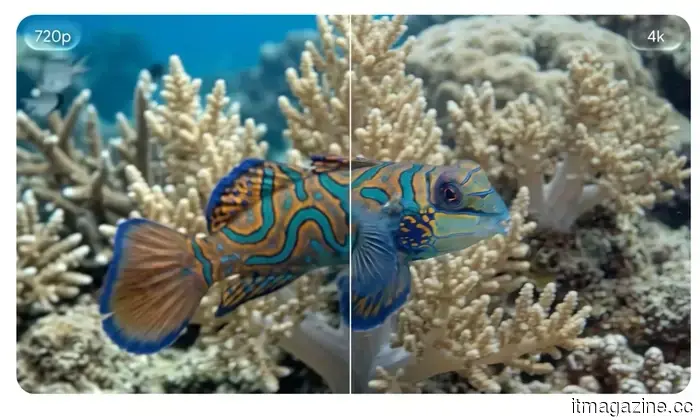
Not all experiments need to commence at the highest quality, and one of Omni 1.1’s more practical features acknowledges this reality. Developers can create 360p previews that Google asserts are up to 60% faster than its standard 720p output, at roughly one-third of the cost. This makes it easier to swiftly test ideas, adjust prompts, or iterate through several versions before investing more time and resources on the final outcome. Once satisfied, Omni 1.1 can produce 1080p footage or upscale the finished video to as high as 4K.
Google
The company is currently making Omni 1.1 Flash accessible to developers via the Gemini API in Google AI Studio, while businesses can gain access through Google’s enterprise Agent Platform. You don't have to be developing an app to experiment with some of these features, either. Omni 1.1 is being rolled out globally in Google Flow for AI Plus, Pro, and Ultra subscribers. Scene extension will also be available to those subscribers directly within the Gemini app, making it considerably easier to trial one of the model’s most intriguing new features.
Shimul is a contributor at Digital Trends, boasting over five years of experience in the tech industry.
Anthropic previews new standard to streamline AI-to-machine connections
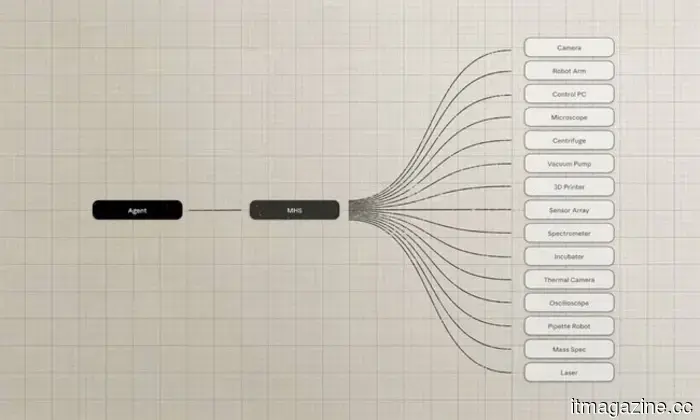
The Model Hardware Standard provides a universal translation layer, enabling AI agents to control lab equipment and factory machines with standard controls.
Anthropic has unveiled a research preview of its Model Hardware Standard (MHS), a common specification intended to allow AI agents to operate lab instruments and factory machinery safely. The company claims that MHS significantly reduces the integration time required for complex machinery with AI, cutting it from months to hours or even minutes. The standard is currently available to select research labs and manufacturers through a waitlist, with plans for future open-sourcing.
How the standard connects AI to physical devices
Why Thinking Like an Engineer Is Essential for Kids in the Age of AI
Perhaps the best gift you can offer your children is the chance to experience failure. This notion may seem radical, even somewhat uncomfortable, especially when much of parenting revolves around shielding children from frustration and disappointment. However, by intervening every time a challenge arises, we might also be depriving them of opportunities to cultivate the very skills they will need to navigate an increasingly uncertain world.
This concern has become more urgent as artificial intelligence alters our perception of work. In a previous Trending Forward discussion, I examined the implications of AI taking over tasks and skills that once demanded years of training. The challenge extends beyond merely predicting which jobs may vanish; it involves preparing individuals for a labor market where the skills valued today may not hold the same significance in ten or twenty years.
Pollen Robotics’ Microduck aims to make training physical AI far less fragile and cheaper
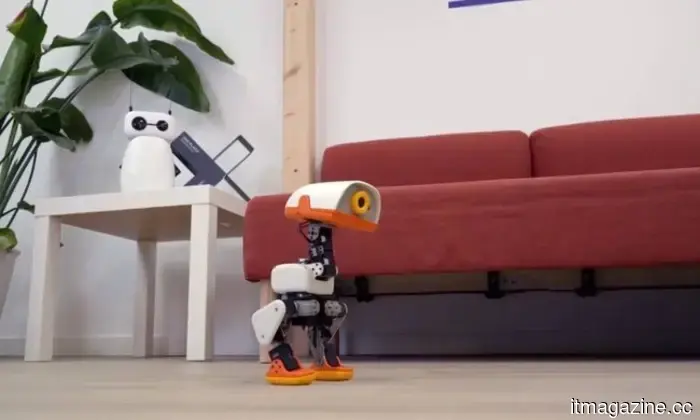
Microduck is an affordable $399 biped designed for developers to experiment with physical AI, providing a budget-friendly way to train and test new robotic behaviors without jeopardizing costly hardware.
Pollen Robotics and Hugging Face have introduced another robot, and this one is charmingly eccentric. Microduck stands 25 cm tall and is designed to bring AI from your screen into your workspace. Preorders are now open, with initial deliveries expected before Christmas 2026. Unlike its predecessor, the Reachy Mini, Microduck emphasizes action



Other articles
 Plaud's $250 earbuds capture your conversations and respond to what they detect.
Plaud's $250 earbuds can capture conversations for an AI assistant and are available for pre-order in Germany and France, where covertly recording speech is illegal.
Plaud's $250 earbuds capture your conversations and respond to what they detect.
Plaud's $250 earbuds can capture conversations for an AI assistant and are available for pre-order in Germany and France, where covertly recording speech is illegal.
 miHoYo reveals a fresh path with NODUSFALL at Gamescom 2026.
Gamescom 2026 is taking place in Cologne, Germany, from August 26 to 30. At Opening Night Live, miHoYo introduced its new original intellectual property, NODUSFALL, for the
miHoYo reveals a fresh path with NODUSFALL at Gamescom 2026.
Gamescom 2026 is taking place in Cologne, Germany, from August 26 to 30. At Opening Night Live, miHoYo introduced its new original intellectual property, NODUSFALL, for the
 Sony has just released this model. It’s budget-friendly for OLEDs and features four HDMI ports.
Sony's latest OLED features four HDMI ports, supports 4K/120Hz gaming, and includes Gemini, all within a relatively budget-friendly 48-inch size.
Sony has just released this model. It’s budget-friendly for OLEDs and features four HDMI ports.
Sony's latest OLED features four HDMI ports, supports 4K/120Hz gaming, and includes Gemini, all within a relatively budget-friendly 48-inch size.
 Currently, Meta's new restrictions for teens will be applicable solely to users in the United States.
Explanation of Meta's teen restrictions: Facebook and Instagram now feature two-hour usage limits, a Night Mode option, and enhanced control settings.
Currently, Meta's new restrictions for teens will be applicable solely to users in the United States.
Explanation of Meta's teen restrictions: Facebook and Instagram now feature two-hour usage limits, a Night Mode option, and enhanced control settings.
 New gaming laptop X-treme Tornado X18A
The company MAIBENBEN decided that 16 inches is for weaklings and rolled out a solid 18-inch laptop on the Russian market. The idea is that this is a powerful machine for gaming and work that can still be carried around.
New gaming laptop X-treme Tornado X18A
The company MAIBENBEN decided that 16 inches is for weaklings and rolled out a solid 18-inch laptop on the Russian market. The idea is that this is a powerful machine for gaming and work that can still be carried around.
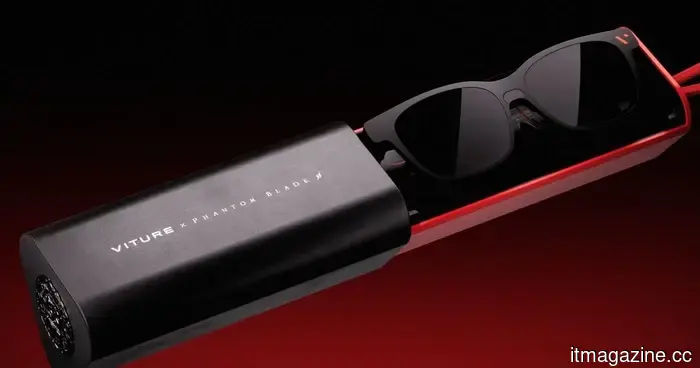 VITURE's latest XR glasses seem like they are directly inspired by Phantom Blade Zero.
Phantom Blade Zero is not just limited to your television. Its kung-fu universe is also coming right at you.
VITURE's latest XR glasses seem like they are directly inspired by Phantom Blade Zero.
Phantom Blade Zero is not just limited to your television. Its kung-fu universe is also coming right at you.
Gemini Omni is now capable of extending videos to 40 seconds and enhancing their resolution to 4K.
Gemini's video toolkit has expanded significantly, now featuring longer clips, 4K output, and enhanced control over each shot.