
Claude now has its own browser and does not require the Chrome extension anymore.
Anthropic has integrated a browser directly into Claude, which opens in a side panel when a prompt requires web access, rather than using its Chrome extension. This feature is enabled by default for Enterprise, Pro, Max, and Team users, who have the option to switch back in the settings.
The inclusion of a browser in Claude allows Cowork to recognize when a prompt needs the internet and displays a custom browser in a side panel, foregoing the need for Chrome through the Claude in Chrome extension. It is activated automatically. This browser is available for Enterprise plans and is being rolled out to Pro, Max, and Team users this week, with administrators or individual users able to revert to the extension in the settings.
Anthropic’s messaging is notably straightforward. The company stated, “Many web tasks do not require your browser, just a browser, and now Claude has one.”
The browser's design is intentionally narrow. It does not allow access to logins for email, banking, or other services unless entered manually, positioning it as a tool for retrieving public information rather than acting on behalf of the user.
Chrome's dominance is significant; Statcounter reports that it accounts for nearly 70% of global web traffic. In Europe, there was a lengthy effort to open up this market. Article 6(3) of the Digital Markets Act mandates that gatekeepers present a choice screen upon first use, showing the primary browsers, search engines, and virtual assistants available, and it explains why the EU has compelled Google to allow competing assistants on Android.
A browser embedded within an app bypasses these regulations. Anthropic is not classified as a gatekeeper, Claude is not considered a core platform service, and no choice screen appears for a browser that users never actively open.
The security situation is transparent but not yet resolved. Anthropic acknowledges that prompt injection, where hidden instructions on a page can compromise an agent, remains a risk within the new browser, which utilizes the same protective measures as the Chrome extension.
This security concern is not hypothetical for this product. TNW reported that Cowork could escape its local virtual machine and access credentials on a Mac.
OpenAI has encountered similar issues. It shut down its standalone Atlas browser this month, integrating it into a Work mode that features its own built-in browser.
Defaults are increasingly becoming the norm. Earlier, Anthropic also combined Claude chat and Cowork memory to be on by default, with the option to disable it later.
Thus, Europe has legislated a screen that prompts users to choose a browser. However, the solution the industry is developing is one that users never see and were never asked about.
Other articles
 OpenAI, Anthropic, Google, and Microsoft advocate for cyber defense to be prioritized at the leadership level.
OpenAI, Anthropic, Google, and Microsoft are advocating for cyber defense to be prioritized at the leadership level. The EU has already implemented the reporting they are seeking.
OpenAI, Anthropic, Google, and Microsoft advocate for cyber defense to be prioritized at the leadership level.
OpenAI, Anthropic, Google, and Microsoft are advocating for cyber defense to be prioritized at the leadership level. The EU has already implemented the reporting they are seeking.
 JPMorgan is leading a $5 billion debt financing project for the construction of Volta's AI data center.
JPMorgan is consulting with lenders regarding a $5 billion financing package for Volta, which will feature its initial building—a Norwegian hydro-powered campus leased from a bitcoin mining company.
JPMorgan is leading a $5 billion debt financing project for the construction of Volta's AI data center.
JPMorgan is consulting with lenders regarding a $5 billion financing package for Volta, which will feature its initial building—a Norwegian hydro-powered campus leased from a bitcoin mining company.
 Anthropic is evaluating a new standard for Claude to interface with factory and laboratory equipment.
Anthropic's Model Hardware Standard allows vendors to define how an AI can control a machine. Starting in January 2027, Europe will oversee the safety features of AI in machinery.
Anthropic is evaluating a new standard for Claude to interface with factory and laboratory equipment.
Anthropic's Model Hardware Standard allows vendors to define how an AI can control a machine. Starting in January 2027, Europe will oversee the safety features of AI in machinery.
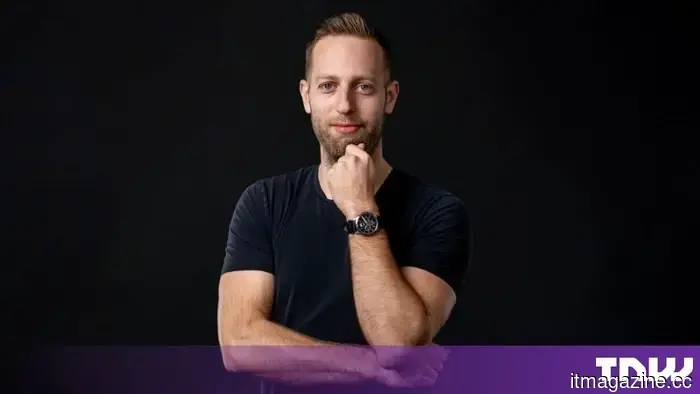 The executive assistant of tomorrow: DonnaPro's method for human-AI teamwork.
DonnaPro provides training on AI tools to executive assistants prior to their start, and supports them with 2,500 pages of frameworks. Founder Filip Pesek contends that even the most effective AI tools require a human who understands how to think critically.
The executive assistant of tomorrow: DonnaPro's method for human-AI teamwork.
DonnaPro provides training on AI tools to executive assistants prior to their start, and supports them with 2,500 pages of frameworks. Founder Filip Pesek contends that even the most effective AI tools require a human who understands how to think critically.
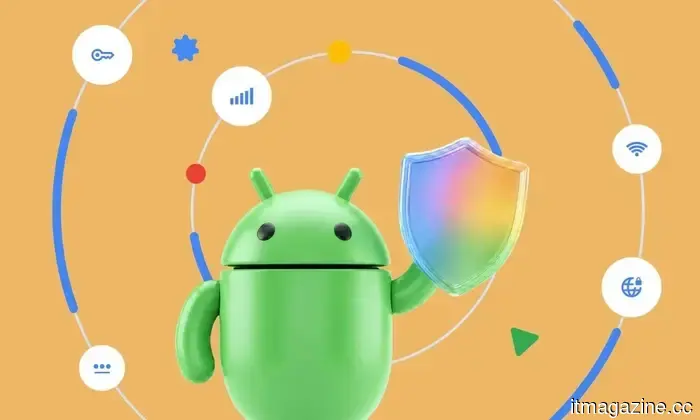 Android 17 will ultimately prevent ISPs from tracking the websites and apps you access.
Android 17 introduces Encrypted Client Hello, becoming the first major mobile operating system to widely prevent ISP tracking of your online activities, while also providing safeguards for home Wi-Fi privacy, countering fake certificates, and defending against 2G scam attacks.
Android 17 will ultimately prevent ISPs from tracking the websites and apps you access.
Android 17 introduces Encrypted Client Hello, becoming the first major mobile operating system to widely prevent ISP tracking of your online activities, while also providing safeguards for home Wi-Fi privacy, countering fake certificates, and defending against 2G scam attacks.
 Anthropic is testing a new standard for Claude to interact with factory and laboratory equipment.
Anthropic's Model Hardware Standard allows suppliers to define how an AI can control a machine. From January 2027, Europe will regulate safety functions related to AI in machinery.
Anthropic is testing a new standard for Claude to interact with factory and laboratory equipment.
Anthropic's Model Hardware Standard allows suppliers to define how an AI can control a machine. From January 2027, Europe will regulate safety functions related to AI in machinery.
Claude now has its own browser and does not require the Chrome extension anymore.
Anthropic has integrated a browser into Claude Cowork, which is enabled by default. The DMA choice screen is applicable only to gatekeepers, and Anthropic does not fall into that category.