
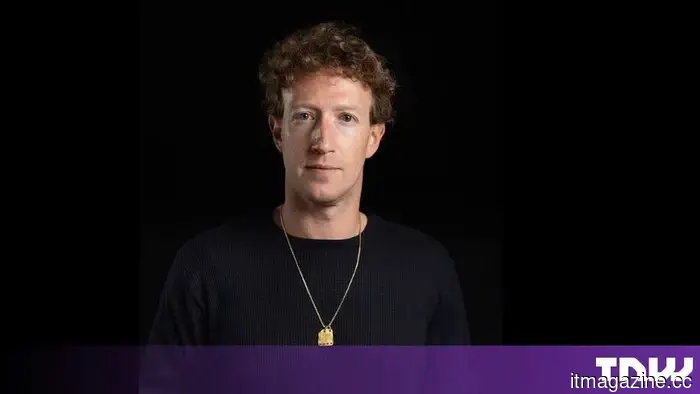
Meta is set to pay as much as $16.68 billion to resolve the youth safety lawsuit involving 29 states.
Meta has consented to disburse up to $16.68 billion to resolve claims filed by various states nationwide. These claims accused the company of creating Facebook and Instagram to entice children, deceiving consumers about the platforms' safety, and inappropriately gathering personal data from child users. Diana Novak Jones reported the figure for Reuters on Wednesday, based on court documents. The agreement was reached during the trial, which is currently in its second week at a federal court in Oakland, California, thereby preventing the continuation of the trial. Meta has denied any wrongdoing in reaching the settlement.
According to Reuters, Meta’s shares climbed by 4.4% in pre-market trading.
**Changes Meta has Committed To**
A court filing made public on Wednesday outlines the conditions of this proposed consent judgment. Meta will implement daily usage limits and nighttime restrictions for teenage users on Facebook and Instagram across the nation. Additionally, the filing mentions enhanced age verification measures aimed at keeping children off these apps, along with further resources for parents and guardians.
All parties involved will relinquish their rights to appeal once the court issues what it considers a Final Judgment. Jonathan Vanian reported this for CNBC based on the filing.
**Claims from the States**
The leading states in this case are California, Colorado, Kentucky, and New Jersey, with California Attorney General Rob Bonta co-leading alongside the attorneys general from the other states. They asserted that Meta intentionally designed Facebook and Instagram to become addictive for children and misled consumers regarding the safety of these platforms.
All 29 states involved claimed that Meta violated the federal Children’s Online Privacy Protection Act by collecting personal data from users, whom it knew were minors, without informing their parents or seeking consent.
This accusation also includes how Meta utilized this data, as the states argued that the company used it to develop machine learning and generative AI models. The consolidated case originated from a lawsuit filed in 2023, identified as People of the State of California v. Meta Platforms Inc., 23-cv-05448, in the Northern District of California.
**Financial Figures Prior to the Settlement**
In a pre-trial filing, Meta indicated that the four states aimed to secure penalties as high as $1.4 trillion, while the states assessed the figure to be closer to $200 billion. Initial reports on these figures were made when the trial commenced.
The states sought more than just financial penalties; they also requested additional damages, a mandate for significant changes to the platforms, and a prohibition against children creating accounts altogether. Meta termed these demands as exaggerated and accused the attorneys general of requesting unreasonable modifications to the design.
**Current Status of the Trial**
Settlement discussions were initially reported by Olivia Carville and Madlin Mekelburg for Bloomberg early Wednesday. Instagram head Adam Mosseri testified on Monday and Tuesday, stating that usage of the Take a Break feature among teenagers was minimal before it became the default and that most adolescents preferred not to use it. He refuted any claims of encouraging his team to conceal information.
Attorneys expressed intentions to call Mark Zuckerberg to testify. The trial was expected to last six weeks, ultimately relying on Judge Yvonne Gonzalez Rogers for final decisions after an advisory verdict from the jury.
**Meta's Defense in the Trial**
Meta denied the allegations of attempting to create addiction among children, citing its research as showing no clear correlation between teenagers’ social media use and negative wellbeing. Regarding the misleading claims, it argued that it couldn’t have misled consumers about the addictiveness of its services since social media addiction is not recognized as a psychiatric disorder.
**Ongoing Legal Challenges**
This settlement does not resolve the numerous other lawsuits facing Meta, Snap, Alphabet, and ByteDance related to similar allegations—Bloomberg reports more than 3,000 personal injury claims and about 1,300 lawsuits from school districts. Approximately 30 states have initiated cases in state courts as well. Additionally, a separate trial against Meta has been ongoing in Nashville since July.
According to Reuters, federal cases are consolidated before Judge Yvonne Gonzalez Rogers in Oakland, including suits from individuals, school districts, and state governments. Moreover, a judge in Los Angeles is overseeing thousands more lawsuits brought by individuals claiming harm from the platform's designs.
Meta experienced setbacks in the New Mexico case, where a jury awarded $375 million in March, and on August 6, a judge ruled it had created a public nuisance, ordering an additional $567 million. Also in March, a jury in Los Angeles found Meta and Google responsible for the depression and anxiety of plaintiff Kaley G.M., ordering $6 million in damages. The companies have announced plans to appeal.
All four companies reached a settlement in the first federal case set for trial, regarding claims from a Kentucky school district asserting their liability for student harm. Public records indicated that Breathitt County School District was expected to receive $27 million in total.
Earlier this month, the Ninth Circuit allowed 2,400 cases to proceed.
**European
Other articles
 Apple's latest Mac mini has subtly enhanced its capabilities for multi-monitor setups.
The M6 and M5 Pro Mac mini maintain the three-display limit, but there has been a significant improvement in refresh rates and port flexibility.
Apple's latest Mac mini has subtly enhanced its capabilities for multi-monitor setups.
The M6 and M5 Pro Mac mini maintain the three-display limit, but there has been a significant improvement in refresh rates and port flexibility.
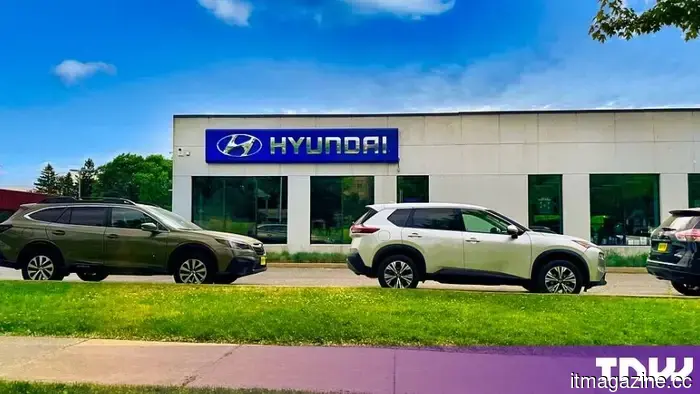 This decade, Hyundai has increased its market share in the US more than any other automaker.
Hyundai aims to increase its domestic sales in the US to 80% by 2030, rising from the current 40%. Its factories in Europe already contribute to approximately 80% of sales in that region.
This decade, Hyundai has increased its market share in the US more than any other automaker.
Hyundai aims to increase its domestic sales in the US to 80% by 2030, rising from the current 40%. Its factories in Europe already contribute to approximately 80% of sales in that region.
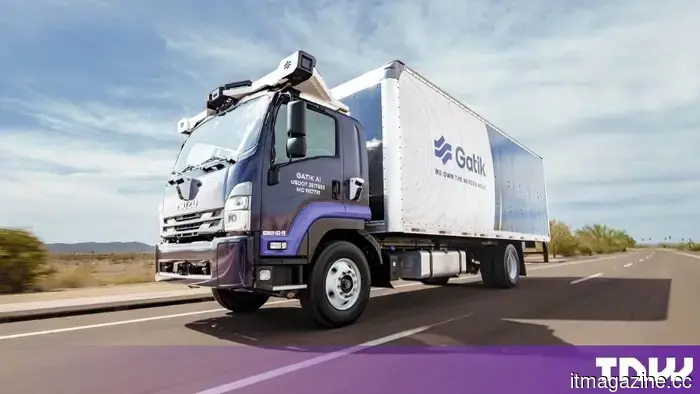 Gatik has secured $200 million to increase the number of driverless box trucks operating on roads in the United States.
Gatik's largest funding round to date was led by the Qatar Investment Authority and Koch Disruptive Technologies, bringing the total amount raised to approximately $500 million.
Gatik has secured $200 million to increase the number of driverless box trucks operating on roads in the United States.
Gatik's largest funding round to date was led by the Qatar Investment Authority and Koch Disruptive Technologies, bringing the total amount raised to approximately $500 million.
 Pennsylvania filed a lawsuit against Snap using an account it created when it was 13 years old.
Pennsylvania's lawsuit against Snap is based on a 13-year-old testimony from an investigator, which describes the Friend Solar System as a tactic for manipulation.
Pennsylvania filed a lawsuit against Snap using an account it created when it was 13 years old.
Pennsylvania's lawsuit against Snap is based on a 13-year-old testimony from an investigator, which describes the Friend Solar System as a tactic for manipulation.
 NO LAW resembles Cyberpunk 2077 in a home setting, but to be honest, I'm all for it.
NO LAW, the upcoming cyber-noir shooter from Neon Giant, the creators of The Ascent, has revealed its initial gameplay, combining visuals reminiscent of Cyberpunk 2077 with elements of stealth, hacking, and choices inspired by Deus Ex.
NO LAW resembles Cyberpunk 2077 in a home setting, but to be honest, I'm all for it.
NO LAW, the upcoming cyber-noir shooter from Neon Giant, the creators of The Ascent, has revealed its initial gameplay, combining visuals reminiscent of Cyberpunk 2077 with elements of stealth, hacking, and choices inspired by Deus Ex.
 Lenovo's inaugural Android gaming handheld offers a smart solution for your poor Wi-Fi connection.
The Lenovo Legion C700 is an Android gaming handheld priced at $327, featuring a 120Hz display, a large battery, and an innovative method for streaming PC games offline.
Lenovo's inaugural Android gaming handheld offers a smart solution for your poor Wi-Fi connection.
The Lenovo Legion C700 is an Android gaming handheld priced at $327, featuring a 120Hz display, a large battery, and an innovative method for streaming PC games offline.
Meta is set to pay as much as $16.68 billion to resolve the youth safety lawsuit involving 29 states.
According to court documents, Meta is set to pay a maximum of $16.68 billion while implementing daily limits and nighttime restrictions for teenagers.