
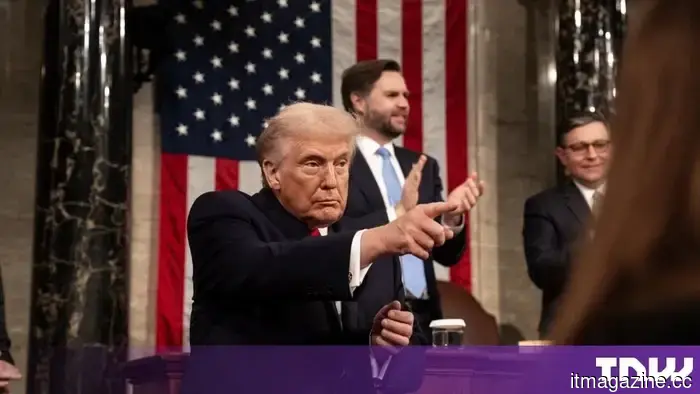
A disclosure reveals that Trump purchased shares in SpaceX two weeks following its IPO.
Donald Trump acquired up to $50,000 in SpaceX stock on June 23, approximately two weeks after the company completed the largest initial public offering ever, according to a financial disclosure made public this week. This purchase places the current president on the shareholder register of a company for which his administration determines federal contracts and regulatory actions, an issue that has already raised questions regarding conflicts of interest related to the listing.
The White House has provided a procedural rationale rather than justifying the situation itself. A spokesperson stated that the president’s investment portfolio is managed by third-party financial institutions and mirrors recognized indexes, citing the Schwab 1000 as an example. This explanation seems reasonable on the surface and highlights something strangely unique about this particular stock. SpaceX actively lobbied major index providers for expedited inclusion before its public offering, resulting in many investors holding the stock without making a conscious decision to do so.
Anyone tracking a significant U.S. index automatically gained exposure to SpaceX, and a portfolio designed to replicate such an index would have purchased shares around the time of the disclosure. The question of whether the president specifically directed the purchase is different from the fact that it appears on his disclosure, and the document cannot clarify this matter.
The timing is problematic, regardless of who initiated the transaction. SpaceX shares were priced at $135 each, saw an increase post-listing, and trading in the mid-$150s in late June would position the investment slightly below the value compared to Monday’s closing price, which reverted to the $135 issue price.
A holding capped at $50,000 is minor in comparison to Trump’s declared wealth, and disclosure regulations require reporting holdings in ranges rather than precise figures. The importance lies not in the amount but in the identity of the counterparty. SpaceX generates a significant portion of its revenue from federal contracts via NASA and the Department of Defense, and its Starlink business relies on spectrum decisions and launch licensing governed by federal agencies. The company has also profited from the administration's overall deregulatory stance regarding commercial spaceflight.
Elon Musk’s connection with the president has been more unstable than usual, undergoing a public disagreement and a subsequent reconciliation, yet the commercial ties between his companies and the federal government have persisted. In particular, Starlink has been growing its government contracts, providing connectivity to federal agencies and seeking defense communication opportunities, which brings it in front of procurement officials who ultimately report to the president.
Presidents are not legally required to divest assets, which lies at the core of the issue. The conflict-of-interest law applicable to most federal officials does not extend to the president, leaving blind trusts and voluntary divestment as practices rather than legal requirements, and this administration has opted not to follow them. Disclosure remains as the only safeguard, and it functions only retroactively. The June purchase became public knowledge in late August, by which time the asset was already held through two months of decisions impacting the company.
The IPO itself was remarkable by any standard, raising $75 billion amid demand that reached about $250 billion, with BlackRock alone ordering $5 billion worth of stock. An offering of this magnitude pulls almost every institutional portfolio across the United States into the same situation that the president now faces.
This is arguably the more significant point. When a single company joins the indexes on such a scale, the question of who holds a financial stake in its regulatory treatment shifts from being a matter of individuals’ interests. Ethics lawyers have contended for years that while the index-tracking explanation is accurate, it does not resolve the fundamental issue, as a president can influence the value of an asset regardless of whether he chose it. The counterargument is that the same applies to every constituent within the index, which is why the standard has been to divest rather than simply disclose.
Neither SpaceX nor Musk has commented on the disclosure. The filing addresses holdings as of a specific reporting date and does not indicate whether the position has been increased, decreased, or sold since then.
Other articles
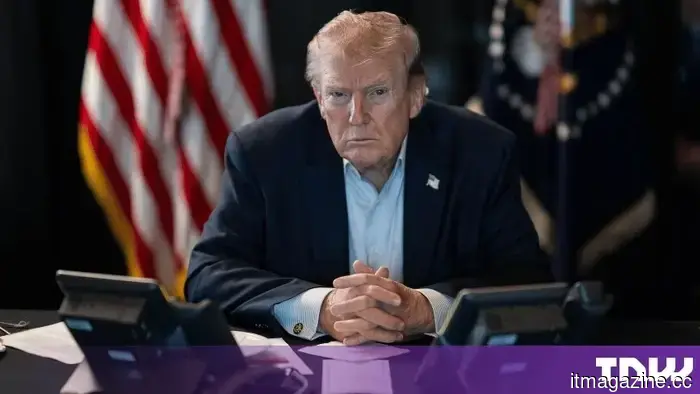 Trump argues that rejecting a data center is a mistake, while Abbott has a differing opinion.
Greg Abbott states that the criticism towards data centres is warranted, as reported by Axios. Trump asserts that communities that reject them are making an error.
Trump argues that rejecting a data center is a mistake, while Abbott has a differing opinion.
Greg Abbott states that the criticism towards data centres is warranted, as reported by Axios. Trump asserts that communities that reject them are making an error.
 Lambda is seeking to raise as much as $3 billion prior to its initial public offering, just a few months after securing $917 million in loans for semiconductor production.
Lambda, supported by Nvidia, is negotiating for up to $3 billion in pre-IPO financing, aiming for a valuation of $12 billion or higher, in preparation for a listing next year.
Lambda is seeking to raise as much as $3 billion prior to its initial public offering, just a few months after securing $917 million in loans for semiconductor production.
Lambda, supported by Nvidia, is negotiating for up to $3 billion in pre-IPO financing, aiming for a valuation of $12 billion or higher, in preparation for a listing next year.
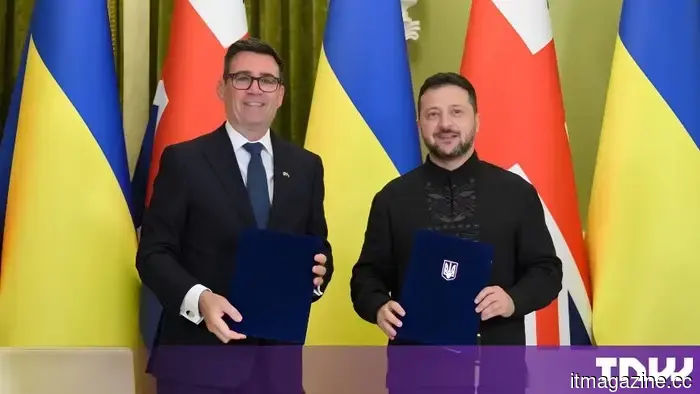 The UK and Ukraine have entered into a declaration regarding military capabilities enhanced by AI.
Volodymyr Zelenskyy and Andy Burnham signed a joint statement in Kyiv regarding a partnership on AI, which includes aspects of AI-enhanced military capabilities.
The UK and Ukraine have entered into a declaration regarding military capabilities enhanced by AI.
Volodymyr Zelenskyy and Andy Burnham signed a joint statement in Kyiv regarding a partnership on AI, which includes aspects of AI-enhanced military capabilities.
 The top limited series on Netflix that you can watch in one go.
This summary highlights 16 outstanding miniseries and limited series available on Netflix, showcasing a decade of prestigious television featuring nearly perfect ratings, critical praise, and some polarizing selections.
The top limited series on Netflix that you can watch in one go.
This summary highlights 16 outstanding miniseries and limited series available on Netflix, showcasing a decade of prestigious television featuring nearly perfect ratings, critical praise, and some polarizing selections.
 LYNOOK transforms AI companions from individual conversations into collective, memory-filled experiences.
While many AI companion products continue to focus on keeping users engaged through basic one-on-one chat interactions, LYNOOK Technology is adopting a completely different approach.
LYNOOK transforms AI companions from individual conversations into collective, memory-filled experiences.
While many AI companion products continue to focus on keeping users engaged through basic one-on-one chat interactions, LYNOOK Technology is adopting a completely different approach.
 Netflix may allow you to stream Peacock and Fox One through its application.
Netflix is said to be negotiating the addition of Peacock and Fox One to its app, marking a significant shift for a company that previously hesitated to collaborate with direct competitors.
Netflix may allow you to stream Peacock and Fox One through its application.
Netflix is said to be negotiating the addition of Peacock and Fox One to its app, marking a significant shift for a company that previously hesitated to collaborate with direct competitors.
A disclosure reveals that Trump purchased shares in SpaceX two weeks following its IPO.
A financial disclosure reveals that Trump purchased as much as $50,000 in SpaceX stock on June 23, two weeks following the record IPO.