
Xiaomi's latest Xring O3 is produced at TSMC and targets a market of several hundred thousand smartphones.
Xiaomi has introduced the Xring O3, a system-on-chip that will be produced by TSMC using its 3-nanometre technology, as revealed by two sources familiar with the situation who spoke to Reuters. This chip integrates computing, graphics, AI processing, and imaging into a single die and is launched during a challenging period for the smartphone industry it aims to set apart, with Xiaomi's profits declining again due to squeezed margins from falling memory prices.
When Reuters inquired, neither Xiaomi nor TSMC confirmed the manufacturing arrangement. While the launch of the chip is publicly announced by Xiaomi, details about the foundry relationship and associated production figures come from sources rather than direct acknowledgments by either company.
The production figures are particularly noteworthy. The O3 is intended for Xiaomi’s upcoming flagship folding smartphone, with projected shipments ranging between 200,000 and 300,000 units. For a company that delivers tens of millions of devices each quarter, this number is minimal and aligns with the shipment patterns of the previous generation. The Xring O1, released in May 2025, has achieved cumulative shipments exceeding one million across phones, tablets, and watches, but only about 150,000 of these were smartphones.
Creating custom silicon at these volumes is not focused on cost savings. Developing an advanced SoC and securing 3nm production capacity to create a few hundred thousand units demonstrates feasibility, which differs from the goal of displacing Qualcomm and MediaTek in the component supply chain.
Every major manufacturer that has pursued this path has begun similarly. Apple, Samsung, and Huawei have all developed in-house processors to distinguish their flagship models and lessen their reliance on external suppliers, a strategy Xiaomi has been attempting since the Surge S1 in 2017, an endeavor that slowed down, leaving its chipset division focused on connectivity and IoT components for several years.
Opting for a folding device aligns with this strategy. Foldable phones are typically low-volume, high-margin products purchased by customers already willing to pay a premium, making them a more forgiving platform for introducing a first-generation chip while also minimizing the risk associated with unprofitable yield economics.
The chosen manufacturing process is also significant. The Xring series continues with TSMC’s 3nm technology rather than advancing to 2nm, with the O2 reportedly utilizing the N3P variant, positioning Xiaomi a step behind the components that will define the premium Android segment next year.
Cost considerations likely play into this decision. TSMC has not dismissed the possibility of further price hikes as production expenses rise, and the allocation of leading-edge wafers is being contested by firms with significantly greater financial resources and larger order books than a smartphone manufacturer pursuing a high-end project.
It is also important to recognize what Xiaomi can achieve that Huawei cannot. Xiaomi is not affected by the US restrictions that disconnected Huawei from TSMC, allowing it to acquire leading-edge production capacity from Taiwan, while its domestic competitor navigates the export control landscape with what local foundries can currently produce.
This advantage illustrates why a Chinese firm developing advanced silicon in 2026 does not necessarily equate to a Chinese firm manufacturing it, a detail often overlooked in discussions about the country's ambitions in the chip sector. In contrast, BYD chose to pursue a domestic approach, producing China's first 4nm driving chip.
However, the timing presents challenges. Xiaomi is already dealing with increased component costs due to memory shortages, and incorporating a custom processor into a flagship device may not be the most prudent decision for a business experiencing margin pressures.
Xiaomi has not released specifications for the O3, identified the folding phone it will be featured in, or provided a launch date. Additionally, it has not revealed whether the chip will be utilized across its other hardware offerings, such as tablets, wearables, cars, and PCs.
Reuters reported this story from Beijing. Whether the O3 signifies a turning point for Xiaomi’s silicon transitioning from a showcase to a functioning supply chain will depend on the second device that employs it, rather than the first.
Other articles
 A strange app has suddenly emerged on millions of Android devices, and its purpose is genuinely to assist.
Android Pulse, a background app from Google that is already on more than 10 million devices, has just been updated in the Play Store.
A strange app has suddenly emerged on millions of Android devices, and its purpose is genuinely to assist.
Android Pulse, a background app from Google that is already on more than 10 million devices, has just been updated in the Play Store.
 Employer of record or entity: make your choice before someone else makes it for you.
Contractor, record contractor, employer of record, or your own organization? A cost and risk assessment framework for recruitment in Europe, including actual pricing for 2026.
Employer of record or entity: make your choice before someone else makes it for you.
Contractor, record contractor, employer of record, or your own organization? A cost and risk assessment framework for recruitment in Europe, including actual pricing for 2026.
 Xiaomi's latest Xring O3 is manufactured by TSMC and is targeted at several hundred thousand smartphones.
Xiaomi's Xring O3 will be produced by TSMC using a 3nm process for a premium folding smartphone, aiming for a production of 200,000 to 300,000 units.
Xiaomi's latest Xring O3 is manufactured by TSMC and is targeted at several hundred thousand smartphones.
Xiaomi's Xring O3 will be produced by TSMC using a 3nm process for a premium folding smartphone, aiming for a production of 200,000 to 300,000 units.
 As the music industry struggles with a wave of challenges, Dr. Dre encourages artists to embrace AI technology.
While AI-generated music is saturating the internet, Dr. Dre is not shying away from it. He believes that artists ought to embrace and learn to utilize AI.
As the music industry struggles with a wave of challenges, Dr. Dre encourages artists to embrace AI technology.
While AI-generated music is saturating the internet, Dr. Dre is not shying away from it. He believes that artists ought to embrace and learn to utilize AI.
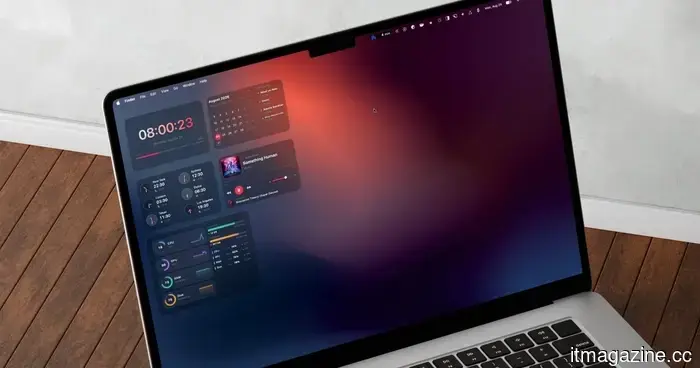 I never had any interest in Mac desktop widgets until I discovered this app.
I never appreciated macOS widgets until I discovered an application that offers more visually appealing and customizable options than those provided by Apple. Here’s the complete overview.
I never had any interest in Mac desktop widgets until I discovered this app.
I never appreciated macOS widgets until I discovered an application that offers more visually appealing and customizable options than those provided by Apple. Here’s the complete overview.
 A device intended to detect hidden cameras might give you a false sense of security.
Researchers discovered that consumer spy-device detectors offered only a minor enhancement in locating concealed cameras and trackers, and that misleading alerts could lead to a false sense of security that may be perilous.
A device intended to detect hidden cameras might give you a false sense of security.
Researchers discovered that consumer spy-device detectors offered only a minor enhancement in locating concealed cameras and trackers, and that misleading alerts could lead to a false sense of security that may be perilous.
Xiaomi's latest Xring O3 is produced at TSMC and targets a market of several hundred thousand smartphones.
Xiaomi's Xring O3 will be produced by TSMC using a 3nm process for a high-end folding smartphone, aiming for a target of 200,000 to 300,000 units.